
/// PRACTICE DISRUPTED
![Episode art: [Re] Creating Your Career in Architecture](/_next/image?url=https%3A%2F%2Ftulggifqnrbcovhlvavv.supabase.co%2Fstorage%2Fv1%2Fobject%2Fpublic%2Fmedia%2Fepisode-art%2F007-re-creating-your-career-in-architecture.jpg%3Fv%3D1787175125750&w=3840&q=75)
How do you rethink a career in architecture to get unstuck?
Laura Weiss Founder at Design Diplomacy
As a professional coach, facilitator, mediator, and consultant, Laura Weiss helps creative leaders engage in powerful conversations that drive change.
A former licensed architect, Laura spent a decade with the global design firm IDEO as a Practice Director and Associate Partner. An expert in service design, she subsequently assumed leadership roles inside a variety of enterprises seeking to build their own capacity for innovation. Today she leads her own practice Design Diplomacy LLC and is an Adjunct Professor at the California College of the Arts.
Laura holds a B.Arch. with honors from Cornell University, an M.Arch. from Yale University, and an MBA from the MIT Sloan School of Management. A lifelong learner, Laura has also earned a Professional Certificate in Mediation and Applied Conflict Studies from Champlain College in Burlington, VT, her CPCC (Certified Professional Co-Active Coach) credential through the Coactive Training Institute and is an ACC (Associate Certified Coach) with The International Coach Federation.
§ GUEST
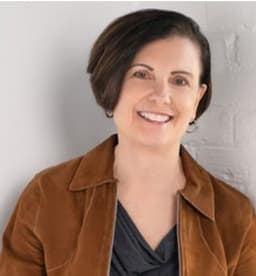
Laura Weiss
Laura Weiss is an architect, leadership coach, and facilitator. She spent a decade at IDEO as a Practice Director and Associate Partner, where she helped pioneer the service design practice. She has served as a Principal at Korn Ferry and is currently an ICF-certified coach and mediator. Laura is also a member of the faculty at the Yale School of Architecture, where she teaches on leadership and organizational development.
This episode is especially for you if:
You want to understand why conflict avoidance in leadership is a strategy that always costs more than it saves.
You are curious about why feedback systems often fail in creative environments and how to fix them.
You are interested in the “five conversations” framework for fostering growth in people, firms, and projects.
You want to learn how to view your firm as a “spider web” of influence where every individual has agency.
You are looking for ways to elevate the profession’s investment in human capital to match its investment in technology.
§ SHOW LINKS
/// THE PRACTICE LAB
Conversations are useful. Running the experiment is what changes the firm.
The Practice Lab is where architects test one real change a month, on their tools, their business model, or their own career, alongside peers running experiments of their own. Office hours most Tuesdays.
§ TRANSCRIPTRead the full episode transcript
A I'm Evelyn Lee.
B And I'm Janine Chastain. We're collaborating on curated conversations to explore how the industry is changing.
A Together, we'll find ways to create new solutions to current challenges while elevating the value of architects.
B Welcome to Practice disrupted. Hey, Evelyn. Hi, Janine. Hi, listeners. Welcome back to Practice Disrupted. Today's episode is focused on recreating your career in architecture, and this conversation actually started at a coffee shop in San Francisco where, Evelyn, you and I were meeting and talking about our own careers and trying to figure out, like, how did we take our architectural education and merge it with our business training to inform the type of career that we wanted to have. So I felt like we've had that conversation many times over the years. But at this particular coffee date, we were starting to sketch out, the foundation of a workshop that we were envisioning sharing with other people who who were having similar questions about their careers.
B This how IDEA actually became the foundation of the program that we pitched to the women's leadership summit, and it successfully was selected. So we ended up how Getting pulled in to come and do a workshop, and we asked today's speaker, Laura Weiss, to join us. And together, the 3 of us developed this program how focused on using an architectural education to essentially recreate a career either in architecture or apply it to a career into another field. When we got to Minneapolis for the women's leadership summit, we were really happy to find out that they We had 2 days of workshops, and both days, the rooms were packed with women who wanted to really talk and dive into these conversations with us. So we used different self reflection methods and assessment tools that we had also personally done in our own career journeys to talk the 2 groups through how to think about their personal values and goals that could help them start to design and craft a career experience that was personal to them.
A Yeah. And I don't wanna isolate our male listeners on this. So I actually think a lot of the things that we developed for, recreating your career in architecture And something that I'm looking for developing and actually turning into some type of full fledged online course on practice of architecture is is really meant for everyone. These tools are tools that everyone can use. The The interesting thing about Laura, not dissimilar from David Fano, an earlier guest on the podcast, how Is that I'm she's one of those people that I I actually just reached out to on LinkedIn. So for those of you who don't think LinkedIn is a powerful connector, you know, here's here's 2 testaments to to the fact that it is. And at at the time when I reached out to Laura, I was looking for new opportunities. And we actually had several connections through public architecture.
A She started serving on the board the same year that I left how to get my MBA. So we our paths didn't cross over exactly, but it was enough of a connection to reach out and say, hi. I would love to have a conversation with you. She was also if you looked at her profile, she transitioned out of her career as an architect And went on to work at IDEO, which I think a lot of architects who think about alternative career paths. IDEO is something as a company that continues to pop up on people's radar. So she she had actually a a very long and successful career as an associate partner and practice lead at IDEO. So after Laura and I had our 1st coffee meeting in San Francisco, I convinced her to apply to be a director at large for the strategic council at the AIA, how And I actually also asked her to help me by moderating the practice innovation lab in 2017. So, Janine, why don't you go ahead and dive into the more official bio for Laura? Sure.
A And you guys are in for
B a treat. Laura is full of energy and very passionate about her subject matter. As a professional coach, facilitator, mediator, and consultant, Laura Weiss helps creative leaders engage in powerful conversations that drive change. A former licensed architect, Laura spent a decade with the global design firm IDEO As a practice director and associate partner, an expert in service design, she subsequently assumed leadership roles inside a variety of enterprises seeking to build their own capacity for innovation. Today, she leads her own practice, Design Diplomacy LLC and is an adjunct professor at the California College of the Arts. Laura holds a BARC with honors from Cornell University, an MRR from Yale University, and an MBA from MIT Sloan School of Management. How A lifelong learner, Laura has also earned a professional certificate in mediation and applied conflict studies from Champlain College in Burlington, Vermont, and her CPCC certified professional coactive coach credential through Coactive Training Institute, and she is also an ACC associate certified coach with the International Coach Federation.
A Yeah. And I think one of the interesting a piece of all of this and the the why the 3 of us make an interesting case study is because we how All represent different generations in architecture who actually went on and got their MBA, and and then have created a new career for themselves afterwards. So let's jump to the interview.
B Welcome, Laura. We're really excited to have you. You are such a powerful speaker, and we're pleased to have you on the show today. We wanted to give you an opportunity to share an introduction about yourself, your company, and the work that you're doing.
C Great. Yeah. I'm really glad to be here. I'm a facilitator, a consultant, and a certified coach. I I essentially help leaders in the creative professions engage in powerful conversations that drive change. And I primarily do this through 1 on 1 coaching with individuals that might hire me directly. I also have partnerships with a handful of large design firms and some tech companies how that hire me to coach their high potential leaders and sometimes also small leadership teams or even codirectors or partners. I kinda consider myself a little bit unique in the coaching world because I bring a depth of, obviously, design experience and design tools into the coaching process how along with skills as a as a mediator and some education on the the neuroscience behind how change happens.
C So it's a coaching experience that how that really blends learning with doing.
A So, yeah, as Janine said, you know, Laura, this is this the 2nd time we're how Actually, the 3rd time because you helped moderate the practice innovation lab for me, that we've gotten together. And you've had a really interesting path to get to where you are. So I I think it would be great for you to share that with our listeners, especially, because you you come from an architecture education.
C How Like the 2 of you, I I began my career as an architect and, you know, I wanted to be an architect since I was the age of 12, which seems to be a common age where a lot of people discover and how Become, you know, kind of enchanted by architecture. So I pursued a professional degree right out of high school. And because I had an interest in teaching, I pursued a master's degree in architecture immediately after that, and I got licensed a couple of years after that and figured I'd be an architect for the rest of my professional life. But as an architect, I I became increasingly interested in the business side of the creative process, how Specifically how architects worked with their clients and with the general public and the impact those relationships had on what actually got designed and built. And I think as you both probably can, can attest, it it it sometimes can be disappointing or or disheartening at best. So this experience prompted the first of 3 career pivots in the the women's leadership summit. As you recall, I talk about these 3 pivots, along this inverted v. And, the first of those was a return to school after 8 years in in practice as an architect to earn an MBA With a goal of more directly influencing how the business world understood and engaged with the practice of design.
C In Somalia, I had this big idea that you know, and this belief that I could also how Bring strategic thinking to the design professions. Now in the mid 19 nineties when I was doing this, it was a a bit of a risky move. The roles that are now available for designers with a business degree were practically nonexistent at how Time. However, I was fortunate to find sort of what I call the right sandbox for experimentation at IDEO, which is one of the best known innovation design firms in the world. And over the course of a decade with them, I worked with clients in a wide range of industries. And with my colleagues, I developed new ways to Introduce the design tools and methodologies, that were common to kind of manufacturing companies to Fortune 500 companies in the service industries. Eventually cofounded a practice, with 3 other colleagues focused on this new arena and, you know, what would today probably be called experience design. The 2nd pivot of the 3 came when I left IDEO after about a decade to better understand and help develop the capacity for innovation on the inside of those how Same kinds of organizations who had been my clients.
C And what I learned is that the most successful efforts did not result from, you know, a single big idea, eve even though that's often how what what is celebrated in the press, especially when it concerns a new technology. Ideas are actually the easy part. You know, we can come up with lots of different ideas. It doesn't mean any of them are how be viable. And so the real challenge I discovered is in leading the change required to bring a new idea to life. And that requires leadership, organizational leadership, team leadership, and perhaps most important of all, I've discovered self leadership. And it was this how Final insight, this this last insight that that led to this 3rd pivot that is the current focus of my professional life. And so today, I I think how Think of myself as someone dedicated to empowering the people side of the design and innovation, world by supporting the growth, of design leaders in terms of their influence and their impact on the world.
C That is
B such a powerful story, and I and I think that it's a skill that's really needed right now in our industry. And I'm I'm hoping you can talk a little bit more about the prototyping part of it because you talked a lot about using prototyping how to experiment with different options in your career before you made these major career pivots.
C So it's probably worth saying something first about the purpose of prototyping. It it's an activity that innovators use to explore questions, which inevitably lead to more questions. It's an iterative process. It's a it's a discovery driven process. So managing one's career can be extremely fulfilling if you take this approach. You're gonna hear me say this a lot, but a career is really a learning journey. It's not a series of jobs. And so when you find yourself dreaming about, you know, what's next, Ask yourself, what do I wanna learn next? And that will greatly widen the range of possibilities so much further than just asking, you know, what's my next role or what's my next job? How And in my case, each of the 3 pivots that I described, earlier had something in common.
C Each was triggered by something that was frustrating me, Which led to a question and then a prototype to explore that question before making a decision about what action I wanted to take or what I wanted to do next. And this helped, how Much in the way prototyping works to help me minimize the risk of taking that next step. So I've since giving the the workshop with you 2 at the how Women's Leadership Summit have actually come to label each of the pivots that I described. It it kinda helps me identify them and think about them as chapters In my career so the first one, I've labeled integrating design and business because that was the question on my mind. The frustration was the economy. It was, 1990, and the Gulf War recession had essentially trashed the construction industry. And and I was less than two Years out of school, and I had never imagined how badly cyclical economic effects like that could affect, not only an entire industry, but a big firm like the one I was part of. How And worse, how ill equipped the firm seemed to be to be able to handle it.
C I was I was pretty naive. But but I was also convinced that part of the problem was a disconnect how I perceived between the value architects delivered and the understanding of that value by their clients. So that sort of became the question. And as a result, I started to think seriously about the business side. In other words, the client side of the design equation. I had taken a general management class as an undergraduate, which I really enjoyed, so I decided to prototype what it would be like to go back to school for a business degree. And so I enrolled in a nondegree executive education class at Harvard Business School, which was in my in my backyard. I was working in Cambridge at the time, And I had a very specific objective.
C If I did well and I enjoyed it, I would apply to business school, and that's essentially what happened. I refer to the 2nd pivot as innovation on the inside. The frustration was the low success rate, relatively speaking, of innovation, you know, meaning much of the amazing work we were doing at IDEO, because this pivot happened As a result of my time there, you know, that work never got to market, and it's worth remembering that these were the early days of service design. We were learning what that meant, and our clients were learning it as well. So the question for me was, what's going on inside of these organizations that's how Creating obstacles to implementation. And I decided to focus on an area that, at the time was how under served by design and where I thought I had a pretty good chance of getting a role there. And that turned out to be the social sector. This was about 2009, and nonprofits and design firms had yet to discover each other.
C There was also another recession, coincidentally or not. And And so I got an introduction to the founder of the Tabroot Foundation, and the prototype I instructed was a pro bono consulting gig I did for them So we could try you know, essentially try each other on for size. And and this eventually led to a full time role there as a VP of Service Innovation. So the the 3rd pivot I call creative leadership because of what I observed at Taproot and at, in in some other internal roles that I how held, in a in a wide variety of different kinds of organizations. Innovation is something that everybody seemed to talk about as a core capability that they wanted to build. But when it came time to, you know, prioritize resources or support resources, the focus always shifted back to sustaining the the status quo, you know, essentially protecting the core business. And this is sort of understandable because for a lot of publicly held companies or Organizations that have shareholders they need to answer to, they need to perpetually, you know, lower the risk, and innovation inherently involves the risk. So this was my frustration, and the question became, you know, what's missing? As these were otherwise very successful organizations Who just couldn't seem to get out of their own way when it came to to to to building an innovation capability.
C Not surprisingly, what was often missing, I discovered was the structural and cultural means to drive change, and and change happens through leadership. You know, by this point in my how I've become a pretty adept facilitator and leader of all kinds of creative processes and workshops, and I started to get really curious about how to work with how entities that avoided the most critical of creative processes, which is conflict. And I decided I wanted to get trained as a mediator. But before enrolling in a formal degree program, which I ultimately did, I found a a local 40 hour certification program I could do on weekends to to try it out, at and at minimal cost. So that became the prototype. And I loved it, and that was ultimately what also connected me to coaching, which how It will surprise neither of you to know, I hired my own coach before deciding to invest in my education there as well. So that's essentially an overview of how prototyping has how me well in in guiding the evolution of
B my career. And, Laura, you drew a diagram of these pivots during to present during the Women's Leadership Summit, which I thought was really in like, an innovative way to think about your career. So I was wondering if you could share what lessons you learned from taking that divergent path that you talk about.
C Yeah. Yeah. And the diagram is how the upside down v. Right? So this idea of this ever divergent, kind of path with no top on it, which is kinda interesting. But, But, yeah, looking back on that journey I just sort of described, I had this interesting realization that every position I held since leaving architecture how was essentially created for me. It's it was really weird, kind of mind blowing. And I realized that that was possible because, First of all, I took this prototyping approach and this very, you know, discovery driven approach, not really knowing what might be next. And I was able to do that because I was how Clear about what I was looking for.
C Right? I was there was a learning experience or a hypothesis I wanted to discover or learn more about. In each case, I wasn't looking for a job. And as a result, I sort of was able to put myself in the right place at the right time. There's definitely some serendipity involved in all this, but, You know, I think somebody once said, you know, luck, you know, I'm gonna forget the phrase now, but it's sort of a combination of luck and experience. Right? And another piece of it is having the courage to follow your instincts. We all have instincts. We all have things that we wish we would do or would love to do, but we oftentimes how Feel like it's too out there. It's too separate from what what we're already doing or we don't have the right experience.
C But, you know, I I I I took the clarity and the courage, and I think that's what's been able to, you know, allow me to have a career journey that is how Happily divergent.
A Yes. Interesting to me that you talk about courage specifically because I feel your last pivot actually happened fairly recently in your career, and I've I've actually been approached by a lot of people midway Through their career that feel that they've dedicated so much time to architecture now, how could they ever consider doing something how Other than what they've already been doing. So, you know, now that you've done career coaching and a self assessment for yourself To gain more knowledge about your own journey that you talked about, what observations can you share from pursuing those experiences?
C How And the value
A of pursuing outside help maybe to to get that courage or or get people over this thought process so they've committed so much time one area that they can't make the switch.
C Yeah. And and by the way, I I had that the the very first pivot, it is it was the hardest because it was essentially I was essentially walking away from, you know, 7 years of essentially gold plated, education And, you know, licensure and I had taught at the university level and, you know, 8 years of practice and I you know, all that investment, how do you walk away from it? So I I've been there. And and my response to your question is starts with sort of the idea that anything you can do to gain some self awareness is sort of Key. And that's gonna sound a little bit wishy washy, so let me explain how that connects also to what, you know, what the the beauty of coaching is. How Self awareness is at the heart of all effective leadership. It's very hard to be an effective leader if you don't understand what's really what what you bring and what's going on with you. Right? Yet we rarely take the time or rarely have the resources to to get to know ourselves. It's also because it can be an extremely uncomfortable, process because there's just stuff we each have that, you know, we kinda maybe wanna let go of or, you know, it's no longer serving us.
C How Coaching is actually an extremely powerful process to support this process. So first thing I'll say is never hire a coach who has never worked how the coach themselves because they can't take you some place they haven't been themselves. And coaching is, right now, still an unregulated industry. Anybody can hang on a how and be a coach, and, unfortunately, some are more effective than others. So I always like to say that a good coaching experience how It's worth pursuing focuses on the future. It has nothing to do with what happened in the past. That's more of the domain of therapy. It's very future oriented, and it's very much oriented on investing in your own natural strengths in order to grow and evolve.
C It's not about fixing something or backfilling your weaknesses. And there are 3 aspects of coaching that I think make it how Incredibly valuable and that also differentiate it from other helping services such as mentoring or therapy. And the first of these is collaboration. So the the the coach and the the client work together essentially as partners, how And they co design a relationship in which the coach creates the space for the client to do this exploration that I've been talking about and and and pursue some specific goals. The second is learning, again, a word you're gonna hear me say over and over again. Coaching is an opportunity to recognize really what's most important in in someone's life, and to get really curious about it and to explore things From new perspectives. So back to your question, Evelyn, about, like, you know, as soon as we just can't get out of our own way, that's usually a matter of Looking at things through only 1 lens or through the default or familiar perspective. This practice of looking at things through perspectives is is incredibly powerful as a way to how Kind of, get that kinda unlock to happen.
C And the third is action. Coaching creates a a safe environment for experimentation and reflection And incorporates accountability for taking small steps into the future. I've learned a lot about adult learning and how adults how can continue to grow and evolve. The idea of neuroplasticity that everything is not fully baked by the time, you know, we're young adults. How There is a lot of hardwiring going on, but there's also the opportunity to do some rewiring. And the only way that happens, the only way adults really learn is not through Just reading or taking a class or or, you know, listening so to speak. They have to take action on it, and then they have to reflect on that action because, essentially, that is the and it has to happen on an ongoing basis. So coaching is naturally set up to enable that kind of practice to occur and, therefore, that kind of how of rewiring of the adult brain.
C You know, the truth is no one really needs a coach, but great coaching can be the difference between taking sort of a passive approach to life that how Perpetuates the status quo or yields only incremental shifts. I mean, kinda like, well, I've I've invested in our in education in architecture, and Here's a practice. I'm I gotta stay in architecture. Right? I think I thought that at one point, managed to get around it. So coaching is a difference between, you know, that just acceptance of the status how and taking a more active approach that really enables some kind of transformative change.
B So, Laura, can you share with us what you're currently seeing from your clients and professional friends who are thinking about pursuing an alternative path.
C Yeah. For sure. It's interesting. A common behavior, I'm seeing is this rush to find the next thing. There's kind of a panic that sometimes sets in when Someone realizes that something has to change or it's already changed and they need to react to it. And again, back to the neuroscience, this happens because the, you know, how Human brain is designed to solve problems. Unfortunately, our default mode is oftentimes to see everything as, like, an enormous problem. And we blow it all out of proportion because, again, anything that threatens us, even if it's our, you know, our ego or sense of self, there may not be an actual threat, how Triggers, our brain to sort of go full on in in terms of, you know, trying to fix that or remove that problem.
C And on top of that, we each have our own sort of well well developed habits for dealing, with problems that are rooted deep in our kind of individual identities and experiences. As I mentioned earlier, sort of rooted sometimes in in childhood. So they've been with us for a long time in their habits. And I'd say so on top of all that and on top of just being humans, how Designers, indeed, like all professional service providers, make their living by solving problems. So when we're faced with an issue, a challenge, a dilemma, We kinda head straight to solutioning. Right? It's it's like our happy place. Unfortunately, I think this default mode can cause problems when it comes to our own development, how Especially around things like, you know, career trajectory. There's a risk of simply moving from, like, having a job to finding a job without any exploration in between.
C And I had an interesting insight the other day that this is actually playing out on a much how Larger stage right now with the tragedy of racial injustice. You know, there's this compulsion that goes straight to Sometimes seemingly superficial solutions. Right? Let's let's make a big statement. Let's offer some new training, introduce some new policies, how Make some financial donations. And while all of those things are wonderful and taking action just in general, is not inherently bad, Sometimes these kinds of reactions are unconscious attempts to sort of make a problem go away instead of actually spending time learning Why is it a problem in the 1st place? What is going on systemically? That's true in the case of of racial injustice. It's actually true in the case of us as how Individuals trying to figure out what's next for us. In the case of our own careers, you know, we can ask the question, do we just wanna get the next job, how We wanna discover how our next role could be truly meaningful. Right? Because our work is part of a bigger system of self, that values more than just a steady paycheck.
C There's also other things that provide meaning and fulfillment in our lives. So What I'm what I'm seeing in in what's become part of my coaching is this need to go from an awareness that something needs to change Back to the career thing, you know, we want we want or need to take the next step in our professional journey to an understanding of why we are where we are and where we really wanna how go next. So I find myself guiding my clients away from the next step that looks like, you know, it's just about finding a job. Right? The tactics around networking and resume writing, which I don't do. Right? But but that's what's on people's minds, that level of, you know, tactics, and instead encouraging them to take a pause, how pause for reflection and exploration. And to be clear, this is not about having resources, as in I have enough money in the bank to take time off and figure out what's next how in this kind of leisurely manner, it's about using your time smartly and making this an ongoing practice, an ongoing practice of of exploration and curiosity, not just something you need to do reactively when your your back is against the wall. You know, at the end of the day, it's really about slowing down, which sometimes seems counterintuitive when it comes to things like jobs, and it's about being thoughtful. Do we wanna continue down the current path, or do we wanna wish for do we really wish for something else? And here it's how Worth adding that this is not about being right or wrong, with your next move.
C There actually is no single path to professional success. And by the way, you get to define what success looks like, which is again another hard thing to do because we've been socialized to believe that how Success looks like certain things along the way. What it is about is about being deliberate and being honest with yourself. How It's back to that clarity and courage. It's it's about learning. So that's a a long answer to the question about what we're still what I'm seeing, from people who are, you know, looking looking at what's next for them on their career path.
B So, Laura, why don't you tell us a little bit more about how you're specifically helping creative professionals with their careers in your new business.
C Yeah. Great. So, how Interesting enough, I don't consider myself a career coach. I I consider myself sort of a whole life coach because I I kinda think of career as part of a system That is comprised of many aspects of our lives. Right? So the question is really this, how do I help people actively manage change? Because, You know, a change in a career might trigger a change in professional life or vice versa or where one lives or how we wanna spend our free time. So it's about kind of actively managing change. So if we build off of the idea I I talked about just a moment ago about, you know, Building in that pause for reflection between awareness that I wanna make a change happen and actually doing something about it. Once you release yourself from that idea of I have how solve the problem, like, as in I need to get a new job right now.
C You can set yourself onto a path where you will likely find a a better fit how that maybe is more fulfilling and not just another job that that pays the rent. So that doesn't mean, you know, we're always looking for our dream job. In fact, I don't think that how Such a thing actually exists, but you're just looking for that one next step. What's the 1 step in the best direction for you? Again, remember, it's all about learning, and there is no right or wrong. It's a it's a process of examining your current situation. This is a theme I mentioned before, and maybe letting yourself be a little bit uncomfortable with what you might discover about yourself and and be open to what you might learn. Right? There's wisdom deep inside of us that we just, It's just waiting, you know, to be discovered, but we don't usually have the time or resources to kind of meaning the skills to sort of tap into that. And so That's a lot of what, what I do as part of my coaching practice.
C Now, because your audiences are are are a lot of designers, I've actually come to believe that designers have an advantage when it comes to this kind of exploration, and that they can kind of put the training and skills they apply to their work with their clients to work for themselves. So things like being curious, making, you know, observations, brainstorming and prototyping, and, of course, how This amazing ability to imagine, a better future. Right? These are all things that are part of the design process, and it's sort of what we need to do for ourselves. So it's important to be able to lead ourselves during that process, meaning we also need to manage anxiety and stress that's Inevitably, sometimes part of, dealing with difficult times such as we're in now, because again, as I continue to geek out on neuroscience, how I've learned that, you know, physiologically, if we are under stress, right, if the hormone, cortisol, has been released and Coursing through our bodies, it actually inhibits our ability to be creative and to think creatively because our body's in, like, you know, Survival mode. And so the ability to learn how to sort of self manage, calm oneself down is a part of this process also. And then I'll I'll just add that, you know, back to this idea of we it's part of, you know, we shifting our perspective. Right? Because how That shift in perspective or taking a different mindset and looking at what's going on right now, especially during this time of extreme uncertainty Where people have either lost their jobs, or their jobs look like something completely different, or they're working from home with all sorts of other distractions. We can see all the problems, with that situation, but we could take an alternate perspective and look at it as as an opportunity.
C Right? Ask ourselves From a place of curiosity, what what's here for me now? What's possible in this world? Instead of living in the past, like, oh, it was so great way back when when how we could do x y z or fear of the future that we're assuming may or may not happen. The only thing you really have any control over is the present. And so I oftentimes will work with clients to take that alternate perspective, understand what's right in front of them right now, and we'll help with that, immediate next how
B Laura, it sounds really exciting what you're doing, and and I I guess we wanna know, like, how can people get in touch with you if they wanna work with you? And can you give an example of some of the stuff that you're kind of exploring right now with your work?
C Yeah. Sure. First of all, people how always welcome to get in touch with me through my website, which I think are in the program notes. There's a, a form you can, easily fill out and, I will set up a time with you to have a complimentary coaching session or just a conversation. Those are always available, Through through contacting me that way. And and I work with people on a whole range of topics, usually on this general topic of change. But as you point out, Janine, it's it's a lot of it right now is around career. So maybe by way of illustration, I did have an interesting recent conversation, with a prospective client It maybe illustrates the some of the themes I've been talking about on this podcast.
C And, this individual came to me after only being out of graduate school for 3 years. He had a master's in architecture. And at 3 years, he was wondering how to pivot. That was literally his his request. And and what he had Said in in his original note to me was it just it takes too long to progress in architecture. After 3 years, I can see that, Should I get an MBA? Should I go work for a developer? You know, it was an instant here's the logical next thing. I just need a new job. So And and granted, this is just a a 20 minute call I had with this individual.
C And the 1st place we started it was really with the question of what did you love about architecture? Right? Just sort of taking it back to a a a way to gently reveal the undercurrent of values. Like, what really still makes this person run? What makes how What gives them energy? What motivates them? And it obviously, they've made an investment in architectural education. There was something about the practice or the discipline of architecture and design, that that it's still there. So we spend some time talking about that. And then, what is often you know, a lot of this is organic, certainly, and you're being highly responsive to what how perspective where a current client brings up. Right? There's nothing formulaic about this. But we shifted over to from that point of what do you value to, well, what is your dream? Right? If You could, right now, do the thing that is really calling to you, what would it look like? And that becomes sort of an interesting free form, how Extemporaneous sort of description, but this individual had no hesitation. Right? He had something in the back of his mind.
C We all do. Sometimes it's It's moved to the foreground, and it's it's screaming at us, like, this is what we wanna do. A lot of times, we're holding it back, right, because it doesn't seem possible, It seems too weird. I don't have the training for it, etcetera. But, you know, getting that out there and getting the individual to articulate that is how is very revealing for them as well. And then you can do this shift, you know, through the coaching of you know, instead of saying, well, how do you go? Let's strategize how to get that how job or that role. I I shifted it back to this notion about, you know, an experience. In other words, what's the next learning experience you need to Be on route to achieving that dream.
C Right? What's just the very next thing? Because this person had in mind something that Wasn't too far afield from what they currently had training in, but it was different, and and it would have required, some additional experience. And so how All of a sudden, may leaving them or bringing the client to a world of possibility is a huge part of what how Coaching does as opposed to, like, well, let's look at all the things that are not possible or all the things that are going wrong. It's the what is going right. What what's possible from here as I said, a moment ago? And from that point, we can start to get very granular. This is where the action comes in and actually articulate the purpose of whatever it is you're gonna do next, Right? With that goal of 1 step towards the dream. And it's not about income. Right? There are a lot of ways to get income. Right? And I don't say that flippantly.
C I I I know it's, you know, job scarcity is a thing right now, but if you're putting income at the front the line in terms of what it is, that's driving you. You you won't be driven by your values anymore unless your value is, you know, Money at all costs. That that's rarely the case with most human beings. So it's about articulating the purpose of the next move. What do I wanna learn how In my next role, that all of a sudden becomes very actionable and very achievable. Because then you can ask the question of, well, where do I go to get that information? Who do I know that I can talk to in my you know, what's right in front of me in terms of my inner circle, the people I have contact with or even second second degree contact with how that I can start that dialogue with. And it turns out this individual knew someone in the exact role he had articulated as their dream role for him. So it's sort of a matter of, you know, a little bit of synthesis and connecting the dots, but all of a sudden, instead of it being this elusive, I've gotta get out of architecture and how I don't know what to do next.
C Again, that's the going straight to the end game. It's stepping back to sort of what what is that first step, how And you do that by understanding what do I wanna learn next, not what's the next job I need to have. So I I started to think about this this approach is Allowing you to reset your, maybe, your career management strategy from one of moving away from something. Like, I gotta get out of this job, I gotta get out of this how Professionally, I gotta get out of this, whatever, this firm, in in reframing it, again, shifting the perspective to moving towards some. And that that's gonna be much more aligned with individual values than taking the the kind of the default problem solving approach. How
A That's really great. I there's so many different takeaways, I think, in this entire conversation. And I know you said you, how You've you've said a few of them a lot like learning, but I I think it's almost necessary to continue to emphasize those points. I'd love, You know, if you were to kind of wrap this up in 3 or 4 bullet points, what would you like our listeners to really walk away with?
C Thank you. I I appreciate the opportunity for that. And and I had looked back at the takeaways the 3 of us had offered during the, women's leadership summit. And I'd say for the most part, they it's always heartening to say, yeah, these still make sense, but I've maybe embellished them a little bit. So I'll I'll kind of revisit them here. The 1st takeaway I'd offer is to just accept that there is no playbook. There is no secret manual somewhere that all leaders in whatever your, you know, industry or business you aspire to be in have have kind of discovered and and utilized. There is no playbook.
C It is a just We're all figuring this out as we go along. Right? As I've said before, take a discovery driven approach. It's kinda cool if you think about, like, we're all in this we're all Still trying to figure it out. Everybody is in the same boat in that way. It's just sort of how consciously are you doing it. So let go of the idea that there's a right way to do any of this how and accept that, you know, in the case of your career, it may have many twists and turns, and that's probably what's gonna make it sort of all the more interesting. The one thing I'd add to this I hadn't heard when I when we spoke back in September is, Marshall Goldsmith, who's a very, very well known coach. You know, coaches, other coaches.
C I I listened to him speak on a on a webinar the other day, and he he said something similar. He said, don't get fixated on the end result. Right? Focus on the process. How essentially the coaching process I described a moment ago. And I love this other thing he said that we can all say to ourselves at the end of every day is, you know, did I do my best, and and can I just be at peace with that? Like, we're all just trying to do our best. So the second1 is, Again, a rearticulation of something, I said earlier is have purpose for whatever you do. Right? Notice what gets your attention, what gives you energy. That's gonna reflect an an underlying value or values.
C And those are the things you should be focusing on or moving towards. You can also notice what drains your energy or leaves you frustrated. Right? Because, essentially, those are things that are ignoring or trampling, things that you value. That's why when I talked about the prototyping of my career, starting to recognize the frustration was a key to that as there was something that was not aligned with how What I was really meant to do. And that's why I said for me, each pivot was preceded by a question, that I was intrigued with that gave that frustration some purpose. Right? How The third thing I takeaway I would say is, like, again, figure out the next thing, not the final thing. Right? To use a metaphor, how You know, use a map, not an itinerary. You kinda know generally where you're trying to get to, but you know what? There might be a really interesting roadside stand along the way or a detour you wanna take, and that's the approach, not the I'm flying from San Francisco to Boston, and I don't care about anything in between.
C Because at the end of the day, you really can't plan or think or how your way to getting what you want. You you kinda need to live your way there. You need to experience things. And the only way you can experience things is in the present. So looking at what's available to you now is the key to this. The one I'd add that wasn't part of our, session last fall is how Just be be courageous and be compassionate. And and the compassionate isn't just with other people. That's critically important, but be compassionate with yourself.
C Again, We're all just doing the best that we can.
B Laura, that's a really great place to land on courage and compassion, Hinn, and we are so appreciative that you came on the show with us today because I think you have a lot to share with, people who are really thinking about these things very seriously. So thank you again for your time and what you're doing.
C Yeah. You're so welcome. It's always fun to speak with both of you. I really enjoyed it.
A How Thank you. Well, I hope that you can all agree with me that really great connections can come out of your LinkedIn network. I virtually I believe I mentioned at the top of the show that I virtually reached out to Laura on a cold email because we had some how overlaps in our career histories, and it's turned into a really interesting working relationship with her. How And we've partnered on a lot of different things. So definitely use that to your advantage. Janine, I'm interested in hearing what stood out to you in that conversation. But what really stood out to me is that I wanna emphasize that ambiguity is okay, and I especially like how she approached her career as a learning journey. I think architects can use kind of a reframing around their career growth in that way.
B Especially right now when many people may be pausing to reflect and think about what's next in terms of their career steps, especially during the pandemic. Laura really shared some excellent insight about what she's learned from her journey of being, okay with ambiguity and adapting the skills of problem solving into figuring out what's next for her career. I think she's a bit of a trailblazer, to be honest, in in what she's been able to achieve with her career.
A I wanna point out though that it's It's not easy being an outlier, but it can create new opportunities that didn't previously exist. So when Laura mentioned her time at IDEO when she was actually creating new business lines for her, how She was combining her business degree with design long before it became commonplaces, or the cool thing to do. Right?
B Yeah. And I think that we both relate to Laura in some ways because we've both had similar experiences of trying to how step off of the path, explore new opportunities, take risks, maybe prototype a little bit in our own way, and how try to find, you know, opportunities that fit who we are as professionals, and we've sought that out. And it I don't think for either of us, Evelyn, it's been a very clear process. It's just kind of happened over a lot of trial and error.
A And to come back to that, I think it's how rarely ever going to be a clear process for anyone. I was one of those kids, not dissimilar from Laura, that knew I wanted to be an architect Literally right up until I became an architect, and that's when everything kinda got blurry and extra hard for me. But how The the bigger lesson there is that there rarely is ever a good time or right time how to reevaluate your career path. I think it's an ongoing journey. I think that everyone who has really moved forward how with any great magnitude has taken a risk at one time or another. And she talked about how you can minimize that risk how by prototyping if you need to. The other thing that I think is important is that we tend to get in our own way. Right.
A So I think we need to seek out people who really push you or push push me to realize what we're actually missing how or where the opportunities are. And use use your network, and not just your professional network, but also your family and friends who who know what you're most passionate about To help you find any way forward.
B Exactly. I mean, it's a great example that you were curious about the work that how she had done, and so you reached out to her to just kinda ask her about her career. And it ended up being such a really cool relationship because you guys had so much in how men that you were even able to work together later. And all in all, I think Laura is just a really great example of proving that it's okay to explore something new at any point along your career journey. You don't have to just stick with the one thing that you decided when you were 18 and you came out of school. And even when you're on that path, if if it takes bumps in turns along the way. That's okay. I loved her closing thought that she left with us that it's really not about the final thing, but more so about the next thing.
B And it it's really about taking those progressive steps forward how that leads you to the place that you're supposed to go with your career that finally fits.
A Absolutely. I agree. And I think it that's a great place to end our conversation. Thank you for listening, and we'll see you next week. Thanks for joining us on Practice Disrupted, a podcast by Practice of how visit us at practice disrupted.com to find out more about future episodes and the changing nature of practice. How This show is part of the Gable Media Podcast Network. You can learn more about other podcasts in our community by visiting gaelmedia.com. If you enjoy the show and want to hear more content like this, you can help us by leaving a rating, review, and subscribing on your favorite podcast app.
A How Don't forget to share with your friends, and feel free to let us know what other topics or speakers you are interested in hearing about. Thanks for listening, and see you next
§ TOPICS
Career Paths
§ MORE EPISODES YOU MAY LIKE


/// THE WEEKLY READ