
/// PRACTICE DISRUPTED

§ EPISODE 244
Architecture, And: From Mass Timber to Behavioral Health, with Michael Caton
§ PRESENTED BY

Provides architects free design guides, a monthly magazine, and practical resources through its Architecture Center for bringing structural engineers and fabricators into a project earlier.
Visit AISC Architecture Center →How can architectural thinking, technology, and a shift from outputs to outcomes empower designers to solve complex human challenges beyond the built environment?
In this episode of Practice Disrupted, host Evelyn Lee sits down with Michael Caton, a Pratt-trained architect whose non-traditional career trajectory spans international mega-projects, technology-driven practice, mass timber housing, and pediatric behavioral health. Michael shares how graduating into the 2008 financial crisis launched a global journey, from construction administration on an Abu Dhabi hotel spanning a Formula One track to civic leadership in Brooklyn, that fundamentally reshaped how he views the architect's role in the room.
Michael reflects on his evolution through technology-focused roles at Studio V, enterprise spatial delivery at WeWork, and his five-year tenure as the first design hire at mass timber startup Juno. Along the way, he completed a full-stack engineering bootcamp and navigated the counterintuitive realities of scaling housing innovations. He discusses the critical mindset of falling in love with the problem rather than the solution, and how his personal journey as a parent to a neurodivergent son led him to found Lumi, a pediatric behavioral health startup delivering real-time, multi-player behavioral guidance for families.
The conversation culminates in an inspiring case for the future of architectural agency. Michael challenges firm leaders to look beyond drawing sets and physical artifacts to focus on the true transformations clients are buying. By prioritizing outcomes over outputs, he argues, design thinkers can leverage their problem-solving superpowers to create profound, measurable impact across the built environment and far beyond.
"If we really focus on those outcomes and that impact through the eyes of that client, those users in very deep ways, that makes the work that we create all the more powerful." - Michael Caton
This episode serves as a powerful reminder that an architect's greatest skill is not merely generating drawings, but applying systems thinking and design synthesis to complex human needs. By focusing on outcomes over outputs, design leaders can expand their agency and unlock meaningful transformation in traditional practice and new industries alike.
Guest:
Michael Caton, AIA, is an architect, technologist, and founder of Lumi, a pediatric behavioral health startup dedicated to supporting neurodivergent families with real-time, personalized behavioral guidance. A graduate of Pratt Institute, Michael’s multi-faceted career spans international project delivery in the UAE and Switzerland, civic leadership advocacy with AIA New York, enterprise workplace delivery at WeWork, and mass timber product development as the first design hire at Juno. Combining architectural expertise with full-stack software engineering, he is a passionate advocate for outcome-driven design and leveraging technology to strengthen human connections.
This episode is especially for you if:
You are curious about how architectural training can open doors to non-traditional, high-impact careers outside conventional firm practice.
You want to explore the compelling case for prioritizing outcomes over outputs to increase client value and professional agency.
You are eager to learn about the counterintuitive challenges and supply-chain realities of scaling mass timber housing startups.
You want to understand how personal lived experience and empathy can drive the creation of human-centered tech startups.
You believe that technology should be leveraged to foster deeper human connections and solve sticky societal problems.
§ GUEST
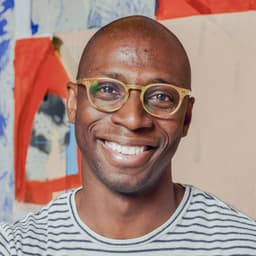
Michael Caton
Michael Caton, AIA, is an architect, technologist, and founder of Lumi, a pediatric behavioral health startup dedicated to supporting neurodivergent families with real-time, personalized behavioral guidance. A graduate of Pratt Institute, Michael’s multi-faceted career spans international project delivery in the UAE and Switzerland, civic leadership advocacy with AIA New York, enterprise workplace delivery at WeWork, and mass timber product development as the first design hire at Juno. Combining architectural expertise with full-stack software engineering, he is a passionate advocate for outcome-driven design and leveraging technology to strengthen human connections.
§ SHOW LINKS
/// THE PRACTICE LAB
Conversations are useful. Running the experiment is what changes the firm.
The Practice Lab is where architects test one real change a month, on their tools, their business model, or their own career, alongside peers running experiments of their own. Office hours most Tuesdays.
§ TRANSCRIPTRead the full episode transcript
A This episode of Practice Disrupted is brought to you by the American Institute of Steel Construction, AISC. The center's staff architects provide a curated collection of structural steel resources to help architects save time and money, reduce risk. Learn more at aisc.org/architecture. Welcome to Practice Disrupted, the podcast on the business of architecture and how it's changing. I'm your host, Evelyn Lee. FAIA, NOMA architect, angel investor, and founder of Practice of Architecture. Whether you're running a firm, starting your career, or rethinking what practice looks like, this show gets into how architects actually change the way they work. Hello, disruptors.
A Welcome back to this week's episode of Practice Disrupted. This isn't the usual story about an architect who found something else to do. Michael Caton found something else to be. He graduated from Pratt in 2008, into the worst hiring year the profession had seen in decades. His job offer in Italy was pulled a month before it started. He answered a late Sunday night email instead and ended up in Abu Dhabi, Doing construction administration on a hotel that sits on the Formula 1 track and had to be finished in 18 months. From there, it's Switzerland, then home to Brooklyn, then a stretch in practice. Somewhere in the middle of it, he joined AIA New York's first Civic Leadership Cohort.
A And one session on a global network of city resiliency officers changed how he thought about where architects actually sit in the room. That's what sent him to WeWork's enterprise team, then 5 years at Juno building mass timber housing. This year, he founded a company that has nothing to do with buildings. It's a pediatric behavioral health startup, and it came out of the hardest week he's had as a parent. Michael's older son is neurodivergent. Mine is too. That part of the conversation wasn't theoretical for me. Then he comes back around to the argument I think every firm leader should hear, his case for outcomes over outputs, and what he believes architects give up by talking about the drawing set instead of the transformation the client is actually buying.
A Let's get into it. Hi, Michael. Welcome to the show. Thank you so much for joining us on Practice Disrupted.
B Oh, thank you so much for having me.
A I think your path and where you've ended up is definitely one of the more interesting ones. And I would argue that it's one of the ones that you could say takes you further away from architecture and design in many ways. But I'm sure we'll find a way to loop that back because you are heavily engaged in the AIA, which is something that I also want to talk to you about. But before we jump in, why don't you start from the beginning and what made you so interested in pursuing architecture and design in the first place?
B Sure. Happy to, to go back. So, I was really an art kid, an artsy kid, and it kind of started in middle school as an art kid. And when I grew up in New York, I'm from Brooklyn, born and raised here. And when I was choosing a high school, I was applying to an art high school. And it was a funny moment where, uh, I remember being in a cab with my mom like driving to like this portfolio review and filling out the application on paper. And there was a checkbox, like 2 checkboxes on like, what, what did you wanna apply for or study for? And one box was architecture and the other box was commercial art. And I checked the architecture box and, you know, when I got into the school and, and I went to the High School of Art and Design in New York, yeah, I was an architecture major from, uh, the time I was a freshman.
B So that was like my initial exposure to the field. At my school, we were exposed to so many things, industrial design, computer graphics, all this kind of stuff.
A But architecture, that was where things If you had all this other exposure though, why stay within the built environment realm? Like, what held that interest? Sure.
B I mean, that's a funny story because that almost didn't happen. When I did switch majors one year in high school to computer graphics, funny enough though, I mean, those things are still very much intertwined in the architecture world. This is like a long time ago, but I remember getting my first exposure to like 3D Studio Max and 3D modeling. I mean, at this time I'm very much dating myself, but that's when like, when InDesign had like first emerged as a platform. I think before that there was this thing called QuarkXPress and I was part of this class and group of people who like learned all this stuff. And I remember having this gigantic Wacom tablet teaching other teachers at the school how to use InDesign and going to the Adobe headquarters, like the, what, this must have been the early 2000s to like learn this stuff. So, while architecture was still very much the core, being surrounded by all that stuff, I still very much like tapped into all that and Funny enough, when I did go on to pursue architecture in college, clearly, of course, like all those things came back together, right? The 3D modeling, the, uh, layout and, and all that kind of stuff with InDesign and all that jazz.
A Oh, at least you were using InDesign. I think we were only, we were stuck in the Photoshop mode, like Photoshop for everything. No one taught me InDesign until grad school. So.
B Gotcha. Yeah. I was in the right, right place at the right time for sure.
A Yes. So then you went on to, to Pratt. But then you left the States. Your experience went much more global. Can you talk about that decision?
B Yeah, sure. So it's kind of funny. In my— I had some phenomenal, phenomenal study abroad experiences during my time at Pratt. I mean, my time at Pratt was so formative to who I am as a professional and as a person. But I remember I'd studied abroad in China the first summer that they'd offered the program. That was— it would've been my 4th year. And then I also had studied abroad in Rome, which was a semester that totally changed my life in so many ways. But after that, coming back from my thesis year of my B.Arch, I remember coming, you know, maybe around mid-semester or so.
B I lived at home. I'm from Brooklyn and, you know, Pratt's in Brooklyn, and I lived at home while I was at school. But I remember one morning my mom like casually asking me like, so what are you thinking about doing like after school's over? And I was, I think it was ironing a shirt or something. And I very casually responded, oh, I'm gonna go work in another country. Like, as if I told her I was going to the supermarket, you know. And that was just like where my head was at after having those experiences in Asia and in Europe. I was like, oh, I definitely want to go and work abroad. And so in the last semester of school, you know, I was applying to firms across Europe primarily.
B Actually, I was hired by a firm in Italy, and that was what the game plan was for me as I graduated. But I graduated at a time of extreme economic volatility in 2008, heading into the, the global financial crisis. But, uh, my offer in Italy was rescinded maybe a month before I was supposed to start that summer. And by chance, I was working on some projects in the UAE with a professor of mine. And I remember coming home on a Sunday night, late one Sunday night, opening up my inbox and seeing an email from the— my then boss and former professor saying, hey, so this project that we were working on in Dubai is like moving forward and our partner architect wants me to send 1 or 2 people to, like, you know, to pursue this project, you know, who wants to go? And I think there were about 8 people on this email. I didn't even think twice. I immediately responded, yeah, I'll go. And, uh, yeah, that's how I ended up in, in the Middle East, which was, uh, the beginning of a really, you know, interesting kind of start to, to my career out of school.
A But then you made your way back to Europe. I'm assuming that was also intentional.
B Not as intentional maybe as it sounds. No, I lived in the UAE for 2 years. I got to work on some great projects. I got to do some CA work on In Abu Dhabi, there's a— the F1, like Abu Dhabi Grand Prix happens there. It's like the final race of the season. And this is a while back. But basically, I was also right place, right time. I was there when they basically needed to build this hotel that sits on the racetrack.
B The racetrack literally goes in between the hotel. But they had to build the entire building in 18 months. I just happened to be there, met some people who were working on the project. It was a New York firm that would— that had won the project. And yeah, I got to do some CA work there. I started teaching while I was there as well, which was another phenomenal experience. Yeah. But after my time in the UAE, I was ready to kind of move on.
B I ended up in Switzerland for a little bit, so I was still kind of like just moving around. Heading to Europe was, it was not as intentional as maybe as it seemed, but it was just more living the expat life and following opportunities. I did that for a bit before coming back home to New York.
A So what drove you back home after all this global experience?
B I realized after about 2 and a half years that the expat life was not for me. I was very much over my life being in 2 suitcases and a carry-on. And not only that, but thinking ahead toward licensure and kind of more capital A architect kind of a pathway. You can only accrue but so many experience hours outside of the US and all that kind of stuff. And so I felt at that time, for me, my head was at, okay, I'm gonna go back to New York and kind of do the more traditional architecture thing and Do all of my— I don't know if they still call it IDP. I think it's called AXP now, whatever it is. Yeah, yeah, exactly. To fulfill all of my hours and like go through the licensure process and all that kind of stuff.
B So that's where my head was at and just being more rooted. And for me, hey, New York City is home and I'm very blessed to call this place home. And so there's a lot of great work happening here.
A Okay, so now I have another question about licensure. Is that something that you always like knew in your head that you were going to pursue? Because I think I know plenty of individuals who've had various different experiences like you and they're doing just fine without licensure and they're just like Like at this point, why go back and try to accumulate the hours?
B Yeah, at that point in my career, I thought I would start my own firm at some point in time. You know, funny enough, probably about a decade ago, I thought like in the space even that I'm in now, before it was even the space, right? We were chatting a little bit about this before we started recording. I had this old beat-up garage in the back of my house and I thought like that's where it was going to start. I was going to get my license and, you know, be a sole practitioner and start my studio out of this space in my backyard, basically. And funny enough, like, now I do run a business out of this space, but it's just not a traditional firm. But, but that was where my head was at at the time, that licensure was a key input to that, to that pathway.
A I just, I just had to ask because I feel like there's some people that are like, at some point, I'm just like, not going to get licensed. And there's other people that have decided from the beginning, like, I'm going to get licensure. So I was just trying to figure out where, where you're falling along that. But you did find work back in the States. Do you want to talk to us a little bit about where you landed and the type of— I think more interestingly also kind of the type of work and how your role within firms have begun to evolve and maybe gotten more technologically dynamic?
B Sure. Yeah. Happy to connect those dots. I think it's actually more continuous than maybe it might seem on its face. So, You know, we spoke a little bit about Pratt and studying abroad, but my education there was deeply technologically rooted, I would say, right? I was there at a time when scripting and writing algorithms was really emerging. Parametric design was really kind of just becoming really a thing, and even getting weaving together computation and manufacturing and that kind of stuff had been a heavy part of my education. And so when I moved to the Middle East, and even finding myself working on this particular project in Abu Dhabi, and even in my teaching. Right? Technology was very much heavily embedded in all of that work, and leveraging technology to achieve really ambitious goals.
B So when I came back to New York after being in Europe for a little bit, I started working with some smaller practitioners who were working on, you know, various projects, but again, bringing that techno— technological, uh, expertise to kind of bear and kind of design synthesis. So this is also at, at a time where, let's say, kind of form follows building performance was very much like kind of a thing. And, and a lot of the, uh, environmental modeling was kind of really emerging and all that kind of stuff. So I was, I found myself working with some smaller practitioners on, you know, master planning projects or like office buildings that were looking to be more environmentally responsive and that kind of stuff into different parts of the world, but from New York. Uh, and that's kind of where things kind of started rolling for me when I came back, uh, stateside. Uh, and then I joined this firm called Studio B Architecture in, in New York. And that was probably the first, let's say, call it small to like midsize firm that, that I was with, where we were doing a range of projects from adaptive reuse, master planning, retail, and kind of stuff like that. But even in that context, still leveraging technology, I was still, you know, doing all this advanced modeling and writing scripts and things like that to kind of push work forward.
B And so, the tech— technology thread had started, you know, in my education, continued across multiple continents. And, uh, even when I came back to New York.
A I would love to get your understanding, or I'd love to get your perspective on how much agency then you have kind of as an early technologist, or maybe an, you know, somebody that's a little bit earlier on working in these firms, were you trying to identify firms that were more technology forward than, than most? Because I do feel that people who are coming in doing the scripting, like either they are valued by the design team to create something tangible out of the designs that are coming out, or they're on the flip side seen as IT help. Right, the help desk. But in either case, they're not necessarily given, I would say, full agency of the ability to really unleash all their technical capabilities within the firm to move things further along faster.
B Yeah, I have some strong opinions about that. But for myself, what I would say is I would describe myself as a very reluctant technologist, you know, even despite everything I just laid out. Because for me, what was always, like, more important or more interesting was the application, the why, like, why did— why would this technology be useful for some goal, some aim? So, that actually, I think, increased my own kind of personal agency. I wasn't just infatuated with the technology for technology's sake of, like, look, hey, look at this kind of cool thing we can do, disconnected from, let's say, some kind of objective or aim that we may have had as a team or something like that. I think that gets a lot of folks into trouble. To your question about agency in many practices where the vision might be a bit too narrow, and that is focusing really on technological application, whereas it's not kind of broadening the lens to, right, the ripple effects and how it impacts either team goals, client goals, business goals, and that kind of stuff, which I think is where one can obtain way more agency in leveraging those technologies to pursue those objectives. But that's certainly something that I learned over time.
A I mean, you were working for a number of big firms throughout your tenure, Adage Associates, Enyad, you mentioned Studio V too. Why did you ultimately leave traditional practice and go into a company like WeWork? Granted, I think there was a lot of interest around WeWork too at the time when that initial move happened.
B You know, it's funny that there's some interesting bookends here because I went to WeWork in 2018, but my first encounter with WeWork and working with them was in 2013 while I was with Studio V, actually.
A Oh, really?
B Yes, very early WeWork days. And so funny enough, there was this competition in New York, let's say one of the last remaining kind of big neighborhoods that was available for kind of rezoning and densification, particularly was in kind of the Lower East Side kind of neighborhood, this place called Seward Park. Anyway, long story short, there was this like 2 million square foot redevelopment competition. And while I was at Studio V, we were working with a big developer in New York and they had brought in WeWork because WeWork had this at the time kind of secret idea about kind of co-living, right? And what would become kind of—
A They actually revisited that later on too. Yeah. Wow. Okay. I had no idea.
B Absolutely. Yes. So this was way back in 2013, back when it was very hush-hush and WeWork was just really emerging. But they were part of our team going after this 2 million square foot redevelopment project. So anyhow, that was then, we didn't win. Another firm, Shop Architects, won, and that whole neighborhood has been transformed already. But a lot of things happened in between. I went to more technology explicit roles at larger firms and practices for a time, again, very reluctantly in all sincerity, but that afforded me the headroom and the bandwidth really to really dedicate myself to buckling down and handling licensure and all that kind of stuff.
B That's when I got LEED certified. That's when I knocked out all of my exams. And so that's really kind of was what I was doing while I was in those more technology-focused roles. But again, I was always drawn to what is the application of this technology? What does it enable us to achieve? You know, not just for myself as an individual, but for us as a team on behalf of our clients, and also ultimately for us as a business. And so that was very much The itch that I had. And given that itch, I was increasingly frustrated with this growing belief that I had that there were conversations that happened way upstream of the actual project, right? That architectural expertise and just perspective or kind of a way of seeing the world would be very beneficial in setting the table for whatever project came kind of downstream. And I'd felt, rightly or wrongly at the time, that, like, there weren't enough architects that were engaged, like, in that conversation. So, I was involved in some programs and things, the most important of which being the Civic Leadership Program that was started at AIA New York.
B I was part of the first cohort of civic leaders that were brought into this program. And essentially, what it was, was largely self-taught. We worked in teams, but we essentially explored our civic interests. Together as a cohort of 10 folks, some around resiliency, some around community engagement, which is what I was very much focused on. But while this was all in the soup at the time, I had this kind of sense like, oh, like, there are definitely conversations that we should be part of that we're not. And then I was in this program on the side at AI New York. And I had an experience there that totally changed my career, where one of my colleagues in that program, they had put together a development session, as we called them, on resiliency. And they had invited this woman who was a leader at this organization at the time called 100 Resilient Cities, which was a global initiative that was supported by the Rockefeller Foundation.
B And essentially, they were looking at the topic of resiliency, which of course, like architects and urban designers and planners, we think about these things all the time, but they were thinking about resiliency both at the level of the built environment, economic mobility, educational attainment, so many different kinds of layers, but then also thinking about it from a policy perspective. And they were looking to create a network of resiliency leaders that would essentially be installed in 100 global cities. So places like Lisbon, Bogotá, Barcelona, New York, and they would work with local municipalities. And they created this role of the Chief Resiliency Officer, whose role was to kind of coordinate and think about, like, resiliency across these different dimensions, like, in that city. But they were part of this network of 100 other CROs Right? Like in this global network. So how can you kind of like take lessons from different cities? And it just blew my mind, like how these folks were thinking about these challenges at a global scale, how they were thinking about it in this kind of structured, layered way, and how to really leverage these roles and this network to drive this change. I had never seen anything like this. And that just absolutely took the top off, you know, for me in terms of Thinking about impact scale, and all of that was coming together at the time when I, in a very happenstance way, was introduced to WeWork.
B And that was my entry point into like that world and ultimately the tech world more broadly.
A There's 2 paths you're kind of talking, and they seem a little bit divergent, right? I mean, it is interesting that WeWork had this like co-housing idea, you know, that it was toying around with in its infancy. But I don't know if like the social responsibility and resiliency and design is necessarily related to what WeWork was building? How does that thread together for you?
B Oh, I'm so glad you, you phrased that question in, in that way. Because I feel like this is where, like, having that internal perspective at WeWork is really helpful in that if you really boil it down, right, what was WeWork creating? That we created office space, right? But at the same time, going to WeWork, there was a— that was my first exposure to what truly felt like a mission-driven organization operating at like a hyperscale. Oh yeah, it was, you know, that slogan, do what you love, work to make a life, not just a living. That stuff permeated the organization, you know, however many thousands of people were there. And for me personally, when I worked on the enterprise team at WeWork, and basically what that means is there were, let's call it Fortune 1000 companies who were very excited by what was happening at WeWorks in terms of the energy, the atmosphere, the vibrancy, how people were kind of collaborating and working in those spaces. But they weren't going to move, you know, hundreds of their employees like into like a coworking space. So they hired WeWork to essentially, I'll say like WeWorkify spaces on their behalf there. And so we were this fully integrated team, MEP engineering, ICT engineering, interior design, lighting design, construction management, operations, all this kind of stuff, all working together from the very beginning to deliver these workspaces for these enterprise customers.
B And not only that, but we We're oftentimes like working with the WeWork product. So, like having this kind of productized kit of parts way of thinking about space and typologies and all this kind of stuff. So, and all the technological advancements that kind of can come with that there. So, to the point about, you know, kind of meaning and resiliency and all those kind of more noble things, even with these enterprise clients that we had, maybe I can, maybe I can't name them at this point, but— Yeah, this is now a long time ago, but on those opening days, when those employees were coming to this transformed workspace, right, from drab gray cubicles, or where the perimeter of the entire space was primarily private offices, and the spaces where the majority of folks were working were like on the darker interior or like lit artificially, where we were totally inverted that kind of thinking and creating what we call these like centers of social gravity in workspaces, all that kind of stuff. I saw with my own two eyes, right, the impact that that had on people when they came to work. And so, while there's like the larger, you know, meta-narrative and, you know, the whole kind of startup story and all that kind of stuff, from the inside, A, the way we were working felt deeply purposeful and innovative. But then, B, when we were delivering spaces one at a time, or however many, when people showed up, oh, we could feel the transformation that they had experienced by taking a dramatically different approach to how they thought about A quick thanks to our partner, the American Institute of Steel Construction, AISC Architecture Center.
A It takes a huge amount of time and energy to create an elegant structural system, but as an architect, where do you start? With the diagrams and terms architects need to express their design intent. Find resources and inspiration at aisc.org/architecture or contact the team The question I'm drawn to now, honestly, is I feel like so many architects want to embolden their culture with that feeling, right? We are creating transformational spaces, but it never permeates the culture. I don't know if you have any thoughts on kind of why that is. I'm kind of mulling it around in my head now that you've just brought this all up, and I don't know if it has to do with the fact that I know how quickly we work with Delivering spaces, and you are probably getting to see the reactions on the very visceral reactions on a more regular basis than like the turnover of a 5-year, uh, a project and kind of what it, what it takes, the toll it takes on the client from start to beginning. I don't know, might be more of a sign, like a, a sign of relief when it's finally over. But I'm just trying to think about why that, like why that is and if it has anything to do with scale of delivery.
B Yeah. Yeah, I think it definitely has something to do with delivery, both in the process by which a project's developed and ultimately, you know, its ongoing life. And I'll expand on this a little bit with the story of like the very first project I worked on when I joined WeWork for this super large bank. They were creating like a, let's call it a secondary kind of HQ space. But on our team at WeWork, we were fully integrated soup to nuts, right? So I remember we had gone to the site somewhere near Hudson Yards in New York on a Friday morning. Whole team goes down there, we look at the space, et cetera. I was the lead architect on the project. I think through some concepts and some things on the weekend.
B But Monday, the very first thing I did, the very first person I spoke to was our director of operations. And we spoke through the operational programming of the space and kind of what we were thinking. And I'd gone straight to the end, like what happens after the space is turned over and the life that it has. As the starting position for that. And that really informed how, at least from a layout perspective and conceptual perspective, I was thinking about how we use these components to kind of shape the space. But what was even more powerful about that experience was, I mentioned we went to visit the site on the previous Friday. Monday, the first conversation I had was with our director of operations. By that Friday, so 7 full days, 5 working days, We had a, let's call it a fully developed budgeted proposal done that we took back to that bank, right? And it was informed by operational concepts and details and how, and how that informs the design, all other considerations around MVP engineering, you know, for that kind of space.
B Cost, it was, you know, working with our cost manager and, and, and how she was thinking about those things, all in sync. It was remarkable to be able to turn that around, but to start at the end, right? Beyond the turnover of the space and kind of the life that it will live and fold that into the very, very, very beginning, right, of the design process. And so, that kind of thinking about, not that architects don't do this, but the way we were working, the speed at which we could work, and the fact that those operational professionals were just like on our team, right? Just allowed us to think in a more holistic and kind of deeper way about those things, like from the very, very, very beginning.
A You went from WeWork to Juno. Talk to me a little bit about Juno. And obviously, there were things that were happening at WeWork that might've prompted a move, but I don't know if there's any other considerations that you were making when you made that jump from— it's a company that, like, you're still very kind of excited to talk about and the impact that it has had on your career.
B Sure. Yeah. So, WeWork had its own kind of, like, crazy crisis moment, right, in This is around 2020. I mean, there are movies, books, several documentaries about this, but, you know, things were contracting in some pretty major ways at WeWork around that time. But when thinking about like what I wanted to do next, you know, I had a few different options ahead of me, thankfully. And, you know, one of those, one of those opportunities was to join this upstart startup. I mean, it was very, very early days at Juno. I was the first person that was hired on their design team.
B So, it's just like totally different from the WeWork experience. I was at WeWork very much in the hyperscaler kind of moment. But being at a 0-to-1 startup is a very, very, very different experience. Nonetheless, for me, what drew me to Juno was, again, mission, right? I spoke a bit before about how WeWork very much was a mission-driven organization, and that mission orientation definitely permeated what we did outside and inside of the buildings. And when it came to Juno, right, we were focusing on this intersection of the housing accessibility crisis and the climate crisis, and this belief that, you know, if we can bring a more scalable housing solution to those things, that, you know, we would enable— help to enable communities and cities to thrive. And what I love about startups, period, and again, the dots are easier to connect looking backwards. Going through this going forward, it was very much intuitive, but looking backwards, you have this rare opportunity to live in the future for a period of time. I like to think of like startups are basically temporary things, right? There's some hypothesis about how the world can operate.
B And, you know, basically the island that you're on today, the island of the status quo, you— if you are compelling enough, I'd say you can attract people like with you on the shores of this island to say, hey, there's this vision of like how the world can be across this ocean that's worth us trying to get there, right? And that's team members, co-founders, investors, you know, early partners, you know, early customers, you name it, right? You're on some shore saying, hey, there's something on the other side of this water that like we are we're going after. We work this whole kind of philosophy around community and workplace at Juno, looking at these challenges around sustainability and housing accessibility. But once you join that journey, it's your job as a team to build the bridge between the shores that you were standing on and that future. And so as part of that endeavor, you get to live in the future for a period of time. And it just constrains you and pushes and pushes you in ways to see and find all of the counterintuitive gaps that you didn't realize existed in that future. But regardless, even having a shot on goal, having the opportunity to pursue that, to be inventive, to build the pieces of this metaphorical bridge, right? Whether you get to that destination or not, that as an experience, that as a pursuit teaches you so much and forges what has been for me, like, among the most amazing professional relationships that I've ever had, working with great people, trying to do something wild and ambitious, you know, for reasons that we feel are good for the world if we are successful. Yeah. And so, At the beginning, right, when Juno was just like this idea and things were, were very, very early, I was very much motivated by that prospect.
B And so, I had joined the team and then proceeded to, to be part of that journey for close to about 5 years.
A What were some of the biggest lessons that came out of, of that experience, or, or some of the moments that you really kind of hold onto? You, you mentioned the relationships. It was obviously a very mission, like, driven company from Externally, I think, you know, I mentioned that it might be harder to see that within WeWork, but Juno is very much like an external, a mission-driven company externally as well. Were there any big lessons learned or, or even unexpected things that happened along the way that really stood up in this transition to the startup world?
B Sure. Yeah. I think trying to build more sustainable housing at scale absolutely led to some counterintuitive lessons. that it's often the unexpected things that kind of ding you in trying to get things over the line. So for instance, let's say we believe in a vision of the world where we have abundant mass timber or, you know, fully electrified buildings being built in, I don't know, 1 to 2 years max per project, maybe even faster. And these things are popping up and they're beautiful and they're vibrant and housing is plentiful and accessible. in urban centers around the country. So let's say we believe that in order for that to happen, right? Sure.
B There needs to be some, likely some productized way of thinking about buildings, some supply chain that enables that to happen. But some of the things that are counterintuitive to that vision of the world being true are things like new models for insuring buildings, for example. So mass timber projects are increasingly becoming more and more common. Codes are changing to allow for taller and taller mass timber buildings. Uh, but as architects, designers, product people, we can spend a lot of time focusing on things that we frankly control, like hard costs and like, how are we designing a product and like trying to get those costs down? But we might not recognize that because this is the, I don't know, first or second mass timber building in a certain like city or jurisdiction, right? How the risk of ensuring that project is priced is Let's say you take a real hit just because you're early. Whether or not that risk is accurately priced is kind of irrelevant. It's just the fact that you're early, therefore we don't have—
A You're first.
B Yeah, you're first. Exactly. We don't have enough data points to maybe more accurately price that risk, therefore we need to put a premium on it. And so, as much focus as one might put on, say, the hard cost, which you still need to do, there are going to be unforeseen things that come up just for the sake of, like, doing things in new ways. Now, that— those are some lessons that I lived up close and personal. I think one of the big benefits of going through startup journeys and living in those futures for a time is that hopefully folks go on to create the solutions that plug those gaps for the next wave of people that come after them, right? So that when the next wave of housing startups who are looking to vertically integrate and build buildings, when they're looking to ensure their buildings that are being built in new ways, like there is a solution that kind of plugs in that's not middle-of-the-bell-curve insurance solutions that can help them at least mitigate like that problem. And there are many of them like that, but they're just counterintuitive. And also even the recognition that the instruments by which we finance and insure buildings, those were inventions by people, right? Therefore, if we're going to build in new ways, right, we can also invent new ways of doing that, right? But we need to know what the challenges are and the opportunities are, right, to drive the invention of those different instruments.
B So that's kind of why I bring that specific one up. Well, on the flip side, one big lesson of my Juno days is the importance of really falling in love with the problem and not your solution as being like really, really, really important. For a lot of startups in the built environment kind of world, things take— still take a long time to come to fruition. Building anything like just takes time. At the same time, I think it's really important to recognize that the Intuition that a certain problem is deep and meaningful to push on is usually accurate, but there are going to be many, many, many, many, many iterations and U-turns or left turns or just redirections to get to a solution that meets the market where you need to at, like, at the stage that you're at as a business. At Juno, I would say we designed a phenomenal product. And maybe it kind of overshot where we were at the stage that we were at. And so we needed to kind of be more flexible on the product to buy ourselves the time to kind of get more reps, to kind of get to what the ultimate vision was.
B And so for me, as a startup person, as now as a founder, I try to hold that lesson pretty close to me, right? And that while the vision needs to be clear, right, the pathway there, we should be very open and flexible to like how we get there. So like, you just Allow the problem to be the North Star and be just super flexible on the means by which you bring to market an effective solution to that problem.
A I feel like that's inherent to who you are though. If I like think about the previous conversations and how you apply technology as not technology for technology's sake. So, it's interesting that that thinking again, like comes back around in a new way and that you've kind of refocused, especially as you've moved into your own startup. Why don't you talk to us a little bit about your startup, and then we can talk about what, what that transition is like from Juno, which is clearly still within the built environment, to how Lumi arguably sits outside of AEC altogether.
B At the beginning of the year, I founded a startup called Lumi. It's a pediatric behavioral health startup. It has nothing to do with the built environment at all and is primarily focused on supporting neurodivergent families with day-to-day support for their behavioral objectives. Now, you know, how that comes about really starts with my own kind of journey as a parent, really. So maybe you're picking up on, like, throughout the different threads of this conversation that I'm personally attracted to kind of very hard and difficult problems, whether it's being part of a project that needs to go from first shoveling the ground to being open in 18 months, or many of the other kind of pursuits that we just talked about. And alongside all of that, right, I was going through my own kind of parenting journey. And I have 2 sons, and my older son is neurodivergent. I was experiencing, like, some of the most challenging circumstances that I've ever navigated in my life.
B And this is despite me kind of putting in what I would consider to be like the work to try to make progress on these things. We're doing all the things that we were recommended by the different professionals in our lives and working with those professionals, every single book that we were recommended. I read them at least once, highlighted the relevant passages to have those things handy as references. And I had a specific experience where I was working with my son on like a particular kind of writing assignment he had for the summer while we were out of the country. And something that felt like it should have taken a couple of days really turned into like the most painful week of my life and probably the most painful week of like both of our lives of trying to work through writing a few postcards. is the details of that story. And I found myself, you know, by the 4th day of us trying to work through these postcards, just outside of the house where we were, in tears, because I didn't know what else to do. And as you can imagine, as you just said, right, that my own disposition around, oh, like, not technology just for technology's sake, and how do you kind of be flexible and how you approach things? You're absolutely right in that assessment in terms of like how I operate.
B And so, you can imagine for me, as a parent, like in those circumstances, okay, is it not this book? Is it not this chapter? I'm flexing the Rubik's Cube Constantly trying to figure out a way, and it's just not working. And I was devastated. I was truly, truly deeply devastated and went searching for what I felt I needed in that moment was some real-time kind of contextualized kind of like support. That's the language that I have for it today. But essentially, like, there were these books that had these assessments that I had done that had you know, guidance that should be helpful for us. I was desperately under stress trying to find those things, reread those things, understand how to translate those things to us in this moment. It just wasn't fast enough. And I just felt like I desperately felt like that was needed and it didn't exist.
B So I'm still working in the PropTech world throughout all of this, but that level of pain that I had felt, to my previous point about falling in love or falling in love with the problem, not the solution. I had never felt anything like that before. And I knew from that moment that there is no way I'm on an island feeling or experiencing this. And yeah, so that was the beginning of following my own pain and recognizing that there's probably a lot of people in the world who feel the same thing. And they probably need the same help that I was looking for. And that was the journey of beginning to build some prototypes to kind of test some hypotheses around like, how could the world operate? Or what could the world look like if this real-time contextualized guidance for neurodivergent families did exist that was responsive to the unique individuals in a family that did kind of grow and evolve with the family based on what was working versus what didn't at any point in time. And those are the seeds for what became what is now Loomi.
A So I want to dig a little bit deeper on this tough subject because Aidan is on the spectrum. He's neurodivergent as well. And there's definitely been those moments where we pulled up To, you know, an event and he's fine. And then all of a sudden, for whatever reason, he just like curls up in a little ball and he becomes immobile and we don't know how to move him. But just for, for individuals who might not have experienced firsthand kind of what you're, what you are describing, can you maybe describe the angst as like a parent who is both struggling because you want to help your child, but also frustrated?
B Yeah.
A Because you'd have no idea how to help your child, but also just like the inherent pain that comes from that moment. I mean, you said it was just like the worst you've ever kind of felt and you held that, but I don't know if everyone understands kind of the complexity of what you were dealing with in the moment in time. And I just want to make sure they do.
B Sure. Yeah, no, I really appreciate that prompt. I think there are a couple of layers to it. First, I think when it comes to parenting in general, rightly or wrongly, I think as folks become parents, there's some imagined pathway of like what things can and may look like, right? Largely pattern recognition, but I think that there's some idea in our heads there. And if a family doesn't have experience with neurodivergence or certain kinds of special needs, once those needs become apparent, whatever bubble we had in our heads about what that road was going to look like, gets burst and it's gone. And certainly I'll speak for my own family personally. In the absence of that vision or that very loose, gauzy vision of what the path might look like, once that goes dark, what often floods that space mentally is a lot of fear and anxiety because you just don't know what to expect. And now, speaking with families around the world, this experience I've found to be very common.
B And not only that, but we are talking about this in a fairly public way. But this is also like often very, very, very private. So there's this emptiness of, well, what comes next? Then there's also the private nature of dealing with this. Therefore, you're not just talking to your colleagues or, you know, your neighbor about, you know, these kinds of things. And so there's the isolation of it. And all of it points to a very heavy, solitary experience of trying to figure out what you as a family are going to do next, which is extremely hard in and of itself. So once you even get past that point to find the people to talk to, to understand like where to even start looking for support and things of that nature, right? Then you're kind of on a pathway, but that in and of itself is just like so, so, so hard. But on the flip side, just because you found supports does not mean that the challenges go away.
B And so I'll speak specifically to the more of the context around the, the, the moment that I described. So my son is neurodivergent. He Has one condition. We'll also see, like, also has a writing disorder. And this is important to the story, which is why I bring up that particular condition, because aware of his writing disorder, he was assigned a summer homework assignment to write some postcards to his friends back in New York while we were abroad. So we have explored so many different supports and books and all kinds of approaches and strategies around, like, this topic, among other topics there. I'm talking, you know, 2 years into all of this, right? This is not early in our journey. We're, like, several years deep.
B And so when it came time to write these postcards, I thought I had learned enough that we'd done enough that where we can get through this, not that it's going to be easy, but that we can get through this. And what proceeded to happen and why this was so painful is that the process just— even hate to use the word just— the process simply didn't move. My son would sit at the table with a postcard in front of him for 30 minutes, an hour, 2 hours, like, and not a word on the card. Now, for me, seeing this, thinking— I'm thinking through, oh, we just spent 2 years, like, you've been working with this, like, tutor for the last 2 years, like, we've gone to this, like, therapist, I've, like, read these, like, dozen books. I'm meanwhile looking over all this other stuff in these books in real time, like, trying to figure out, like, why isn't this moving? And that's not a neutral place to be in as a parent, right? There's a lot of anxiety, there's a lot of confusion, there's a lot of frustration. So clearly, like, even in that moment, like, our dynamic is not necessarily a positive one either. Like, hey, like, what's, what's, what's going on? And so, and that is just like snowballing day over day over day. And so by the 4th day, we'd made some progress, but it was very slow.
B It's like swimming through molasses. And that's where I broke down. Like, wow, we are everyone, my son included. We're all putting in so much work. And yet this is still seemingly like impossibly difficult. And I realized something important. Again, having more tools at our disposal now, my family, we use the product on a daily basis. But I learned that how we support our children, that who we are as people matters a lot in terms of how we support our children and what's likely going to be easier or difficult.
B And I don't mean that in any kind of universal sense or even in a family sense, but down to the person-to-person connection. And what our product helped me understand was certain strengths that I have that color the way I communicate, that color what my unexpressed expectations may be, that frankly just becomes like the water in the air that we swim in, swim in and breathe at home, can easily just tap into the areas where my son struggles the most, which only exacerbates that disconnect of like, why isn't this working? Because it's just kind of what, for any one of us, just seems natural. So even that first step of having the awareness of yourself and another individual and where those tripwires are, frankly, it's just been transformative for like how we interact. And I don't think it would be an understatement to say that it has absolutely saved my relationship with my son for sure. You know, so we spoke a little bit about, you know, my own parenting journey and how painful certain moments were and my recognition that there must be many other parents kind of feeling similar, dealing with similar challenges. Something that occurred to me like in that moment was that a lot of the different supports that my family had engaged in, and also lots of families at this point that I've spoken to have engaged in, really treat these challenges that emerge fundamentally as single, what I'll call single-player challenges, right? There is an individual, who has some condition which will bring with it some gaps or challenges that they're going to have. Therefore, we're going to undertake certain exercises or things to help that person kind of close those gaps as best as we can so that they can operate effectively, like, in the world. However, a lot of the symptoms or the ways that these things really— these challenges really show up in life are fundamentally multiplayer in their nature.
B You know, whether that's a child in the classroom working with a teacher, Or, you know, a parent, you know, doing something with their child. It's rarely a single-player issue. And the capacities of those individuals, right, what their strengths are that can be leveraged, what are the growth areas that need appropriate scaffolding, that applies just as much to us as it does to anybody else. And that was something that I really learned in that moment with the postcards and the struggle with the struggles that we were feeling there. And ultimately, Even the first prototypes that really began to show some real promise for us in that it was just as much about understanding myself as much as it was about understanding my son and that helping people to understand one another better, understand how to, again, leverage their shared strengths, but also effectively scaffold just by approach, right? The areas where folks struggle can help people, right? In this case, we're talking about parents and children. But just to help a group of people discover, right, the approaches and ways that work more effectively for them. And that's kind of fundamentally what, what Lumi is rooted in, that every individual, right, as they go through life needs to kind of discover, right, the approaches to things that work for them in life. And Lumi is fundamentally kind of an engine, right, that helps families kind of discover those adaptations, build on them.
B Of course, they're going to evolve over time because children are growing and evolving, right? Things that worked when they were 6 are probably not going to work when they're 8. nor when they're, when they're 12, but to have this intelligence that is like supporting a family and growing with them over time. Because ultimately those children, right, go on to become, you know, young adults that kind of go out into the world. You know, early on in the founding of Loomi, you know, I thought about frankly how much human potential is lost to the disconnects that happen between folks who are just wired differently, right? And how those disconnects that occur on a daily basis, you know, in different environments, home, school, elsewhere, socially, how all of those create this, what I would say is frankly a vicious cycle of becoming overly self-critical or overly aware of one's gaps as opposed to one's superpowers, right? And how that just creates more and more headwinds to someone's sense of belief of like what they can achieve. And with Loomi, I fundamentally wanted to support families to change that dynamic, to have a tool, real-time support that helps them to, yeah, just find alternative pathways, right, that are better matched to how folks are wired, to get more wins on the board, to have more reasons, if even if they were needed, to give hugs and high fives, to celebrate the progress that is very real, but in challenging circumstances can often be very difficult to see and appreciate, and how that creates a much more virtuous growth cycle for all of these brilliant humans who have so much to give to the world.
A Thank you, Michael, for sharing that. And then I've had a lot of conversations with different types of communities, both that are seen, easier to see and not see, and those that have felt in isolation. And I have a really deep appreciation for the interesting use that technology is— ways that technology is being implemented to Rebuild or build stronger human connections, which I think is an interesting flip for technology and one that isn't often talked about. But I do wanna move to the technology side of this conversation. You are a technology-enabled architect for all intents and purposes, but you're not a software developer, but you are an ambitious person who likes sticky problems. So, how do you find yourself? As like the CEO, what were your next steps? Who do you partner with? How did you transition from that into like a fully fledged company with a lot of interested people on building a product that has obviously already changed your life?
B Yeah, no, great question. I think it requires us to take a step back to Juno, actually. So, and maybe even a little bit to WeWork. So while at WeWork, my role was very much focused on architecture, recruitment, staffing, all that kind of stuff, more capital A architecture in nature, even in that context. And when I joined the team at Juno, my role was very much focused on building tools and software to support underwriting, design, construction administration, supply chain management, right? developing buildings with this product-based approach to the built environment. And so, I've been building tools and software at Juno. Now, while there though, as I began to get deeper and deeper into building more and more robust software systems, one's education can never really stop. And so, during that time, right, while working at Juno, I'd also then kind of gone through an intensive full-stack software engineering bootcamp Oh, wow.
B Yeah. So, I had done that while I was at Juno as well, just to— there's a lot of things that you learn being self-taught, but then feeling that, okay, as these systems get more robust and kind of what we're building being more kind of production-grade stuff, to ensure that, like, I had a really solid foundation, right, of kind of full-stack engineering. So, I was doing that as well while I was at Juno. So, coming into building Lumi, that foundation for me is, like, is very much set. in that I have a deeper understanding of those things, which also just allowed me to, to do more, to, to test more. Uh, you know, my family, I say that we're, we're very much, uh, we are the guinea pigs for sure. I would, uh, literally, I'll come down here often early in the mornings, build a feature or something, and, you know, then it's at 6:30 when my kids get up, you know, we're using that to get ready to get out of the door in the morning. So, and I'm getting that feedback very, very quickly, and so can kind of have that iterative cycle.
B Work in that way. Still though, there's a lot more to it than just the kind of raw kind of engineering, right? I think, and I think I began to, I alluded to this earlier in our conversation where we were speaking about some of the lack of agency that a lot of technology-focused folks may feel in traditional practice, right? In that the technology's kind of one piece, right? But there are kind of goals and objectives that, that sits within. And even the attainment of those goals and objectives kind of sit within the context of a business and business model and larger impact. And this is something that I've harped on for quite a few years now, that if there's one thing I would love for architects to focus on more, it would be outcomes over outputs. And that might feel a bit crass to some folks, but in that we do focus on outcomes. But, you know, we talk so much about the drawing set or even like the building as an artifact, when every client that commissions an architect to design anything, whether that is renovating their bathroom or building a multimillion-dollar institutional building, you know, on a campus is seeking some kind of transformation in their life or in the lives of their teams and organizations or the customers that they may serve in the case of, say, like students or something like that. There is some transformation that people are seeking, and the artifact of the building is, or whatever you're designing, is an output that is contributing to some outcome that is leading to some impact that someone is Looking to achieve. And I feel like we are at our best when we focus much, much, much more on the impact and outcome end of that spectrum and scale, recognizing, of course, that there are the tangible things that we make, the artifacts of architecture that we make, that, that is an input to that.
B But if we really focus on those outcomes and that impact through the eyes of that client, those users in, in, in very deep ways, that makes the work that we create all the more powerful. I think that gives architects tremendous more leverage in terms of communicating or understanding the value that that has to the people that we work for. And so many other tentacles of things that we often spend a lot of time talking about in, in this industry, fees and all that kind of jazz. Hi, disruptors.
A Thank you for joining us on this episode of Practice Disrupted. Want more of this between episodes? Start with Practice Rebuilt, our weekly newsletter on the business of architecture at practiceofarchitecture.com/newsletter. And when you're ready to stop reading about change and start testing it in your own firm, get on the list for The Lab at practiceofarchitecture.com/lab. We'll see you next week for a new conversation. On change in the profession.
§ TOPICS
Career PathsEntrepreneurshipTechnology & ToolsPractice Innovation
§ MORE EPISODES YOU MAY LIKE


/// THE WEEKLY READ