
/// PRACTICE DISRUPTED

How can architects use copywriting techniques to communicate their value, connect with their ideal clients, and improve their marketing?
On this episode of Practice Disrupted, I’m excited to share my very special conversation with Nikita Morell, an expert copywriter who specializes in working with architects. She is also the founder of Architects WordShop: an online shop dedicated to helping architects with their words. In this episode, Nikita discusses the importance of effectively communicating our ideas and embracing our humanity as architects and shares advice for crafting copy to help you market your value as an architect.
First, Nikita explains the science and art behind copywriting and emphasizes the need for intentional, research-based writing tailored to your ideal client. She also shares tips on making architecture copy more accessible to a broader audience by replacing heavy jargon with conversational words and phrases.
Then, Nikita highlights her approach to copywriting, focusing on tone of voice and audience connection. She also encourages architects to work collaboratively with the copywriting community and learn exactly how to prompt AI tools and use them as a starting point for specific copy.
A good way just to start is to really take a step back and just make your copy a little bit more conversational. Try and remove some of that jargon. A lot of architects, when they don’t really know what they’re trying to say, sometimes hide behind a little bit of jargon that makes them sound smart. – Nikita Morell
To wrap up the episode, Nikita offers you an opportunity to work with her in person and gives a sneak peek at her proven framework for gathering, utilizing, and optimizing a client testimonial.
Tune in next week for an episode about the future of technology within the architecture, engineering, and construction industry.
Nikita Morell
Nikita Morell is a copywriter for only architects. She is also the founder of Architects WordShop: an online shop dedicated to helping architects with their words.
Nikita specializes in making architecture websites sound more human, less robot—so architects can get a steady stream of ridiculously good projects. Nikita analyzed 663 architecture websites, you can see the results on her website.
§ GUEST
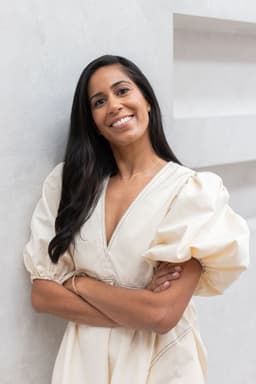
Nikita Morell
Nikita Morell
Nikita Morell is a copywriter for only architects. She is also the founder of Architects WordShop: an online shop dedicated to helping architects with their words.
Nikita specializes in making architecture websites sound more human, less robot—so architects can get a steady stream of ridiculously good projects. Nikita analyzed 663 architecture websites, you can see the results on her website.
§ SHOW LINKS
§ CONTINUE LEARNING
/// THE PRACTICE LAB
Conversations are useful. Running the experiment is what changes the firm.
The Practice Lab is where architects test one real change a month, on their tools, their business model, or their own career, alongside peers running experiments of their own. Office hours most Tuesdays.
§ TRANSCRIPTRead the full episode transcript
A Welcome to Practice Disrupted, a podcast where we find ways to create new solutions to current challenges while elevating the value of architects. I'm your host, Evelyn Lee, an architect who spans tech as an angel investor, start up advisor, and founder of Practice of Architecture. Whether you're a seasoned architect or just starting in the field, this podcast is your gateway to think differently about the role architects play within our global community. Hello, disruptors. Welcome back to the show. I have a treat for you today because this guest is someone that I've been trying to find a way to work directly with for a while now, and I hope this isn't the last time we're working together. So Nikkita Morel is a copywriter. And get this, she only works for architects.
A So for those of you who believe that there are no individuals or consultants in these types of roles that understand us, that's definitely not true. Nikita is also the founder of Architects Wordshop, a shop dedicated to helping architects with their words. But before you tune out on what she has to say, I wanna start by saying this. Copywriting is actually a true science that requires understanding of human psychology and persuasion techniques. And I would even take that a little step further and argue that techniques you learn for copywriting can even be used in kind of how you approach everyday conversation when it comes to persuasion and getting people to understand your value and the services that you're trying to sell as an architect. So we will discuss all of this and more right now. Nikkita, welcome to the show.
B Thank you so much for having me. I'm really excited to be here and to, be chatting with you.
A Yes. And thank you for spanning the many time zones. This is something we do every once in a while, but you are not in the US. You are in Australia. Right? Yeah.
B That's correct. In Sydney, Australia. So down under.
A It's so just for reference, where are your clients typically located?
B Yes. So these days I would say almost like 85 to 90% are based, internationally with charge in US dollars now, not even Aussie dollars. So, definitely a sign that I've become quite international.
A Yeah. We'll talk at the end of the show about an opportunity to potentially meet you in person over in the US. I'm very excited about that. But why don't we kick it off by, you know, we always ask people to tell us a little something unique about them. So is there anything maybe that your listeners wouldn't find in your bio or even on other podcast shows that you might be able to share with us?
B Yes. So a bit of a fun fact about me is when I'm not weaving words, I actually am weaving on my Japanese floor loom. So I'm a bit of a a weaver and it is a hobby. Maybe one day it can become a little bit more but yeah. I create artworks and I just find the whole process of weaving it's very complimentary I guess to what I do professionally. It's a great way for me just to switch off. It's quite meditative and it's also frustrating and also humbling the whole process of, you know, warping a loom and and creating fabric. So it's a great way for me to switch off.
B I've got, 3 kids under 6, so it's a it's a nice way for me just to have a bit of me time as well.
A That's a I think we've been talking on and off for many years now, and I never knew that I never knew that you were a weaver. So I think I think that also speaks to kind of design and and aesthetics though and an artist's eye around your copywriting as well. So thank you for sharing. Before we jump into it, in your own words, how do you define copywriting? You know, when architects are like like, what is what is copywriting? How how would you define it?
B Sure. So in its very basic basic essence, I would say copywriting is writing to connect and sell with your audience. It's very strategic and I often say it's not even writing, but it's assembling. So it's assembling words to prompt the reader, which I often refer to as your ideal client to take some sort of action. So it's not design writing. It's not journalism, design journalism. It's very different. As you mentioned before, Evelyn, it's underpinned by psychology, by marketing, and by sales.
B So as you said, it is a science but it's also an art because, well, I believe it, requires a bit of creativity. It requires you to be able to tell stories, to really distill big ideas into punchy, you know, copy. And I always tell my architecture clients, you don't need lots and lots of words. You just need the right words. So it's really making sure that every word is intentional and that there it's underpinned by research, which ties into that science behind it because it does need to be tested, is based in research, and of course, as I mentioned that psychology element to it as well.
A So I know you mentioned, like, marketing, sales, and business development, and I feel like copywriting is most often looped under marketing, for instance, when, you know, when it comes to a website or something like that. How would you say that copywriting is different from those functions or or even integrates with those functions?
B Sure. So, yeah, I wouldn't say look, it is obviously different because it's like a different, you know, it's a different task you're doing. Copywriting is different. But what I would say in a way it is, like, its relationship to marketing is that copywriting is a critical component of many marketing efforts. Right? So think about everything from your website to your submission documents to presentations to social media captions to even emails that you're writing to potential sponsors or something or collaborators. All of that is copy. That is all, you know, going back to what I said earlier copywriting is writing to connect and to sell. And, yeah, when it comes to your marketing efforts copy really does underpin.
B Like every time you think about when you need to put words down that is copywriting, so that's copy. And I guess it's it also informs business development in the same way. Right? You know, you need to write scripts to pitch to clients or if you've got a presentation you need to think about the the headings and the subheadings, like, it's all very strategic and that is, yeah, essentially how copywriting fits in to the bigger picture is that it is a critical component that you need to do whether whether you like it or not. I always tell architects they're like, oh, but, you know, do I really need, like, do I I don't really write copy. I said, yeah. Like, it's all through. Like, every time you sit down and write, that is copy. So it's really changing your mindset and realizing how, you know, it really does, weave throughout your different workflow and daily tasks.
A Yeah. No. That's interesting. I was because I'm just thinking through my time at Slack and the fact that I often share in our presentations how our brand voice carries through down to our update notes. And I and I usually juxtapose even Google or Amazon's update notes against Slack's update notes. And Slacks are always like, hey. We saw you were having a problem with x. We went ahead and fixed that.
A It should be done, you know, it should be fixed now. And Google's update notes are like, repatch security node 2.51j, you know, working again or something like that. And I I guess I didn't even realize to the extent that, like, that's copy. Right? That's your brand voice carrying through to everything that you do.
B Exactly. And I think you bring out a really good point. So, you know, how before I said copywriting is connecting. Well, a huge part of being able to connect with people is to really, you know, resonate with them and make them feel and and when I say them I mean like the reader or the audience, your ideal client, but it's making them feel seen and heard and understood in a way that perhaps have never felt before. So tone of voice is huge and I have done actually a lot of study in the last year on tone of voice because I feel that a lot of architecture practices, you know, they've got these beautiful designs, they look different but they all sound the same. So tone of voice is really how your practice or your firm sounds and I think it's a huge missing piece that a lot of architects perhaps aren't thinking about, but really they should because the way you sound is such a good way, and a really underused way to stand out from all the other architecture firms out there and to really be memorable. You know, the design sales cycle it's so long it's not like, you know, other services or you know the dentist or whatever where you just book in and you go like, people could be looking for an architect now or they could just be doing their research or they need to, you know, they're waiting 2 years. So it's really important for architects to find a way to keep their firm top of mind and memorable so that when that ideal client is ready to hire a firm, you know, boom they're the first to mind.
A Yeah. I guess, and I know that you've studied a ton of websites, but I when I think about the language that architects tend to use, we're very verbose, but we also sound a lot alike. So how do you go about kind of identifying what's that brand voice for an individual firm that makes it a little distinct and unique from, you know, the competitor down the street.
B Yeah. Look. There's different levels of what you can do. Obviously, you know, I can hire a consultant and they can give you, like, fresh objective perspective on someone like myself could come in and say, look, this is what I recommend. Like, really with tone of voice it has to be quite authentic and it has to come from within. My job as a copywriter would be to uncover it rather than to kind of impose it because it has to be, as you said, consistent. So it, you know, there has to be guidelines around it. But otherwise, you know, a good way just to start is to really kind of take a step back and just make it a little bit more conversational.
B Write like how you speak. Try and remove some of that jargon and sometimes and look not all the time but a lot of architects when they don't really know what they're trying to say they sometimes hide behind a little bit of jargon, you know, it just makes them sound smart. So I've seen that on on a few occasions that they don't really know what they wanna be saying or how they should be saying and they're worried about what their peers are thinking. So they think, oh, just, you know, I sold this on someone else's website and this and they kind of just, you know, Frankenstein it together and then they just put it on their own website. So I really do recommend, you know, again it goes back to your firm, like, the brand of your firm and think what's our personality? And then I often recommend you just pick like 3 adjectives, I don't know. Yeah. Friendly informative and approachable or something and you just keep those words in mind as you're writing your copy. But look, it isn't it isn't easy and I'm not saying it is.
B It is can be quite tricky especially if you haven't done it before. But, yeah, there's lots of people out there to help you. So yeah.
A So what do we do well as a as a profession when it comes to to copywriting? Do do we do anything well?
B Yeah. I think one thing you do well and and this is I think it maybe stems look, I'm I'm not an architect, but I think it stems a lot from your design school, kind of education but I do really I often come across some really strong project descriptions. I think steel architects are very visual creatures, if I can say that, but you definitely when you're describing your projects, you come at it from what you can see visually. I always tell architects why don't you, weave in a few more senses like what does the space smell like or what does the materials feel like? You know, just to kind of create that word painting but definitely do I I've seen some great examples of project descriptions that really describe the space and then again I always say to clients just go that step further and really showcase your design thinking and rather than just saying this is the space, this is what we did, kind of really pull backs on the layers and say, well, this is why we did what we did. We were trying to make the brief this way, etcetera. So, yeah, that's mean how you can improve it. But, yeah, I think overall architects are pretty good at that.
A I do think maybe this might be an interesting point of view, but maybe we are so good at that only because so much of our marketing jargon that we tend to put together on projects and how we are descriptive of our projects is because we take, for instance, our submission to the design awards, and then that's the same kind of paragraph that ends up on our website when describing a project. Are there any other things that we should be thinking about when we're talking more to an external audience versus talking amongst our ourselves for things like a design award?
B Yes. So you bring up some very important points. So my biggest pet peeves is the whole cut and copy, and I get it. You know, your time, Paul, the last thing you have time for is to rewrite something that you've already kind of got text for. But as you just said Evelyn, like you are writing for a different audience. It's just like for example, if you're writing to, you know, a judge, you know, if you've got an awards submission, the judge is looking for different things than an ideal client would be, right? The judge you're trying to impress the judge whereas an ideal client you're trying to build that trust and credibility. So you definitely always need to be, you know, you don't have to do a whole rewrite but you really need to be thinking of who you're writing to and that is a huge part of copywriting and almost like at the very center of copywriting is, as before we were saying that science part is really researching your ideal client. So for example, if a client comes to me, I will never write a word of copy until I've interviewed 3 or 3 to 5 of their clients because I wanna see what kind of words they're using.
B You know, the what words are, for example, a residential ideal client, like how they're describing their dream home, like, and you see patterns, emerge and then once you find that language, you can weave that language back into your copy so that new ideal client reads it and goes, oh, that's exactly what I want. These guys really get me.' So that's that's a big part of copywriting is writing for your ideal client.
A So you also mentioned, and what I love about you, and I know some architects may not necessarily like this about you, and we can talk about that too, is that you you don't have a background in architecture and design, but somehow you've woven your way to this career journey where you're primarily focused on architects. So I'd love to go a little bit deeper into your background and understand why you decided to work with such a difficult group of individuals in in the first place.
B Well, look, I'll be honest. I, you know, I started kind of in big brand marketing, like, with L'Oreal, and then I actually, quite early on in my career, went into architecture publishing. So that's kind of where I fell in love with all things architecture and design. And I remember I even tried doing like a diploma in interior design just for fun as a hobby just to see what it was like to draft and I think at that point I realized, you know what? I just don't have what it takes. Like, I honestly have so much respect for architects and I actually think that's where, you know, my that's kind of where my career has gone to. Like, I worked in house in an architecture firm as, a comms and marketing manager. And then from there, I've started my own consultancy around, like, 9 years ago now, but it just blows me away. Like, if I'm being completely honest, like the way architects can, like, see things in their mind and then just kind of bring them to life.
B I I just don't have those skills and I so I've thought, you know, what's the next best thing is to really, I guess, you know, look at what my skills are and see how I could apply that to the architecture industry. And and to be honest, getting that first hand experience of of working in house in architecture practice really it was it was quite a large firm so I got to meet lots of the principals and I just felt like I could be helping so many smaller firms with what I was doing. So that's kind of what made me take the jump. You're right. And it's come a long way, you know, with things like, you know, your podcast and and there's so many more kind of archimarketers out there but in those early days, like even architects had never heard of copywriting or they didn't really know where it fit in, and so it has been a bit of an uphill battle, but I feel like it's getting it's getting better. So yeah.
A If you don't follow Nikkita on LinkedIn, you should. We'll make sure that you post your LinkedIn bio in the show notes. But, you know, you and I have both taken criticism very openly about kind of our connection to the field. So what do you have to say to the naysayers who are like, you don't really understand what we do even though you work in house. You're you're not an architect. And and how do you talk to them about why your perspective is so important?
B Yes. So, look, just rewinding, like, I've yeah. I've been called an outsider, an intruder, and look, that's fine. Look, but I think I mean, what keeps me going is that I'm bringing a fresh objective opinion to the industry. You know, I feel like I haven't gone to design school, which is, yeah, maybe some would say it's the Spanish, but I also think that just means I'm not, you you know, I don't have those same kind of preconceived ideas. So I can come at at it from a a totally different angle. And really like at the end of the day I, you know, had one architect say, why would I take advice from you? You're not an architect. And I said, well, you know, is your lawyer an architect? Is your doctor an architect? You know copywriting is copywriting and especially now that I've had you know almost 10 years experience working solely with architecture firms I feel like I've got a good handle of the industry maybe not, you know, from the inside but I definitely understand when it comes to language, when it comes to copywriting marketing.
B Yeah. I can apply my knowledge onto these firms. So I don't know. I don't wanna get defensive about it, but I I fully admit I'm not not an architect in any way. So yeah.
A No. I no. I mean, I appreciate how open and forthright you you are about that. But I also I also struggle with individuals within the industry that don't see the opportunity in kind of expanding what we we know. We're not experts in copywriting, but to say that only somebody who has a background in architecture can be a true expert in copywriting, I think, is just a missed opportunity for for all of us. And I imagine that I would hope that there's enough people out there in the industry that are more forward thinking and open that you have plenty of clients coming clients coming your way.
B I was just going to say, yeah, definitely. And as I think, yeah, the years go by, I think these younger generation and even, you know, some of the older, they're definitely a lot more open minded, and they're looking outside the architecture industry for kind of marketing inspiration as well. I think it can be a bit of an echo chamber sometimes.
A I think that's a good LinkedIn post. We should both jot that down, the echo chamber that is architecture. I think when you think about adding things like like marketing, business development, it all becomes really daunting as, like, a small or medium sized business. Are you working with small and medium sized businesses too?
B Yeah. So I've I've, like, I guess, structured my services because I really do wanna help, I guess, as many architects as possible. And I'm fully aware that, you know, some of the solo practitioners, they don't have the budget to hire a copywriter. And I I don't think that's fair that they don't get access, you know, to resources just because they're at that, you know, kind of establishing phase. So I've got the Architect's Workshop which has toolkits which are pretty affordable, which is at least a good starting point. And then I've got site smart, which is my 6 week course, which I help architects, like the medium sized, as you just said, it's kind of like, me helping them get their website done in 6 weeks. And then of course I've got my 1 on 1, which are for the, you know, they've got a bigger budget, but yeah, I definitely feel that every architect there's no excuse, like, everyone should have access even if it's to free resources, which I've got up there as well on my website, like, everyone should at least get the basic knowledge and then go from there.
A So architects, I think, are, you know, we talk about the joy of architecture being this continuous learning, this profession where we're continuously learning about new products, services, how to deliver buildings. How does a copywriter continue to develop? What does a professional development look like for you? Do you really see a lot of, like, new things coming out with respect to copywriting?
B Sure. So last year, for example, I touched on before, I I've been doing a lot of, I guess, extra study. So last year, I really wanted to dive deep on psychology. So I did a course on, yeah, copywriting psychology. So pretty much, you know, learning things like, for example, how people see numbers. Like when you write 1 comma 0 for 1,000 versus just 1 k how that is perceived different in the human mind, you know, one feels bigger so you know when you're trying to amp up the number you write it in a certain way. It's a little, you know, little kind of tricks and things like that that psychology was really that course is really good. Again another professional development kind of thing I've done is on tone of voice.
B So there is a quite a large copywriting community and from that a lot of people, you know, offer courses just like any type of industry. But that's one thing I've definitely found and I'm trying to really, I guess, apply to the architecture industry is that this copywriting industry is very collaborative. Everyone shares. You don't really hold things to your chest, you know, you'll share how much you charge for things and you'll share your swipe files if you come across good copy. Whereas I feel sometimes and it's getting better but with the architecture industry there's still a bit of, I guess, fear around really openly sharing resources. So I don't know, that could just be my perspective and I could be completely wrong. But yeah.
A I think you're perfect in making that assessment. I worked for a firm once where they had all of our guests sign an NDA before they came into the office. But I think it just went to this mindset that, you know, we don't want anyone copying us to any degree. And I've had friends that worked in firms where project managers won't even share details their detail libraries with with one another. So I unfortunately, I feel like some of that was built in from from the competitive nature of studio when we were in school. I feel like that's starting to change a little bit now. I think, you know, studio is being a lot more collaborative too. But that's, that is definitely one thing that I have struggled with even in my move to tech and how much secrecy is in tech to get ahead, but also how much they share collaboratively to get ahead, honestly.
A So one of the things that earlier or towards the end of last year, you actually offered a course on AI and copywriting. And I feel like this is something that architects would say that ChatGPT can can do. What's your personal take on AI and what it means for your job, and how you would approach it from a from a firm owner perspective when it comes, you know, to rewriting copy on a website?
B I honestly Chat GPT, admittedly, when I first heard of it, I was like, oh, that's it, my job. I'm no longer required, but that's why, you know, once I've been using it, you know, since last March, really, as soon as it came out and I've really realized, like, how powerful it can be in terms of just giving people a starting point. But the biggest thing is is you need to know how to prompt it, you know, and I'm I'm sure people who are listening to this have heard this before but that's what really motivated me to create that, ChatGPT masterclass was to show architects like how you can use it to research your ideal clients. You know, for example, you could say what are some objections architects, ideal clients of architects may have and, you know, use those objections then in your website copy or you get your website copy, the existing website copy, you know, put it in and say make this more focused on the ideal client, you know, replace kind of the me centric with, you and speak directly or you can tighten it up or you know put subheadings in. There's just so much you can do especially now you can put images in and get captions. So it's really I wanted to give architects the confidence to at least give it a go and try and find ways they can really, you know, weave it into their work flow because it cuts down so much time. And, you know, I'm a huge it's like a it's like with any tool. Right? It's it's whose hands it's in and it's how you use it.
B So I definitely would never recommend just cutting and copying whatever it spits out. No way. But, yeah. It does give you a good starting point and it's good to, you know, brainstorm ideas like metaphors or analogies, create some hilarious ones about passive house, you know. So so, like, it it can be quite fun. It also can be a bit of a time suck, but, yeah, I really encourage architects to give it a go.
A You talked about, Joan, of your online workshops. Like, last year was you did some stuff on chat GPT. That, of course, is continuing to evolve. So now you have this workshop coming up and and march on testimonials. How do you decide, like, what what do architects really need and decide to build a whole course around that?
B Yeah. So in all honesty, like, for example, this testimonial, it's called testimonial in 1 hour, and that has taken me, even though it's a a 1 hour ish course, it's taken me, like, over 2 years to create. So I'm very Oh, wow. Intentional about how it's structured. I make sure, you know, it's 1 hour. I cut out all the fluff. I know that architects are time poor. I know you don't have time.
B But what it really is, it's just based on the exact process that I've been using for years years. And I it's like it's proven to work because I've done it a 1000000 times, I've gotten results from it so I feel very confident in saying, okay, here's my framework on how to ask for a testimonial, you know, without being awkward. You know, here's a script. Here are the questions you need to be asking your clients and then, here's how you turn that into a really solid testimonial to go, you know, on your website or your award submission or whatever. So it does feel sometimes like it's very niche and it is just one little thing but I really feel that some of these little things can have a huge impact and can really that could be the could be the thing that makes an ideal client choose you versus a competitor. It can win new clients.
A So for those of you who are listening, who are really interested in all of the resources that Nikkita is talking about, she has so many wonderful resources on her website. I suggest you go look at them. For those of you who are in the US and want to get to meet Nikkita in person, we mentioned at the top of the show that you will be coming in person to the US. So so when is that gonna happen?
B Yes. So I've been invited to speak at the National AIA Conference in June. So I think it's from 5th to 8th, I think, from memory. That'll be in Washington, DC, and I am so excited. I this has been my business goal for years years. So, yeah, very excited. And and if anyone who's listening to this, is also attending, please please connect with me on LinkedIn because, yeah, we'd love to meet more architects face to face.
A Hi, disruptors. Thank you for joining us today on an episode of Practice Disrupted. If you like the content for today's show, you can find all of our past episodes over on practice of architecture.com/podcast. Be a part of the conversation by joining me, our speakers, and other disruptors in our community at practice of architecture.com/community. Our social media handle is practice of arch. That's practice of a r c h. We'd love to hear from you, so feel free to drop us a DM and say hello. Tune in next week for a new conversation on change in the profession.
§ TOPICS
Marketing & GrowthAI & Automation
§ MORE EPISODES YOU MAY LIKE


/// THE WEEKLY READ