
/// PRACTICE DISRUPTED

How can architects thrive within the future of architecture by embracing the professional business development aspects of the practice?
Welcome to Season 9 of Practice Disrupted! In this episode, we are joined by Aya Shlachter, the CEO and owner of MGS Global Group and the host of the “Architect My Business” podcast, where she provides valuable insights for small businesses in the architecture industry. Today, our conversation is focused on various business-related issues within architecture firms and strategies for addressing these effectively so architects can thrive and develop stronger management practices for the future of architecture.
First, Aya and Evelyn dive into the role of education in the future of architecture and how schools can equip new architects with necessary skills. Evelyn explains why firms should adapt their business models to support the nuanced teachings in schools. We touch on the need for schools to provide more resources to students to support the growing influence of delivering beyond the buildings.
Then, we discuss integrating freelancers into firms and the recent shift to the gig economy within the workforce, expanding on aspects such as healthcare, freelancers versus fractional employees, and how this trend allows for more flexibility within the industry. Evelyn also shares potential solutions for the lack of professional development in business for architects outside of firms.
Architects are aware of their weaknesses in business management. Despite this awareness, there’s still a gap in addressing issues effectively. So, for architects to thrive, they need to develop stronger business strategies and management practices. I always say architects were taught how to master their craft but not taught how to run or grow a business. – Aya Shlachter
To wrap up the conversation, Aya and Evelyn address AI’s impact on the future of architecture. Evelyn also opens up about her decision to become a full-time business owner and reflects on the growth of the Practice Disrupted community.
Tune in next week for an episode about the future leaders of AIA’s Firm of the Year Award Winner, Quinn Evans.
Aya Shlachter
Aya is the CEO and owner of MGS Global Group, a female minority-owned business providing full-service architecture support to the AEC industry. She has impressively expanded the company from a solo operation to a thriving firm with 50 plus employees , serving hundreds of clients, including publicly traded and Fortune 500 companies.
§ GUEST
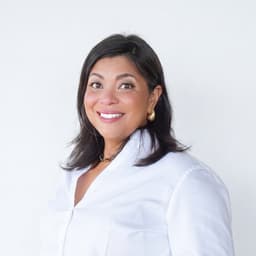
Aya Shlachter
Aya Shlachter
Aya is the CEO and owner of MGS Global Group, a female minority-owned business providing full-service architecture support to the AEC industry. She has impressively expanded the company from a solo operation to a thriving firm with 50 plus employees , serving hundreds of clients, including publicly traded and Fortune 500 companies.
§ SHOW LINKS
§ CONTINUE LEARNING
/// THE PRACTICE LAB
Conversations are useful. Running the experiment is what changes the firm.
The Practice Lab is where architects test one real change a month, on their tools, their business model, or their own career, alongside peers running experiments of their own. Office hours most Tuesdays.
§ TRANSCRIPTRead the full episode transcript
A Welcome to Practice Disrupted, a podcast where we find ways to create new solutions to current challenges while elevating the value of architects. I'm your host, Evelyn Lee, an architect who spans tech as an angel investor, start up advisor, and founder of Practice of Architecture. Whether you're a seasoned architect or just starting in the field, this podcast is your gateway to think differently about the role architects play within our global community. Hello, disruptors. Welcome to season 9 of Practice Disrupted. For this season opener, I'm bringing on longtime LinkedIn friend, Ayesh Lachter, to discuss some of the more controversial posts I've been posting to LinkedIn about architecture practice, but really to have a meaningful conversation on the future of practice. For those of you who don't know who she is, Aya is a CEO and owner of MSG Global Group, a female minority owned business providing full service architecture support to the AEC industry. She has impressively expanded the company from a solo operation to a thriving firm with 50 plus employees, serving 100 of clients, including publicly traded and Fortune 500 companies.
A Podcasting has been a transformative force in Aya's life and business. As the host of the Architect My Business podcast, she offers valuable insights for small businesses in the architecture industry to succeed. Aya is a keynote speaker addressing topics such as business growth, marketing, personal brand, and operations within the architecture sector. And that's also one of the reasons we get along so well. Aya earned a master's degree in architecture and urban design from Columbia University Jersey Institute of Technology. I is a wife and mother of 2 beyond work. She's into traveling, open water swimming, finding the best matcha cafes, and spending time outdoors. Hi, Aya.
A Welcome to the show. Thank you so much for joining me to open up season 9.
B Hi, Evelyn. Thanks so much for inviting me to your show, and I'm thrilled to be here and launch season 9 with you.
A It's been I think we've been talking back and forth about finding more ways to connect with each other and to work with each other. So I'm just so glad that we were able to make this work, especially with you in the Philippines.
B Yeah. It's it's, you know, it's part of my life. I travel so much. But first of all, I wanted to congratulate you on season 9, and you have a 160 episodes. That's a huge milestone for any podcaster because I have a podcast. I'm in maybe episode 70, but I don't know if you know the statistic. There are over 5,000,000 active podcasts globally, and only, I think, 20% go beyond 7 episodes. So, you know, people just pod fade.
A Well, you're in that 80% too. You said you were up to 70. So congrats on your pod you also have multiple podcasts, I feel.
B Yeah. It is. It's one major podcast, and I have, like, 2, mini shows. 1 for Her Space, Women in Architecture, and the other one isn't asking me anything. But I have a question because I'm, you know, I'm really fascinated by all of your the things you're doing because you've done a 160. I'm not gonna ask you, one particular episode. But what are what sticks out to you in the 160 episodes and guests that you've, you know, interviewed? What is the most memorable?
A Oh, I mean, there have been so many. It's really hard to play favorites, and it's also like you know, there there was a transition that happened right between season 7 and season 8 where Janine went and decided to do her own thing, which I continue to say is a break and not like a she, she has an open invitation to come back to the podcast. But there have been a lot of guests. It's funny because Janine and I would both reach out to our networks to get guests and there's there We would talk about some guests and we'd be like, really? Do you wanna bring them on practice disrupted? But there's been some guests where, you know, I didn't know what to expect out of the conversation because Janine was bringing them on and they've been like really insightful and surprising. And then there's guests that I bring on and, you know, I expect the conversation to go one way and it and it goes an entirely new way. But we recently started this series with the firm of the year award winners, the AIA firm of the year award winners, where we don't ask for the firm principles to come on. And it's been really fun because we ask for them to send us the next generation leadership and try to understand what it means to them as the next generation of the firm as leaders for their firm to have won firm of the year. And I think it, you know, it raises up the profile of more of the firm members because principles are always celebrated.
A But what about those that are coming and behind them?
B I think that's such a great idea to empower the next generation and give them a voice in in the profession. So as you look forward to season 9, what are the some themes or topics you're excited to explore this season?
A Yeah. So one of the benefits of not having Janine is that she didn't like bulk recording. And for my own sanity, I feel like I have to do some so bulk recording just means get one more guest in to, like, maintain our schedule, and we would, like, be, like, calling around to all of our friends to see who can jump in on an episode the next day. I'm trying to avoid a little bit of that with my hectic schedule. So we've already recorded almost half the season, and I think the audience made it clear that I over indexed on technology last year or last season and a little bit on AI. So we're bringing it back to firms and firm owners and bringing on some firms that are doing really unique things. Just last week, I finished a episode with a CEO of Luckett and Farley out of Kentucky. And the CEO isn't an architect, but he's running A and E firm.
A And I feel like that's really unusual in our field. So we talked about his journey and why he made that decision, but also the challenges that he faces with being a non architect operating within this industry. So things like that, we have Quinn Evans, future leaders on. We are touching on some of the startups there that I think may be a little bit disruptive to the industry. So we have the founders of Hyarch on to talk about what affordable housing looks like and how they're helping delivering more housing that is market rates to more people. But they're working with developers. They're working with home builders. So things things like that.
B That's great. I I agree that, you know, I listen to a lot of your podcasts, and a lot of it is very tech heavy. And I'm I learn a lot. I'm not in the tech space, so I have to, like, research what is she talking about. But it's good, though. Noted. Noted
A to future guests. Yes.
B Yeah. But but, you know, like, when we were talking about this episode, and I asked you what would our topics be because you're you talk about AI and LLMs and all the things. I had to research the the glossary. And I know from the last episode, you're creating a glossary of AI terms. But when we talked about our episode today, you mentioned we can go over all of the things that you posted on LinkedIn. And I never miss your LinkedIn post because I live on LinkedIn, so I'm like, yay. It's not AI related. Although, I feel like I have one AI related question because it's
A That's fine. That's fine.
B Really important. But I think it will be a great opportunity to address all of the curiosities you have sparked in, LinkedIn posts. There's certain posts that have, like, 229 comments.
A So Lately. Lately. It's taken off. It's just funny because the people that usually post to LinkedIn were like, what happened to the algorithm? The algorithm's dead. And then a few landed, surprisingly. But they're not new, right? And I think you can, you know this, Aya, because you're on LinkedIn, but like you could post the same thing 5 different times, and it just doesn't it just lands differently for some reason all of a sudden. Yeah. I've never had anything go, quote, unquote, viral, I don't think.
B I think 229 comments is viral. Right? Like, before I get around
A I think I think half of those comments are my replies to their comments.
B I'm lucky if I have, like, 5. That means you really, you know, you really have a huge following, which is obviously I'm not surprised because you're Evelyn Lee.
A Oh. Anyway No.
B The the first thing I wanna talk about is the topic on architecture schools. Schools are creating the architects of the future, but architecture firms are causing them to leave. Right? It's always exciting to talk about the future of architecture, especially when we're talking about innovation and making the industry better. And a lot of this starts with education. It's the foundation that shapes how we see and approach architecture. So architecture schools are creating, like, the architects of the future, but I wanna give you a little bit of background about my architecture school experience. I went to NJIT. It's a state school in New Jersey, extremely technical, and I was like, oh god.
B This is so boring and so technical because I was doing wall sections and all that. Right? I wanted to design cool things, you know, but then it there was a balance because NJIT is highly technical. And then I went to Columbia University for my master's, and that was a whole different contrast. I'm like, what are these people talking about?
A You know? So So so why did you choose Columbia?
B Because I did architecture and urban design. I had a great urban design program. So my goal after grad school was to come back to the Philippines and work on urban housing. Mhmm. And, you know, but I got married so to an American. So but but that was the thing. Right? Like like in in NJIT, it's hard. I mean, obviously, we do.
B It depends on the professor, but NJIT is very technical. I learned a lot of technical stuff, but Colombia is the extreme. Right? So what do you think are the main reasons for the disconnect between architecture schools and, like, what the firms expect from the graduates?
A Oh, yeah. I I mean so to be fair on LinkedIn, in order for you to get somebody's attention on LinkedIn, and this is true of any post, you kind of have to put something up that you know some people are going to disagree with. Just just to start having the conversation. So, you know, not to say, like, there are wonderful firms out there, right? And we've had those wonderful firms on the show. Architects Fora consistently comes to mind when it comes to how they run a very progressive firm in a in a remote environment, do it doing sustainable multifamily affordable multifamily housing. So my biggest complaints though, or I guess my biggest criticism, or what I was trying to be aware of is I think the most valuable thing that I personally learn in architecture and where we bring the most value to the table for our clients is on, like, is during, you know, SDs and DDs, right? It's it's applying that design thinking, like helping our clients articulate the problem and beginning to work towards the solution for them, and that's where they get the most value, but firms find the highest value in graduates off of actually graduates that come from NJIT. I think they they firms want graduates who know how to detail a wall section. And I know you didn't wanna go into AI and technology, but I feel like of all of the work that we're doing, that area of doing details is is one area that is that a computer can actually learn an algorithm to say this needs to be a fire, it's a bathroom or it's a kitchen so it needs to be a rated wall of this, you know, this section needs to include this or it needs to be waterproofed like that.
A That's that's an algorithm that you can type into a computer that a computer can learn. What they can't learn is the nuances between translating a human between identifying a human problem and translating that into a working program and floor plan and how that looks aesthetically and contextually within the neighborhood. That's a much harder algorithm to develop. So so I think that the schools are doing what we need to do to train the architects of the future. I think that firms and the business models they are stuck in are reverse incentivized to spend a long time on construction documentation even though that's not necessarily where the client gets the most value. And because of that, I mean, that's kind of the impetus of the the post. So my goal with the practice of architecture and and, you know, this is to really bring firms along more in this way of thinking and where we get the most where we deliver the most value and then how do we find business models that support us delivering on that. So that's that was the crux of the whole post.
A It went every which direction. Right? I think there's somebody on there talking about titling. There's somebody on there talking about, like, remote work out of nowhere. Like, it it went in every which direction, but, like, that was, like, that was the crux. Yes. That was the crux of the post.
B Anyway, also, I wanted to briefly touch on the topic of educating the graduates. Right? Like, right now, I subscribe to the AIA newsletter, and recently, they talk about the AIA 2024 consensus construction forecast. Right? And then the all the new projects coming in are data centers and manufacturing. So I think, you know, one of the things that we can educate our graduates or the professors perhaps is to manage the expectations of the new graduates that, hey. Based on the consensus reports and the architecture billing index, when you graduate, these are, like, majority of what the firms are building.
A The work the work is in manufacturing and
B Data centers.
A I know. But I also think that if we think bigger and we are able to have conversations beyond buildings, then our work will expand. Right? Like, you and I have talked about this and I think about how architects get pulled too late, like brought in too late, right? And Yeah. Before the decision process is made. So it's like, how do we get ahead of the decision making process? So when the ABI is down, you know, our clients are talking to us about doing things outside of buildings, but it could be related to their real estate projects. But we we're still in the conversation and we still have a relationship with them where we're actually bringing in money that goes beyond just delivering the building. And then, and then there's there's more excitement for people coming out of schools beyond manufacturing and and data centers. Well, we'll point to the ABI.
A I mean, we'll point to the ABI buildings index in the show notes. But, yeah, I mean, that was that was just like, man like, the only thing on the upswing is manufacturing and and data centers. Yeah.
B And I was talking to Joanne Liu about it because she she works in what is that firm? It's an AI firm. TestFit. TestFit. She's you know, that's they do a lot of the manufacturing plants and site plants. I'm like, wow. Anyway, that's where the future is, you know, in manufacturing, warehousing, data centers. So, I mean, it's schools should really share all this information and or incur I mean, you know what? People are smart. They can be resourceful and read, like, all the things that they're really interested in.
B Right? So, yeah, that that was interesting to see because I'm in in, you know, architecture support. So I need to know where, you know, the new markets because residential is kind of down right now, right, because of high interest rates. So I need to be in touch with all over, you know, like, what's going on, not only in the US, but globally. Evelyn, I don't know if you know this, but I travel quite a bit. I was just in Australia for the institute last year because I also really wanna know what's going on. And, you know, maybe one day you can come when when after all the things next year. I don't know what I mean, you can
A come I can come to Ohio. Like, let me know when you're back in Ohio.
B Yeah. Oh, there's a huge conference and marketing AI conference. It's one of the biggest. I'll share that later after, you know, this conversation, but it's in September, I think. So, yeah, I I really enjoyed that topic about schools because when I moved to the US and went to NJIT, I was really kinda disappointed that I was doing wall sections. But in in retrospect, right now, my business in is is in production.
A I was gonna say a lot of your business relies on your ability to, like It's just a blessing.
B How do
A I how do I automate this? Yes.
B Yeah. Yeah. Yeah. So the next topic that I wanna talk about is integrating freelancers in teams in the firms. About 35 to 40% of the global workforce will be independent workers in 2025. That's huge. That is. Yeah.
B Yeah. That's that's you know? I I don't even know what to think about that. When you say global, like, the entire world. Right? Like, all over, like, US.
A I mean Yeah. So that was a statistic that I pulled from an HBR, so, Harvard Business Review article, but it was taken from additional research. So the interesting thing is I think there's been talks right on and off about how the gig economy will affect, could potentially affect it. And I think people were like, whatever. The gig economy is not going anywhere, and it's really low skilled labor, like, because because the first time around when we were talking about this, we were talking about the Uber drivers or, you know, the DoorDash delivery people. Like, people were like, that was the quote unquote gig economy. But now there's a lot more people out there that are looking to that are that are actually not satisfied with the 9 to 5 or, like, working for somebody else, and they want the freedom and flexibility in their schedule and to kinda create the life that they want. And I see a lot of middle managers or even more skilled people leaving to go and start their own consulting firms or or to become professional coaches or even, you see this happening a lot in tech is where they they go deep deeper into an expertise, and then there's actually tech firms that bring them on, these experts on, for very specific project work because because they're so good in what they do, there's no way they could afford to bring them on full time, but you could definitely afford to bring them on for a project.
A So so the, you know, the gig revolute, or like the the gig worker is now this, like, highly skilled professional that people are bringing in just to help with certain aspects of the business or just to, like, help bring out one project. So I wanted to actually, like, put some statistics behind this. So so this was a Gartner report that predicted that the independent workers will make up 35 to 40% of the global workforce by 2025, which is next year. The interesting thing about that is they said Upwork did a study. So Upwork did a study in December 2023 of 3,000 professionals and put the number at 38% or roughly 64,000,000. And they said, of these, 1 third were earning more than a 150,000 a year. So imagine all these fresh architecture students going out in the world saying I can do something else and earn a 150 year. But it it it spans all markets.
A So computer programming, marketing, tech, health care, finance. They said that 52% of Gen Z workers and 43% of millennials are are freelancers and were or were freelancers in 2023. So that's why they think in the next year.
B Yeah. I have an in interesting thought about that since I'm very plugged into what's going on all over the world, especially in Asia and, you know, developing countries. You know, the global, the 35 to 40% of the global workforce is actually helping the economy of the developing countries because now we have access to better jobs. So it's not just the US that's that's benefiting from this, especially during COVID when the world opened up. So so I have a friend here who has a an outsourcing company and they've they're focusing on tech. Right? They do they're programmers. Before, they were they were able to give market rate Philippine rates to their programmers. But now after COVID, their programmers are leaving because they can work for US companies.
B And in in the Philippines and in Asia, when I was living here, like, 20, 30 years ago, people didn't have couldn't travel, you know, couldn't go abroad. Now, like, the the rise of the middle class in in a global economy is good. People, Like, my executive assistant was just in in Hong Kong for the holidays. Before, there was only for the upper, you know, upper class people. But here, you can go to Hong Kong and Singapore for, like, $300, and it's very affordable. So I think it's interesting statistic that in the global economy, a lot of, you know, freelancers but in the US, though, when people depend on their health and, you know, the health insurance I mean, that's really important. Right? When when like, the only reason I'm an entrepreneur is because my husband has a stable job and we get health insurance. Like, Right.
B Right? So in the US, it's a different story. So I I'm curious to see the statistic in the US because that would be interesting how many people really are freelancing and how they do their get their health insurance.
A So that's that's also a part of start up. So the interesting thing is health tech health tech and fintech working together, but also advances in health care and what they're doing is they're essentially they're they're solutions. There's typical solutions where there's companies out there and there's there's simultaneously enough demand because of the freelancers out there where they're able to get the bulk group discounts because they are they provide healthcare services to a handful or several 100 freelancers at any given time. So, I mean, I think so those things that weren't typically available to freelancers or became or came in at a premium because they were buying off health care just for themselves. With technology and the ability to build in these systems has brought that cost down. And and now, similar to honestly, I never worked at an architecture firm that covered health care 100%, but so similar to what you might pay into a health care package just by taking out of your weekly salary, working a full time job is now it's like you can get similar rates as freelancers.
B That's great. Evelyn, do you mind dropping them in the show notes? Because I have a lot of friends who are freelancers, and they really have a hard time finding health care. So that's such a great resource for people who are freelancing, and they need health care. Another question I have is, you know, like, you mentioned middle managers and even CC executives like you're a fractional COO right or CFO. You just got a new job title. I can't keep up with all of the things you're doing, your advisory board, and now you're fractional. Is it like the fractional COO, is that a better term than a freelancer? Because if you call fractional employee, it sounds much better because you're kinda integrated into the company as opposed to a freelancer. Is there a difference in terms of that the way you label the freelancer versus a fractional employee?
A I think it's a shift in mindset. Right? With, like, the the move from the gig economy to where we are now too. Because if you because, like, for all intents and purposes, I'm still a freelancer, I'm still a contractor. Right? But I'm considered fractional COO and I could there's there's actually a lot of people that do that have have come in. I know a lot more CMOs, fractional CMO, chief marketing officers that come in, you know, test some go to market strategies, get things up and running, and then move on to their next project with another organization. But for me, it's it's it's, like, a nuance change, kind of like you said, like, yes, it is freelancing. I think fractional is just like the next evolution of that term as more individuals, skilled individuals are are taking up this type of work. And really building a portfolio career, which is something that I posted a long time ago about on LinkedIn now and I should probably revisit.
A But it's this also this notion that even people with full time jobs are doing this on the side, not because they don't love their full time jobs, but because I think as whole human beings, it's hard to fulfill all of your passions in one role. So it might mean doing a little coaching on the side or, you know, pursuing a little passion project on their side in addition to to your full time job and whether or not that's fractional or or otherwise.
B Yeah. So so when I started the company 15 years ago, all my employees were freelancers because, you know, I was just starting out, but now we're around we've been around for, like, already 15 years. That was you know, that's a lot of years. I mean, most of my people, I think 99% of my staff, they're full time employees. Right? Because, like, for me, it's it doesn't benefit the my company if I have people that I train and then they leave. Right? If I have people that I train and then they leave. Right? But in the in the US, like, how would you explain the benefits of hiring freelancers to firm owners if they think that they're gonna leave for the bigger pay or, like because I think freelancers are amazing. You know? The the reason why my my employees are full time with me because I because of all the benefits, health insurance, Social Security, and all the things.
B Right? But how would you explain the freelancers to architects who just wanna do their own thing and and do everything and burn out and not hire freelancers or the benefits of having the freelancers?
A Well, I think I mean, so if you think about fractional people, if you think about independent workers or if you think of about people that you bring on contracts, like and you think about how much more difficult and specialized certain things are becoming within within the building. And and that includes, like, I would say it's not dissimilar from working with the many consultants that we work with, right, to put together a building. So you're bringing in somebody who has expertise maybe in that building type. Maybe you are testing out. Maybe you're trying you found a client that's willing to take a risk on you in a new market, but you don't like, you went into health care, but you don't necessarily have all the health care expertise in house. So you brought on a consultant or a freelancer or a fractional person with deep health care knowledge to support that program and to really grow a healthcare practice, but they don't wanna be a principal of a firm anymore. I think that's that's kind of the reframe on on how you look at it. And then I tend to work with a lot of small and medium sized employees or firms, and they don't have the money to hire an operations person that's just going to sit on overhead and not be billable.
A So so that enables them to at least get some operational expertise, look for some areas where they can, you know, streamline some of their processes or automate some of their systems, you know, and and build that in without having to to pay for somebody full time to do that.
B Yeah. And one of the things that if if, you know, like, the plus side of having a freelancer or a fractional something is actually firm's diversification. Right? If there's a firm owner that gets a project in health care or hospitality or, like, a fire station and their normal pipeline is in residential, that's when they really if they want it's part of a diversification strategy. Right? Because a lot of
A people will just
B say, I don't do that because my expertise is this and that. But how are you gonna, you know, pay your bills if you don't try? I'm very practical, Evelyn, so, you know, I I'm not a starchitect. I I take any projects that that come in because, you know, I have a family to support, and I love helping architects. But, yeah, it's a diversification strategy for to tap into other people's expertise if they don't have that in their firm.
A Yeah. And it's also and it's lower risk in in many ways because of that. Right? Because if if you pursue, you can bring on that person and you can set up the contract to say, like, can you help me go after this contract? We'll pay you x. If we win the contract, we'll pay you this percentage of the contract. But you can you can take it in stages, and, like, that's the biggest you don't have to commit to anyone full time, and I think that's the biggest relief that firm owners couldn't receive from freelancers. There's also the ability, you know, I talk to people who would who are like, oh, I really wanna work with that person, but we don't have enough work to support the type of work that they would be interested in. And it gives you the ability to work with work with that person without having an entire portfolio to support them.
B That's true. My my next topic is one of my favorites. It's all about business and the business of architecture. So so let's dive into the post about architects and the gap in business knowledge. I'll be referencing 2 posts here. Right? You highlighted 2 big issues in the architecture industry. 1st, architects are great at solving design and technical problems but often struggle with business related issues in their firm. 2nd, you point out that architects are aware of their weaknesses in business management.
B Despite this awareness, there's still a gap in addressing issues effectively. So architects need to thrive. They need to develop stronger business strategies and management practices. And I know because I had to go through this as well. It's my topic. I always say architects were taught how to master their craft, but not taught how to run or grow a business. Entrepreneurship can be learned with the right mindset and mentors. Right? But I personally believe in experiential learning.
B The reason why I hired all these people is because I burnt out and I was almost broke. I mean, you know, and I knew I was not I mean, this was years ago. Right? And, you know, architects are we like to take control of everything. Drafting, finance, everything. But, yeah, for me, it was because of unfortunate events in my career that prompted me to hire the right consultants. I always say a smart person learns from his mistakes, but a genius learns from the mistakes of others. So what strategies do you suggest architects should use to develop an entrepreneurial mindset without having to go through the things that I went through?
A Well, I know. I mean, it's it's so funny because it it's like it's like inexpensive things. It's like pick up a business book. It's it's seek seek professional development in business outside of the firm. What really grinds me is that, you know, we point to that 1 hour professional practice that we got going through the accredited program and and they blame the fact that we only got 1 hour and that's why we're so horrible at business. But then I'm like, well, when's the last time that you talks, like, to somebody outside of practice about business? When is the last time do you have you ever tried hiring a business coach? What do you like doing indulging yourselves in like architectural coffee table books, which is something that I think we all like indulging in. But, you know, when is the last time you taught like, picked up a a business book or even when attended a business like a webinar on business development and business strategies? I think it's if you if you look at the professional development, and I've even been critical of AIA CEUs and all the programs that are available in lunch and learns, right? It's on products and technology and everything related to building better buildings, and none of it is on on business. So, sure, we can blame that 1 hour that we got in professional practice, but I went and got my MBA and I, you know, I have a subscription to the Harvard Business Review to learn about, like, what and I'm following the MIT press and, like, the studies that are coming out of their Sloan Management.
A So I'm I'm constantly my professional development and my continuous education is spent on the business side, and we just don't dedicate enough of our professional development to that side of things. And I think that's ultimately why our practices suffer.
B So one of the people I'm a big proponent of hiring consultants. Right? And so one of the when people ask me who's the first consultant that I hired. The first one obviously was business development because I was so shy. Like, years ago, I didn't even talk to people. And so I needed a business development.
A Imagine that.
B I know. He's my COO now, Mike George. We I asked him to help because before my clients came in organically, like, you know, like any architecture firm, I was big on retail. So I needed only 2 retail clients. I did 4,000 shops for Michael Kors and Coach. Like, I thought that was a gold mine until Amazon came and killed my you know, not killed my business, but, you know, retail kinda died. Right? So so the first person that I hired was business development, and he he probably made more hourly than me. But you know what? You need to invest in people that are smarter than you to make money.
B Like, hiring consultants is an investment. Right? And the the second consultant that I hired, you'd appreciate this, Evelyn, is, an angel investor and a technologist. I hired him every quarter to tell me what's going on in, you know, in tech and, you know, where where all the markets are you know, what companies are gaining traction, you know, all the investing, you know, everything investing related. Right. And, you know, what companies are falling apart. Even if it's, like, you know, electric vehicles or NVIDIA and all that, he tells me that this is the growth areas. But that's every quarter because we need to know what's going on geopolitically and also in technology. And people are like, what? You hire an angel investor? He's a friend, but, you know, I don't wanna just pick his brain.
B So we have consult you know, we have sessions once every quarter.
A That's a fractional specialist that you've essentially brought on. So yeah. I mean, it's funny because you're like, yeah, I hired him, but you didn't hire him full time and you didn't bring him on as an employee because I imagine, one, he doesn't want to be an employee, but 2, like I can't afford him. I don't know anyone that can afford him. Right? But, again, that's kind of the use of fractional expertise.
B Yeah. And so another example that I wanted to share is he he told me that I should said he suggested I write an article about parking lots and electric vehicles. And I'm like, what? That was 3 years ago. He's like, why should I write about parking lots and electric vehicles? He's like, just write about it. It shows your thought leadership. So I did. I did a research and I did an article on how electric vehicles are going to change the design of the future, parking lot design, you know, like, experience design when it comes to, like, waiting waiting while they're charging their cars. I wrote about this 3 years ago, and guess what? 3 years later, somebody from California called me and asked me to design all their parking lots for all the schools because in in San California, I think they're they're supposed to do all solar parking lots in some district there, and now that has become, like, one of our bread and butter.
B It's like parking lot design. So, you know, this was 3 years ago, and now fast forward to 2023, 24, we've done over maybe 50 to 60 parking lot structures. Right? So things like that
A Yeah.
B It's surprising. You know? What do I know about parking lots and electric vehicles? But I research. So so yeah. Like, be open. Right? Like, I mean, if you don't if you can't afford consultants, you know, talk to your friends or whoever can help you enrich your your, you know, knowledge in in what's going on around the world. Right? And I like what you said with Janine last last year I mean, last episode when you said you always wanna learn learning by analogy through other businesses and industries. Is there a particular industry that you get all of, you know, most of your inspiration and learning from?
A I mean, I I think I think there's an opportunity to to I mean, there's there's always an opportunity to learn. Like so I I love operations. Right? And I love well run systems. And you can take learnings from from all different markets. So F and B. So food and beverage, for instance. I shop at this one grocery store, Good Eggs, and I was really frustrated with them because they said something in my cart had sold out, but it didn't tell me what in my cart. And I literally had to remove every single thing from my cart only to find it was, like, it was an item that I didn't know was in a meal that I ordered from them that sold out.
A But it's those type of things. It's like how do you build a better experience there? And people are like, how does that translate to architecture? But I think it's like, you know, if you get questions from a client over and over again that you are just sick and tired of answering on every single project because you do the same project type. You can do a frequently asked questions chatbot that can, like, look up the project and say, you know, rather than having a client, like, call you and ask you how many more months for a permit, you know, like, the chat box can reference the website or look at the project, look at the project address, even look up any, you know, permit number, pull it from the permit website, and say this is where they are in process, and give the client just as much information as you would've had to gone and probably look up that information yourself. Anyways, how but how do you remove the time consuming things off your plate, but also how do you create a better customer experience? So I'm always thinking about I'm always thinking about the client and the customer experience and, by extension, the employee experience and what it's like to be an employee somewhere. And and that I'm cons like, architects walk into a space and we always say we look up. Right? I, like, look back at the experience I had either eating at a restaurant or checking out or finding parking. And I say, like, how could we how could we have designed this a little bit differently to make it go smoother?
B I love it. I'm I'm the same way. I Growing up, my mom was in the bakery business and the jewelry business. And so like you, I learned from analogy and different, you know, different industries. And, yeah, I started using a Gantt chart, and I knew knew what time and motion study was. I knew what inventory was and all the terms and and canvassing and all the things. So, I mean, I had an advantage, right, as a as a daughter of an entrepreneur. But like what you said, Evelyn, people should, you know, like, look at your example in the grocery store.
B Like, how do you make the customer experience the top notch? And I think with AI, you know, that AI right now is automating a lot of things and helping us. The human touch is really, like, the most important thing. And I'm excited about this next topic, which is AI because I know you're, like, one of the leaders in women in AI. You're an advisory board, right, Evelyn, in in, women in AI?
A Right.
B To be honest, when I went to the AIA, one of the talks I attended was AI and architecture. Because as an architect, I mean, as somebody supporting the architecture profession, I worry about the value of the architect and the future of what I do as, you know, part of the design development, the construction document process. So talk about AI and where you see, you know, how to address the fears, the common fears of architects in AI?
A The interesting thing with AI is there's always these conversations about how many jobs are going to be replaced by AI. I think we also have to equally talk about how many jobs will be created by AI. So so there's that kind of duality with any new technology or any new advancements. Right? That we forget, like, this all also opens a lot more opportunities. Opportunities that we probably can't even imagine right now. The other thing is, you know, architect there's always gonna meet be a need for a a human in the loop. And, you know, especially on the the design development, the SD and DD phase. And like I said, I think that's where our greatest value add is.
A As the architecture industry, I I think I mean, if I'm being, you know, like a 100% honest, I think you're you're smart in doing what in in what you do to be looking at that area because I feel like construction documentation is one of the areas where you can actually begin to create processes that that a computer can assist with to to create greater operational efficiency, right, and drive costs down. And a lot of it is what you support now. So I think if anything, like, you're super smart to be thinking about how is this going to be affecting my business and the work we're doing and the work that, you know, how is MGS is supporting architecture firms and your clients. But I would hope that architects, if anything, look at this as an opportunity, but also that the technology is nascent enough that everybody is kind of learning and figuring out what it can do. And the other thing that I would encourage architects to do is to be a part of the development of this new technology. There are people in the startup world out there that are leveraging this technology to lay out floor plans, and they have no background in architecture. They're essentially developing the tools that we as architects could be using in the future. And we can either wait for those tools to be presented to us in half bakes because there are no architects in the voice of making those tools, or we can be full partners in bringing those tools forward.
A And I would rather be a partner than working with whatever kind of gets thrown our way just because we were not ever in the development of of that technology.
B Is that part of a consulting that you will be doing in the future, AI integration and operations?
A I mean, it's, like, a little bit of what I'm doing now, not on the project side. I tend to stick in the business operations side. There's a ton of experts looking at what architects can do how architects can leverage AI on on the project side, and it gets a lot more technical than I ever want to get. I never had Revit on my machine because I left the industry before Revit became, like, a really a standard. And and I'm kind of proud of that fact, but it's also because I that is just, like not what drives my passion, which is also why I I just traditional practice was never a good fit for me. But I do think I can help onboard clients better. I can help streamline communications better. I can help with quicker RFP and RFI responses and change orders and and create better employee experiences and better client experiences.
A Those are the things that, like, I'm really interested in helping architects do, which I think could also, you know, grow grow business and and bring a lot of value to architects.
B That's great because what you just said is very relatable to any firm size. Right? Maybe some people because you're Evelyn Lee. Right? You're gonna be president next year. And people might get intimidated. But you know, everybody needs all the services that you provide, whether you're a solopreneur or a person with like 50 to a 100 employees without a good operating manual or system. So I like all of the things that you've said because I've had to learn that from ground 0. Right? So for again, let's go back to AI. Like for architects who are new to AI, it can be overwhelming for them.
B Like, where do you suggest people begin to start research? Do you have a resource for people who just wanna be in the know or like podcast?
A And practice of architecture is partnering with Almost Technical. And Almost Technical, what they do is, it's learning about AI for beginners, and they deliver bite sized videos or bite sized lessons is like 5 to 10 no more like by really 5 to 7 minutes long. And then they run these cohorts. So you watch a video, 5 to 7 minutes. You do an exercise that should take you no longer than half an hour, and then you kind of post your findings and your explorations to to the group, you know, and the group all kind of weighs in on on their findings as well. And what it does is it encourages people to play with AI because this is how we learn and experiment and just get more curious about what AI can do for you. So right now, I'm actively in the process of gathering, like, all of the various different site things on the business operations side that architects would like us to demo or create exercises around. So they be, can begin to play with the technology and really just begin to think about how can I start integrating this into, like, something that I do every day and take take the harder stuff off off of our plate? Right? Like what if you could upload all of your meeting minutes from a project along with, I don't know, a client interview, a transcript from a client interview and create a case study, a marketing case study for the firm.
A And then you take that, you're a solopreneur, so you don't have the ability to to get all of the legs you can out of that case study, but you can run it through AI and get, like, I don't know, a month's worth of social media posts out of it. We can reframe it so it's written to go to certain publications, like, write and it's it's publishing ready. You can rewrite it for different audiences depending on what you're trying to do. So so those are the different types of demos. It's really just getting encouraging people to play. This is true not only within architecture and beyond. I think people see other people doing great things with AI, and they go and try, like, chat gbt or another LLM, and they put in one prompt, and they get something out of it that they're not happy with, and then they're just like, AI isn't all that it's cracked up to be. But there's a learning curve there for everyone, and it's just it's just to really get curious.
A So if you're interested, join the practice community and lab. We'll put a link in the show notes. Everybody that's a part of the practice community and lab will be a part of the first few cohorts of this, almost technical module we're putting together specifically for architects. And then we actually hope to roll it out to firms in the future.
B Oh, wow. I'm interested, Evelyn.
A Join the community.
B Oh, definitely. Yes. Yes. Yes. So, you know, this has been amazing, Evelyn. I've learned so much in this last past, like, 45 minutes to an hour that we're talking. But, I mean, I I wish I could talk to you forever and and pick your brain. Anyway, before we wrap up, let's I wanna shift gears and talk a little bit about your new adventure as business owner.
B Right? Full time business owner right now.
A Oh, yes.
B It's exciting. I'm sure you're, you know, people in the PD community and your POA wanna hear about what is the most exciting thing about, you know, finally taking the big leap?
A I think the most exciting thing about finally taking the big leap is being able to focus on this full time. Right? Like before I always had some other job that I was doing. So practice of architecture was just something that I did after after my 9 to 5. But to really be able to work on something that I'm passionate about, but also have the ability to, you know, and you have this as a business owner to, like, not ask anyone if I can take a day off or if I want to go do a walk in the park or take my kids to a doctor's appointment and just, like, not be able like, have the freedom to know that I'm not answering to everyone else to anyone else. And I think there's there's a lot of it's it's scary too to know that, you know, if I'm not bringing in enough money that's on me. But there's also the opportunity that if I am bringing in a lot of money to you, that's that's all because of me. And it's all because of the the things that I'm most passionate about and want to pursue. So it's a roller coaster of a ride.
A Right? Like the the benefits and and the fallbacks. But and it was funny because Janine's like, now you now you get to see what I'm I'm dealing with, but I am enjoying it at this stage of my life. I can't say I won't ever work for a company ever again, but right now this is the right fit for me now. And I I really wanna be in a place where I can transform the industry. And and for me, I'm building my own vehicle to do that, which is pretty exciting.
B So when I found out on LinkedIn that you were, you know, leaving your full time job, I was like, wow, it's gonna be such a powerhouse what you're gonna do. Because even when you had a full time job, you're already doing so much for the community. So it's very exciting for us, you know, entrepreneurs, architects, emerging architects, professionals to have such a great resource within your the practice of architecture, the podcast, and all the content that you're creating on LinkedIn. And I like I said, I tried to, you know, read all of the posts. I tried to comment, but then, you know, I get pulled into different things. As you know, like now that you have your own business, what is your biggest ask for your business? Like, in terms of the top three things you want from the community or whether it's support or opportunities for collaboration. Or maybe, to be more specific, who's your ideal client that you want right now? Right? Like, I already have an ideal client. But who is it that your dream client?
A There's so many irons in the fires and different things I'm working on. I'm I'm really trying to make different aspects of the business accessible to everyone, which which means there is not necessarily one ideal client. But practice disrupted, practice of architecture, the practice community and lab, and practice advisory services are really all geared towards industry professionals, professionals within the industry that want to change how we practice architecture and reconsider what it means to practice architecture both within the built environment and beyond. And I wanna build a community of individuals that are finding new ways to make money as architects, but also teaching those new ways to others so others can make money doing what they're doing in different regions or different markets. And I want a community and to create a culture of us helping one another move everything forward. That is so distant and opposite of what our architecture culture has become known for. And like my goal for myself would be able to step away from a business for a month for 2 months and know that it's gonna continue to carry on and be successful even while I step away. And and I'm and I mean, like, be able to completely step away.
A Right? Like, go off go off the grid and know that it's gonna be able to continue. I would love to be able to tell any full time staff that we hire, you know, you're gonna get a week off every quarter minimum because everybody needs that mental health break to relax and refresh and bring new ideas forward. But but really build the type of company that I would love to work at that I would have loved to work that as a young architect, and move the industry forward. I think that's like, I don't know, that's very, like a big ambition. Like, I just I just wanna do good in the industry. I I love architects. I love everything that they're trying to do in the community, and that's why I've stayed connected to the industry. So anything I can do to help them do more of the work that they love in meaningful ways.
B As a practice disrupted founder, right, has there any, like, cool things that have happened because you've started this whole podcast? Like, any disruptions that has happened since episode 1?
A Honestly, the coolest thing that has happened, and Janine will tell you this is to know that we are not as alone, as we thought you, like, thought we were. Right? Like like, there's literally a whole community of listeners out there. And that's partly why I launched the community was to give, like, all the disruptors like a place to meet each other online. But, like, just to realize that, like, what we are saying is resonating and it's resonating because other people have felt the way we felt and other people want to see the same change that we want to see. And I think, and that's that's also the most rewarding part of it is just like knowing you're not alone in this exploration to do things differently. And now, to whatever extent we can, we're also here to help.
B That's great. So so last question. What are you the most excited about not work related personally, in the next 6 months?
A Oh, the next so my husband who didn't like theme parks until we had kids and then felt obligated to go to Disney is now, now love is kind of Disney and, at one point he was like, well, what if we were to ever just do like an adult trip to to Disney? So we both have some landmark birthdays. He turns 50, and I turned 45 this month. So we are going to do a weekend down in Anaheim and just go to Disney and California Adventure without the kids, which means I'll finally get to ride the rise of the resistance for the first time even though I've gone to Disney 3 times and haven't been able to get on that ride. So that's what I'm that's what I'm most looking forward to. Hi, disruptors. Thank you for joining us today on an episode of practice disrupted. If you like the content for today's show, you can find all of our past episodes over on practice of architecture.com/podcast. Be a part of the conversation arch.
A Our social media handle is practice of arch. That's practice of a r c h. We'd love to hear from you, so feel free to drop us a DM and say hello. Tune in next week for a new conversation on change in the profession.
§ TOPICS
Business ModelFirm OperationsMarketing & Growth
§ MORE EPISODES YOU MAY LIKE


/// THE WEEKLY READ