
/// PRACTICE DISRUPTED

§ EPISODE 246
Getting Chosen: How Storytelling Changes the Way Firms Win Work
§ PRESENTED BY

A proactive tax and CPA service for firm owners that builds the year-end plan — owner compensation, retirement contributions, PTE elections — runs a projection before the calendar closes, and supports the firm year-round.
Visit Gelt →How can architects leverage storytelling to differentiate their practice, build authentic client connections, and communicate the true value of design?
In this episode of Practice Disrupted, host Evelyn Lee sits down with Lee Schneider, founder of Red Cup Agency and adjunct assistant professor at the USC School of Architecture. With a rich background spanning screenwriting, network news production at Dateline NBC, and over a decade teaching media making to architecture students, Lee brings a unique outside perspective to the profession. Together, they explore how narrative carries weight in business development, firm positioning, and project selection.
The conversation dives deep into the three foundational stories every architect must learn to master: the origin story of purpose, the testimonial story of social proof, and the tailored case study that addresses specific client needs. Lee breaks down common pitfalls, such as relying on the "genius reel" or assuming projects will simply speak for themselves, and emphasizes why collaboration and active listening matter more to clients than pure prestige. They also examine how evolving digital media, short-form video, and AI are shifting how firms communicate.
Beyond digital marketing, Lee and Evelyn unpack the mechanics of high-stakes interview preparation, team composition, and building project advocates on both sides of the table. Lee shares practical strategies for overcoming public speaking hesitations, grounding presentations in authentic personal purpose, and adapting narrative delivery across different mediums. Ultimately, they highlight how clearer storytelling can elevate public appreciation for the architectural discipline as a whole.
"Clients want you to listen to them. For the most part, they're looking for a collaboration. They're not looking to be talked down to. If you're giving a case study, a really smart case study would include a little taste of that, the idea that this firm listens to clients." - Lee Schneider
This episode serves as a powerful reminder that architecture is communicated not just through drawings and budgets, but through human connection and shared purpose. By mastering narrative strategy and focusing on client collaboration, practitioners can stand out in a crowded market and demonstrate the indispensable value of design.
Guest:
Lee Schneider is the founder of Red Cup Agency, a communications consultancy based in Santa Monica, and an adjunct assistant professor at the USC School of Architecture, where he has taught media making for over ten years. A former producer for Dateline NBC, playwright, and screenwriter, he specializes in helping firms, technical startups, and emerging leaders articulate complex ideas through compelling linear and non-linear storytelling.
This episode is especially for you if:
You want to understand how narrative strategy can differentiate your firm in competitive business development and RFP processes.
You are curious about the three essential stories every architect needs - origin, testimonial, and case study - and how to avoid the "genius reel" trap.
You want to explore practical ways to adapt your firm's communications across emerging media formats, short-form video, and podcasting.
You are looking for actionable strategies to prepare for high-stakes client interviews, build authentic team advocacy, and improve room-reading skills.
You believe that better storytelling across the AEC industry can broaden public appreciation for the full value of architectural practice.
§ GUEST
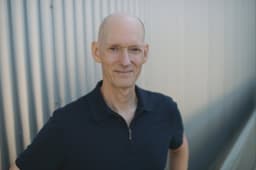
Lee Schneider
Lee Schneider is the founder of Red Cup Agency, a communications consultancy based in Santa Monica, and an adjunct assistant professor at the USC School of Architecture, where he has taught media making for over ten years. A former producer for Dateline NBC, playwright, and screenwriter, he specializes in helping firms, technical startups, and emerging leaders articulate complex ideas through compelling linear and non-linear storytelling.
§ SHOW LINKS
/// THE PRACTICE LAB
Conversations are useful. Running the experiment is what changes the firm.
The Practice Lab is where architects test one real change a month, on their tools, their business model, or their own career, alongside peers running experiments of their own. Office hours most Tuesdays.
§ TRANSCRIPTRead the full episode transcript
A Firm owners, the move that cuts this year's tax bill have to be in place before December 31st, and most take months to set up. I use Gelt, who I partnered with on this episode, but also in my business, and they saved me over $10,000 in year 1. Visit joingelt.com, that's J-O-I-N-G-E-L-T.com, to sign up for a consultation and mention Practice of Architecture For 10% off your first year. Welcome to Practice Disrupted, a podcast exploring how architects can build better businesses, embrace emerging technology, and create more sustainable, fulfilling practices. I'm your host, Evelyn Lee, architect, angel investor, and founder of Practice of Architecture. Whether you're running a firm, starting your career, or reimagining what's possible, this podcast challenges you to think differently about the Hello, disruptors. Welcome to this week's episode of Practice Disrupted. One of the threads we keep pulling on this season is how firms actually get chosen and what it costs a practice when it can't explain what it does.
A Most of those conversations get there through fees, positioning, or technology. This one gets there through story. Lee Schneider is the founder of Red Cup Agency, a consultancy in Santa Monica, and an adjunct assistant professor in the USC School of Architecture, where he has taught media making for the past 10 years. Before that, he was a producer for Dateline NBC. He isn't an architect, and he's never run a firm. We get into the 3 stories he says every architect has to learn to tell, and what the bad version of each one sounds like. We ask where narrative actually carries weight in our pursuit, given that on a lot of projects, the capital is committed before the architect is even selected. And we get practical about the smallest real version of this.
A for a firm of fewer than 50 people where nobody has communications in their title. Let's get into it. Lee, welcome to Practice Disrupted. Thank you for joining us on the show. It's so lovely to have you here.
B It's a pleasure to be here, and I'm looking forward to talking with you.
A So, you have had quite a varied communications background. I don't even know where to start. So things that are top of mind, screenwriting, network news, documentaries, novels, and then more than 10 years teaching media making inside of an architecture school. Where would you like to start? And then I would love to bridge into how you ended up specifically in the architecture school.
B So in answer to your question, it's storytelling. For me, it really began with storytelling. I'm the kind of kid who always had a camera around and always had a cassette player around and was making stories. So when I realized eventually that that was a good way to make a living, that led me into the screenwriting and news production and documentary production because I started in New York as a playwright, just writing plays, which if you hit the big time really fast, it pays the rent. But I was able to pay the rent doing other things, but I ended up doing network news and I came out of— from New York originally, came to California to do screenwriting and got hired to do screenwriting projects. Now it's the movie connection that connects to the architecture school because I was actually recruited by some very nice people because I was making a film about earthquake recovery in Haiti called Shelter. And there's a professor in the School of Architecture and she had a class called Shelter and she must have Googled me or something and she invited me in to give a lecture. And that's how it started because they realized astutely that Students especially need to express their complex, brilliant ideas.
B And a good way to do that is with storytelling. And in the class I teach, a lot of it is done by video. How do you get your idea into a video? How do you make a video? How do you make a video with your phone? So that's the short answer to the big story arc.
A What made you stay at USC for— in the architecture school for so long? Because there's definitely a film and entertainment connection within USC itself. I feel like you could be in other departments that—
B For sure.
A Why architecture?
B Well, I had this real appreciation of the students' ideas were so inventive. It's really the students that kept me coming back. I had students make videos about urban farming and how to build a chicken coop in the middle of LA, or accessibility issues or temperature issues, like what's the hottest part of town? How do we alleviate that? Or how can we induce cities to build more sidewalks? All these interesting topics kept coming up year after year. And I said, wow, that's pretty fascinating because, you know, a cinema student, when I was a young screenwriter, I would write maybe a horror movie or a rom-com. And of course those are fun and interesting and I've written my share of rom-com-ish things, but the idea of changing a city, changing the built environment, thinking about accessibility, that came back over and over. And as you know, the eclectic nature of an architecture practice and the architectural mind, you have to be good at a lot of things. You have to be a good people person. You have to be a good idea person.
B You have to be a good conceptualizer. You have to be a good talker. You have to be good in the old days, in actual drafting and drawing. So that huge skill set was also kind of an attractant to me, an amazing thing. I was in awe of some of these young students at first, and then really enjoyed helping them get all of that, all those ingredients into a video project.
A So you've also transitioned to helping practitioners in this space. What are the differences or what are students unlearning or maybe bringing too much reality to once they become practitioners? Where are the biggest differences you're seeing in terms of where the students are innovative and the way practitioners may or may not be?
B Well, of course, there's always the pressure of a group practice where you have to get buy-in and you have to get consensus. That's a big difference. Students, They're on their own for the most part, sometimes working in small teams, but the basic issues remain the same. We have a complex idea. How do we get it across? We need to differentiate ourselves either as a brand new student for putting up their first portfolio site or a firm that's been in business for a long time. We have to be different somehow. And there's a question that comes up, when can stories help and when can stories not help and the use of storytelling? We're all narrative animals. So my contention, of course, is that stories are always going to help because we have to communicate with each other.
B And it's how we connect with each other. It's how we get to know each other. There are certain projects that are immune to the attractions of storytelling, and that would be a project that's purely on the numbers, purely budget related, purely on efficiencies. I would say that's a really hard mountain to climb. If your project is just doable based on numbers, say budget, well, someone's always gonna come along with a lower budget and you'll be knocked out of that. So I would reintroduce the idea of storytelling there. If someone says, well, my, my project, you know, we only, we only sell stuff when it's the right, in the right budget range, or when it— meets certain lead requirements or whatever it might be. I would say yes, but there's also a lot of people out there just like that.
B And how do you set yourself apart? Which is something we'll be talking about more later, but it's really this human-to-human contact that we can't leave out. And the way that we, with some humility even, approach how we communicate our ideas to fellow humans. For me, the short answer to that one is, you know, I haven't found that much difference in someone who's been practicing architecture for decades and a brand new student because the storytelling issue and the human-to-human, we're all human, those issues remain the same.
A When people hire you into their firm, how are they finding you and what is the problem they are looking to solve? And, you know, what type of stories are you telling? So, for instance, when, Just as you were saying that, I was like, well, not as big of an issue right now because pipeline and business development seems to be top of mind. But I do feel like there are more studios, architecture firms out there putting out videos on what is a day in the life of a studio looks like, right? They wanna attract the top talent. On the flip side of that, there is the business development and, you know, talking about a project and outcomes for the client. So, where do people, Or where do you find yourself brought in most often?
B Well, of course, USC and teaching. So, most of my case studies, if you will, are student case studies. I have done seminars and workshops for architectural firms and architectural groups, and I've been a keynote speaker for AIA in Michigan. So, That's the body of my experience. And what I find is, yes, the pipeline issue is probably the first thing that comes up. People see certain things like, we need a better website, or— and I've helped with that— or we need to make a video, and I've helped with that. And I've worked, by the way, in parallel with startups quite a bit, mostly highly technical startups that are hard to explain, medical device startups or pharmacology startups. And I've helped those folks find the story to tell in a video or on a website.
B Because when I say storytelling, sometimes people picture sitting around the campfire and literally telling a story. But I'm thinking of a bigger toolbox that storytelling applies to the journey you take when you first click on the first click of a website. Or storytelling, of course, in a linear form like a video was, you know, locks you into a linear form, but not all storytelling is linear. People will discover you in nonlinear ways. Most people discover me through my company and my website, Red Cup Agency. And that's for the most part where I've generated the most work, but I'm more known now as a teacher, consultant, speaker. Really, that's my primary interface with the profession.
A This notion of storytelling, especially, you can argue it is newer to architecture firms. You've been teaching at USC for now a decade. So, this notion of storytelling is not necessarily new, but I feel like, especially when it comes to the video format, it's changing and evolving. With platforms like TikTok and Instagram and YouTube Reels, how has your view on storytelling evolved or changed? And is there a right one, a better one, the short form versus the long form? What are the best ways to leverage storytelling nowadays?
B Well, I think the format and the length and the medium are all variables that get plugged in depending on what you're trying to do. But the big answer really comes back around to AI, really, and the way AI is influencing search and it's influencing the way we interface and connect with each other. And I'm in favor of anything that increases human connection because at the end of the day, you know, there's the expression we used to have in movies, I sold the idea in the room. It means that you went into whatever pitch or sales session, whatever it was, and the decision-makers were there. And you were able to sell it in the room on a handshake deal. Now, for that to happen, there has to be a lot of human trust going on. And there's also a lot of precursor to that. Maybe it's a video.
B Maybe it's a conversation. Maybe it's a really good website. And maybe it is a lot of TikToks, but I find in a funny inverse relationship, the smaller the screen, meaning say phone and TikTok, and the shorter the duration, the more we have to produce, the more narrative is necessary because to make an impression is the game in marketing, right? We need the— there's a number bandied about of we need 8 impressions or 7 impressions. We need to hear a person's name. We need to hear Evelyn Lee 8 times before we remember who that is. It's probably true. I, you know, the number changes, but the idea remains the same. So if you're making short-form stuff, you're going to have to make a lot.
B If it's Instagram Reels or if it's something on TikTok or Snapchat or whatever your medium is, people need to see quite a lot of that. And very few people are watching anything that's longer than 20 minutes. I mean, that is, that's epic. In our world, that's an epic amount of time. That's Odysseus, 3 hours plus in an IMAX. So in podcasting, for example, our sweet spot is about 20 minutes. And in introduction videos to a firm, 30 seconds to 2.5 minutes. In other words, not long.
B The other key thing to think about here is the network effect online is you want things to be shareable. You want them to be able to be appreciated on a phone. You want someone to see your video and say, I know just the person for this, and they could forward it quickly and that person could look at it on their phone, for example. That kind of speed, that's changed a lot, right? It's not so much— when we made corporate videos, we'd make an 8 or 10-minute video that would be basically shown at a shareholders meeting or shown as a proof of concept to new donors. And those were epically long at 10 minutes. You know, we didn't— and no one's really doing that at that volume any longer. So, the wheel is turning a lot faster and the network effect is a lot stronger.
A You've mentioned that there are 3 stories that every architect has to learn to tell. I feel like you need to translate that into like 120 stories. What are they and who is each one for? What's the target audience or what are they meaning to do?
B Yeah, that's a great question. The first is the foundational story of your origin. Why are you doing this? An origin story has to tell why is the firm around. It has to give some historical context or if it's a personal video about you, it's Why do you do this? But that why factor is pretty huge in that. It will not work if you just— I usually refer to it as, you know, the genius reel. Like, if you make a reel of all the times you were brilliant and it doesn't really let anyone else into that, or doesn't really tell why you did those things, it's going to be almost repellent in a strange way, because people don't need the proof of how brilliant you are. They want to know how to work with you. And they want to know that you are passionate and care about what you're doing.
B And they want to know, for better or worse, that you have a niche that you can be differentiated. So, we can talk about that quite a bit, but the origin story is pretty huge. It's usually the first thing I think about when working with a client or with myself or with students. The second one is a testimonial story. which can be as simple as a quote on a website. But as people who are experienced to a huge amount of media now, just a staggeringly crazy amount of media, we need social proof. We need someone to say, yeah, I'm kind of like that person. I'm sort of like that.
B They can talk to me. They're in my group. When I measure myself against them, I see that we're kind of on the same level. You'll never sell a project to anybody who thinks they're way above you or way below you, either ideologically, financially, whatever. We're all looking for that kind of mean, that median thing where we can talk to each other. We're in the same club. So testimonials can do that and they help people see, oh, This firm or this person has helped a person like that and they're kind of like me, so I'm in. And the third one is a case study that really works.
B Now, the mistake that most people make in a case study is they don't think about the audience. You mentioned audience. The case study has to speak to a specific gap or lack that the client has. The simple way to put that is Every client is coming to you for a reason. They got something they need. So, it's really our job to figure out what do they need. Sometimes it's, yeah, I need a house built, but that's too simple an answer. Sometimes when I speak at keynotes and such, I've referenced a study done by AIA which asked what architects really want to get out of their practice.
B and what their clients really want to get out of the architect, the kind of deep human connection stuff. And the architects usually said, well, I want to do social good, or it has to be sustainable. I want it to be beautiful. I want it to work. I want to give my clients value, all the things you'd expect. The client thing surprised me. Clients want you to listen to them. For the most part, they're looking for a collaboration.
B They're not looking to be talked down to or have it done for. They want to know that they They can have input, that they can connect. So, if you're giving a case study, a really smart case study would include a little taste of that, a little idea that, you know, you can work with me. I'm someone who you can talk to. I'm someone— this firm listens to clients because that was on the top of the list. Now, maybe that's changed, but I think when you're just thinking about how do you get new clients and what's the deal breaker? Because we all know there are so many projects, and I see this in the startup world quite a bit because they're all trying to get funding. There's so many projects that have the right team, they have the right ingredients, it's a great plan, everything's beautiful, and it fails. It doesn't get the money or doesn't get the client.
B And the reason for that is usually a storytelling failure, but even more precisely, The human connection wasn't made. Somebody wasn't listening to what the client really, really wanted. And as we all know, clients don't always say what they want. They'll say, well, do it cheap or something like that. And we have to learn to get a little deeper than that. So, the audience for these 3 stories changes. It's not like you can create these and walk away for the rest of your career. You have to reevaluate and see who are the people you really want to get to.
B And the one thing that remains constant for most individuals and most firms is, you know, you have a reason you're doing this. You have a reason that sets you apart from others. And if that reason turns into, well, we're the cheapest, where that goes, that's a race to the bottom of the budget. And that's not a fun thing at all. Better that you have some deeper reason for doing it that you can communicate that also matters to the client.
A I don't disagree, but I do feel like so many of the architects I know want to deliver on the same thing. It's words like human, human-centered, right? Socially driven, climate reactive these days, going beyond sustainability, climate regenerative. So in a world where all the sameness is even well-intentioned sameness, how does storytelling begin, or how do I begin to tell a different story of what specifically I am doing?
B Well, my approach to that is to do a bit of an exercise which I've offered in my classes and other, other media, which is to think about When I— like, I'll think about it for myself. When I was young, what was the person that had the biggest impression on me? Or what kind of event happened that really shaped me that I remember? Could be good, could be bad, could be a challenge. And since I'm from California, I get to be a little touchy-feely here because, you know, Californian. But what that's doing is we all have something different that got us started in this work. And it may not be something that jumps to the head of the line when you're pitching a project. It may not ever, ever appear on your website, for example, but it's something you know in your gut that you can come and present and shape your presentation. Because absolutely, I agree with you. There's a lot of worthy folks pitching or they have their RFP out there, whatever it is, right? And how do I, putting myself in the client's shoes for a second, which is another thing that people sometimes forget, thinking like a client thinks, how do I choose? Here's the end of the week.
B I've heard 3 great proposals or pitches, or I've read 3 super great RFPs. they're great. What do I do? You know, do I flip a coin? Like, I know I'm the guest here, but I would ask you, like, how would you decide? What would you do?
A Well, I mean, the scary thing is, and I was on the owner side for the last 10 years before I came out to practice of architecture, and so much of it was, honestly, it was gut. It was driven by the relationship that I had established, if any, beforehand. It was driven by— most of these architecture projects are not short. So, it was really more about if they met all the qualifications, who do I want to spend time with bringing this project to reality? And who do I think I'd get along with the best? And who do I think would be the most collaborative? rather than spoken down to. And that's why I kind of joked and said gut, but it kind of is.
B It totally is. I mean, I'm totally with you on that. And I think that is the reason that at the end, if given every— all factors equal, you know, and you're just trying to pick the right one, who is the person or firm that I really want to collaborate with? Who is the person? And usually for most people, that means who's going to listen to me or who's going to Work with me. Sometimes it's who's the most fun in a kind of a silly way, but I don't think that, you know, when you're talking big money deals, it's usually, you know, people get over that pretty quickly. But the idea of, is there going to be a good working relationship here? Because these projects go on for a long time and they achieve closure is a huge victory and funding can be torturous. for many of them and can take a long time. So who am I going to want to ride in this bus with for however long it takes? For me, that comes back to that human connection. And since we're narrative animals, my solution to look at that is, is there a story that was told at some point in the broadest sense that connected client and practitioner? Is there a way that We use stories to measure people, to evaluate people.
B It's baked in. It's a brain thing. It's when people see me or people see you or see anyone, they immediately start building a story about that person. We're scenario builders. It's an evolutionary skill, survival skill. So if you can influence that process even a little bit, I think it gives an edge. There's something positive about that.
A What do you say to the practitioners out there who say the projects should speak for themselves?
B How do you mean?
A I guess like for a long time, right, architects weren't allowed to, one, market, but two, there were so many practitioners that like, the project speaks for itself. Like, just, just look at my project. It's won so many designs. I'd just love to hear your response to that. To kind of that exclamation.
B I would love it to be true. You know, I would really love that to be true. And it can be true. You know, if you're a multi-award winner way up at the top of your profession, ideally whatever you submit should win. And perhaps it does for many. I mean, look, this is a— in very many ways, this is a name-driven business. if the firm is known, there's this psychological concept called the familiarity heuristic. And what it means is that people who don't know anything about baseball, if you say, what's the best baseball team? And they say, it must be the New York Yankees.
B Well, that's because they've heard of the New York Yankees, so they say it's got to be the Yankees. So, I'm sure that applies quite a bit in the world of architecture and design, that there are certain big known names and they're already ahead. But we're not all the big known names and we're not— we don't all have that. As, as good as we are, to rely upon that is a bit of a luxury for a smaller percentage of people. And if you can do it, great. I say fantastic. You know, if you're the A-lister, as we used to say in Hollywood, great. You know, but what if you're not? You know, what if you deserve to be, or what if, you know, your project's a little different? How do you work with that? And I like working with those kind of folks because then you've got to figure out a way to stand out, to connect, and make all of those things work that the A-lister or the star architect or the big name person that's already working, like they've got that done.
B And bravo to them and brava to them where They've had that kind of a career where the way is paved. Fantastic. But that's not the case for all of us.
A It's not the case, but I do feel like there are some architects who, even though they might not have reached that status, sometimes their egos unfortunately get in their way.
B Yeah. Well, it is an ego thing because— and that, I think, when I look at how the profession has changed and how my work has changed over the space of, say, 10, 15 years, This is a big factor that people want to work with. They don't want to be dictated to. Gone, I think, for the most part, are the days of the Frank Lloyd Wright figure shows up, the guy in the funny hat or the guy with the funny— or the woman with the funny glasses and dressed in all black, and they're going to tell you what you like. I don't think that's as powerful an archetype as it used to be because for sure, It was a very powerful archetype. But now I think people are looking for more collaboration and for better or worse, to speak very broadly here, the deterioration of skilled professions has come about because people can do it themselves. We can all make our own podcasts. We can all do our own plans.
B We can ask an AI to draw up some plans, which doesn't replace us.
A Right.
B But it certainly puts in the mind of the prospective client, well, I could do that. I could come to the meeting with my own plan, which would probably be pretty nightmarish. So, I think that the big picture change has been this kind of a refashioning of what's considered the skill of the architect, or in my case, the storyteller or the writer. What is the real skill there? Any architect will tell you, well, it's a pretty big grab bag of skills that a successful architectural firm needs to draw from.
A What do you say to the architects who are like, I'm already telling my story in the broadest sense. It's on my about page. I have a career page.
B Well, valid. It could be. Well, it's very hard to be done because As you mentioned earlier, I've taught this course at USC for more than 10 years now, like 11 years. Guess what I have to do every semester? I have to take another look at that course and see that my examples are true, that my base concepts still work. Part of it deals with entrepreneurial behavior and IP. I have to explore short-form, long-form. I mean, there are things when I started teaching that that didn't exist. And now they exist.
B So I view this as an evolving process, like it or not. And yes, if you have a biography and your biography, you know, you're not gonna change the past, but the way people absorb it, the way people connect with it, is someone gonna scroll down 4 or 5 screens of text to get your credentials? Some will, but many won't. You know, you might have to think about how, even if your story's terrific, How are you delivering it? And it comes to a know your audience question. Who is the client? Who is the prospective client anyway? Who is your audience? Are they people who would happily scroll down 6 or 8 screens on a website or on a phone, or they're not even looking at your website or whatever? You know, you have to know those things. Those are pretty basic things. So it doesn't stand still is the short answer there. I think things change and we have to change.
A Here's the thing about year-end tax planning. Owner compensation, retirement plans, PTE elections. They only count on this year's returns if they're set up before the calendar runs out. And your current CPA is probably reactive. Gelt CPAs, they build the plan, run a calculated year-end projection so you know exactly where you stand, and support your firm year-round. Start now at joingelt.com. That's joinget.com and mention Practice of Architecture for 10% off your first year. So, you mentioned AI and obviously search and how that's going to change in terms of how people find you on the web.
A What are some of the, in addition to that, which I feel like is maybe the most obvious one, what adjustments are you making for this next upcoming class or cohort that you might be teaching?
B Well, I think a lot about— what I teach is two-part, really. It's a how-to, which is make the video, which doesn't change that much because most people are so video literate at this point that I always laugh.
A Maybe more video literate. It is amazing how some of the next generation, like my kids, I feel like my 9 and 11-year-olds are more video literate in production than I am.
B But yes, I am blown away. Sidebar here, I'm blown away every year by the editing. Like, you used to go to film school to know how to edit. And I have students who, you know, they'll have someone cross frame and the door closes and they cut. It's like Alfred Hitchcock. Like, how do they learn how to do that? How do they learn where to put that cut? Well, they've watched a lot of movies and a lot of videos. So I think that, you know, the key thing that changes is is duration. How long will it take to tell this story? And an understanding that some people really want to dig in.
B Like, they want those details. They want to know everything about you, say, or they want to know— they want to have— you can't have enough case studies up there. They want all your case studies. But other people are going to be attracted by a very simple, human, moving, short story about someone, say, who was helped by something you made, a particular community project? If you're talking about social good, social impact, community projects, well, who was helped by that? That's often a missed connection. We'll often post about, well, we were so smart and we were so good with this, or our client loved it. But how about the user, so to speak? How about the The person who really, if it is a community project, well, show the cards. Is that someone who could talk to it articulately, who it really mattered to? That's going to get to someone. That's kind of a heart-centered thing.
B From California, I can say that. But there are different ways into connecting with people than facts, numbers, bludgeoning them with a 60-page part CV. I mean, we know we all do these things and it can work, but it depends on who you're trying to reach. People now will skim and skip and they won't— and an AI will just ingest the whole thing and spit out a summary, which is a whole other topic. But can you be summarized? Are you willing to be summarized by an AI? You don't really have a choice. But you have to think about how you're gonna be seen if your predominant funnel is online, which is very hard these days. If that's what you got, you're gonna have to think about how is it seen, not just by humans, not just by search and SEO, but by bots, you know, and what are they gonna do with that material?
A I have a question because I have been looking at getting more into video. And there's a lot more studies being done around what it takes to kind of hook people in and how the timing of story, the storyline switches. How important is that initial, I don't know, it's not even 5 seconds anymore.
B Well, yes. I mean, an interesting benchmark is Google will not Index a view unless it's 20 or 30 seconds long, and then it counts. So even Google, which you think is a pretty fast cadence, they're looking for a hook in 20 or 30 seconds. If you can bail out after 20, 30 seconds, I would call that video not as successful. And unless, of course, it's TikTok, you know, then you— that's what it is. And a YouTube Short, yes, you know, that you could have a 45-second YouTube Short with a million views and it's considered a huge success. But I really do have to wonder, as someone who works with complicated, intelligent people, can you really hammer down your idea to 30 seconds and have it matter? Or do you have to make 10 30-second videos, or maybe—
A That's why I said you need to do the 120.
B You know, and for me, that's a daunting concept, but maybe necessary because it depends on your audience. Like, is, you know, the median age of TikTok is, except for BookTok, is generally pretty young. So, are those your buyers as an architect? Maybe. but probably not, you know, perhaps YouTube Shorts, maybe again. I mean, with each client, as far as media is concerned, you really have to do a little testing and you have to— I have to ask questions like, where do people find you now and how many views do you have?
A And I would be surprised if most medium-sized architecture firms could even tell you the answer to that.
B Yeah. And we have to find out. Sometimes we have to find out. And there's also a moment of courage where people have to say, you know, I really suck at that, or that part of this has never interested me and I really hate it. And that's good. It's good to know that because, you know, if we're going to be going on this ride, you're going to have to make the media and make the media that your audience will appreciate and the right audience will appreciate. You know, there's the old joke about Google Ads, like you could take out— and I've done Google Ads with brilliant people putting them together for me. And it's kind of like Arnold Schwarzenegger taking creatine or something like you, you get all muscular and you puff up when those Google ads are running and you get lots of hits and you find a lot of people.
B And then when you stop the ads, guess what happens? All that traffic goes away. And that's not that useful. You know, we really need to build a steady, if you're just looking at the web, a steady stream of traffic. And if we're only doing web, we're probably in trouble, honestly. I mean, speaking to actual people at appearances, doing events, finding other ways to connect with clients is probably where things are going. I see the most successful people who are raising money for projects, they're out in the real world. They're doing interviews, they're doing talks, they're IRL. You have to do that, I think.
B Because the online world is becoming increasingly mediated, not so open, not so free, increasingly controlled. And that's a trend that doesn't look like it's going to be reversing anytime soon.
A I think there is a level of confidence building, right? In order for a founder or a CEO or even executive leadership or firm leadership to go out and want to do that. That's something that I've personally had to learn over time. And I'm still not willing to turn on, you know, the back camera of my phone and record. How do people begin to embody this notion of being a storyteller and think about things in stories in a narrative way that they might not be used to telling or talking about their firm or projects?
B Yep. I mean, there are a couple of ways of going about this, internal way and external way. The internal way tracks back a little bit to what we were talking about earlier, is finding out what really matters to you and what is your theme as a person and who are you archetypally. There's a little bit of Jungian analysis there. We play around with connecting with ourselves and to make videos for yourself about that is going to be a lot easier because that's what you care about. And that's, you know, and you could Begin to connect why the firm matters. So that's, I think having a sense of purpose for it is a big deal. If you're feeling a bit shy or introverted, what usually rescues a person is having a sense of purpose about it.
B Like the real, why am I here? Why am I giving this talk? Why am I trying to convince myself to talk into my phone? And if you can give a compelling, purposeful answer to that, because I want more accessibility in the world, because ADA helps everybody, because we have to do more and better by our planet, it's critical now. You know, whatever your thing is, to find that thing and be able to talk about that in the opening rounds is very valuable. The external way is, you know, not all of this media is super terrific for everybody. Like, I'm not that good at doing the flipping the camera around and just talking. And like, people, those people who like walk and talk and, you know, pink is my favorite color and let's riff on that for 10 minutes. I mean, I'm pretty bad at that. I'm not that kind of person. And I've just come to recognize that.
B I just have to accept that. So I've chosen podcasts because ideas unfold. over 43 minutes and 46 seconds. It's like, that's cool. I'm down with that. I like that. And some people are just gonna need more time to unwrap their ideas. And some people are super terrific at doing a 30-second video.
B I mean, we have a friend who's an author and she has written a book about kind of like your 4th act as a person in their 70s and 80s. And she is just blasting through Instagram with those 2-camera, talking to camera. So it doesn't matter, you know, it's not an age thing. It's a, what do you really get pleasure out of and what are you really good at? It's a kind of a moment of honesty. Like, what's really gonna work? I mean, I happen to love audio podcasts because I don't have to worry about anything, but what we talk about. But I've had to change too and be ready with some video, maybe not posting the whole thing on YouTube, but maybe later. I'm, you know, for my own self, I'm starting another episode of a podcast that I'm in season 3 now. It's going to be probably— I have to be prepared that that's going to be a video podcast.
B So I'm preparing, but it doesn't mean that that's my primary thing. I'm not— I'm expecting to do better in Apple, Spotify, LinkedIn than I am on YouTube and Instagram. I'm just expecting it based on past performance. And, you know, the, the short answer here is you don't have to expect to be good at every medium. You know, there's a lot out there. It's a, it's a big universe of possibilities, but you don't have to hit a home run in every single one. Just do what you're good at.
A People are still telling me that I need to do more video.
B Well, you know, I think it's fine if it feels right and if your ideas are suitable to that. I mean, if you could— video requires brevity. It requires selling it and selling yourself and a bit of charisma. And if it feels like a stretch or it doesn't feel comfortable, like, that's pretty hard, you know. Charisma is not— is a great ingredient to have. You don't have to have charisma necessarily, but in the realm of the visual, a bit of charisma goes a long way.
A I feel like architects like to think that projects speak for themselves. I think there's a number of architects out there that feel that they're also incredibly, incredible storytellers, right? Because they're creating stories in order to understand the context which these brand new environments are being put into. So, where does a firm mistake a storytelling problem for something else, or where does it mistake, this is the story that I'm telling myself, but it's actually not really the story that's being told?
B Yeah, I like this question because I actually was in a conversation with an architect about this. And their concept of it was, I want to be the guy at the cocktail party who's got everybody listening to me. You know, kind of like that raconteur with a glass of wine in my hand. And, you know, that's great, and I'd love to be that guy too, but that's not necessarily how projects get funded and how things move forward. So, it's not— oh, charisma is helpful, as I just said, but it's not always about being a raconteur. It's always about understanding the gap, the story gap that the client might have, And what they— in other words, what they need, what they're looking for, and how can your story address that? And in the simplest way, it's thinking about that and making a video or two that address that. And in a more light-on-your-feet way, it's changing how you tell that story, being prepared to have some variations in that story. Because you usually, when you launch into even a 30-second story, you usually There's no do-overs.
B You usually get just one shot. You know, it's kind of like when I was pitching movies in Hollywood regularly and I'd go in with no notes, no briefcase, no slide projector, just me talking, 'cause that was my style and that was the way it was done. I had one shot. Like if my— I started to, okay, what do you got? And I started to tell my story. If I blew it, it was like I couldn't say, hey, I got another one for you. Try this. I mean, that almost never worked. I would try it from time to time, but it was usually a So I think, you know, knowing the audience and being kind of reading the room and being, having a bit of empathy.
B Like if, are people's eyes glazing over when you tell this story? Can you see that? Some people are not capable of noticing that, you know, they're just on a roll or they're too scared to stop. But I like to watch that. I like to see how's it being received. You know, I do that during keynotes and I do that in presentations and I'll stop, you know, if it's not working and try to find another direction if I can.
A So that's an interesting transition because we've been talking a lot about video storytelling. And of course you do keynotes. You mentioned showing up, the guy who wanted to be the center of attention at the cocktail hour. How do And how can architects prepare better for interviews? And that includes kind of the team they're bringing. Like, let's cover the whole gamut of things. Because I've, as a minority female, let's just set it up this way. I've definitely been that person that's brought in for representation and told to kind of be quiet and observant in the back of the room. I feel like that in itself is sending maybe the wrong story.
B Yeah. Yes, definitely.
A What advice do you give to people when they are trying to figure out the stories, the client's needs and wants, and how to set up for a successful interview?
B Yeah, this is another great question. And some of it is dependent on research, right? You want to know who you're going to be seeing and what they like if you can. You're going to know what they've bought before. You're going to know, you know, all those kind of intelligent expectation setting. But I think the most important thing is really an intention setting. What do you want to happen in that room? Is it that we're going to sell the idea in the room? Basically, we're going to go in— this is on a scale of 1 to 10, this is the 11— that we're going to walk into the room and we're going to get a handshake deal right then and there. Well, that is highly dependent on who's there. Are they decision makers, leads in the firm? For that, you probably need a lead in the firm, someone who they trust the yes is a real yes and can really present.
B But I submit that's a fairly rare situation or not as common as we might think. Most of the time, it's going to be the, we have to think about it kind of a situation, or we'll get back to you, or we're interviewing 10 other people and this was a fabulous presentation. Thanks so much. It was a common practice of mine to ask, well, how many others are you speaking about this? Even when I'm up for producing jobs as a podcast producer, I usually ask, just curious, how many other people have you spoken with? And they say, well, we've spoken with 110 people. That's not a good answer because they can't decide. But if they say, well, you're the top 3 or top 2, then that's better. So this gets into 2 things. One, the composition of the team you send to the meeting.
B You want the person who's an advocate for the project, the most impassioned, articulate advocate for the project, which might be a junior or middle person. Because guess what you need on the other side of the table? An advocate for the project. Most of the time, those people have to join forces with you to advocate for the project, unless it's that rare situation where it's 2 senior partners and they just go, yeah, yeah, I'll see you on the golf course next week and this is done. Which, great, but I don't think— I don't submit that as the common thing. The common thing is we have to build advocacy. You have to build a friend, and you have to build someone who's going to fight for that project through all the hoops and ladders that it has to jump through. So pick your people. Know who can really communicate with the other side of the table and someone who has a real They got skin in the game, as the expression goes.
B They really care about this. They can talk about why it matters to them, which is a bit of soul-searching more than, you know, this is cool, it's our first big project, or, you know, we're cheaper than anybody else, or, you know, whatever it is. That's fine, but you could easily— when you're competing on that level, it's a race to the bottom, and you can easily be eliminated. It's too easy. You know, I felt that many a time when I was competing for production jobs, and I realized, you know, they're just asking me the production questions so they can take my pitch to the next person and just do it cheaper. And I stopped at that point. I just stopped doing that because I realized, well, it's nice, but I shouldn't have to be their resource to pitch someone who, you know, here's Lee's proposal, just do this and knock off whatever, you know, X dollars. I don't want to ever be in that position.
B I want to be the person who, as we said earlier, they want to work with. They like me, or I'm interesting, or this is going to be a great collaboration, or their passion for this is awesome. They're going to go above and beyond to make this work. And we're going to carry that passion into usually the next meeting that we need to take at the firm to get this to be a go. So, it's a combination of, to shorten this up, So, to summarize, research, really know who you're talking to, know who's the best person to come in there and answer the questions about it, who has passion. And I would say passion. And also, some role-playing and embodiment. If you have a presentation that's kind of a rote presentation, by all means, present it to another human before you do it.
B Like, you can't read from that piece of paper and you can't Even if you're speaking it into a mirror, all the things that people do, my tricks are I will often record myself saying it, and then I'll go out for a walk, and I'll listen to myself back and say, where did I lose it? Where am I not connecting? And then presenting it to anyone, your spouse, a friend, doesn't have to be a fellow architect even. seeing where they connect and seeing where they don't connect and just having that connection with it, especially if you have to memorize— if you feel you have to memorize it, because it should just feel like it's pouring out of you, like you really care about it. And that's an interesting, you know, that can be hard to reach that point. But when you do, it's great. You know, that gives you a tremendous advantage over others.
A Yes, I used to— well, I still don't love listening to myself, but one of the things that I did find helpful In preparing for very big talks with the AIA is I would actually record it how I want it delivered, and then usually a week in advance. And then I would just sit there and anytime I had free time, if I were brushing my teeth, I would listen to it. That was one of the ways that I, I often prepared.
B It's a great practice because it, it pulls you out of your comfort zone in a way, because we all tend to like sit at the same desk or go to the same corner of the room to practice. But when you have to practice or listen to yourself outside of the context, it kind of anchors it in the body more because that's what you really need. There's an old saying in, you know, speech giving talks is that the audience will never know about the part you forgot to say. They'll— they won't miss that part. You will for sure. You'll say, oh, I didn't say that. But most of the time I found I will bring that part in anyway, maybe in a slightly different order if I'm embodied. If I really know why I'm there and what I need to accomplish and who these people are and what they need to hear, I usually don't forget anything, but I might speak it in a slightly different order.
A So, a lot of these— a lot of— I'm thinking about the listeners to Practice Disrupted and where they're coming from. And we have a lot of, I would say, younger leaders or even new people entering into the profession that want to create change. Is it really that simple? Like, like how, how can you begin to move the needle on storytelling?
B I think that exercise of a bit of introspection. I think if you were listening to this on a Thursday, what if by Monday you had a story for your own purposes, just for you? Maybe you told it to your spouse or a friend, but it's really a foundational story of why do I care? What's my purpose in either doing the work that I do most generally or this specific project or presentation? Can I really answer that for myself, not for public consumption, but to build a foundation of my personal connection to this? And That is a very powerful takeaway. The story I tell about this when I think about this for me is when I was in junior high school, a teacher I had a crush on asked, all right, I want you to write a fiction story. And I'd written book reports, but I'd never written a fictional story. So I wrote a very silly story about talking horses or talking cows. I don't quite remember it. And she read it aloud. And the parts that I thought were funny, people laughed at.
B And that was, wow, wait a minute, I could write something that has the desired effect, you know, cause and effect. And I credit that with becoming a storyteller and becoming a writer. And also I had a crush on her, so it helped, you know, that, whoa, she likes the way I write. But I go back to that a lot because the effect that your story has on people, you know, we don't do this in a vacuum. We're interested in people connecting. And to put that at the top of your list on that Monday, can people connect with this story of why I care about what I do? So it's sort of like part one is, why do I care? What's my purpose for this story or this job or this profession? And part 2 is, how is it received? If I tell that to somebody, do they think it's good or does it— The way to test that is ask them to repeat back a little bit of the story. If they can say in 1 or 2 sentences what you had talked about, that's the win. Not verbatim, but enough.
B If they say, I don't know, I can't, I don't know what you're— it seemed very complicated, you know, that you have to start over and try again. So that's for me, just over the weekend, say, if you had to do something, I would do that.
A We're talking a little bit about introspection. I want to look a bit outward and maybe even more potentially optimistic. If architects were much better at telling stories, what changes about how the industry positions itself? What is possible?
B Yeah, I love that question because it's a common lament among architects and students, most architects I come in contact with, that people don't really understand what we do. And, people don't really understand the incredibly diverse skill set that goes into doing this well. And, if people understood more completely what architects do, and if people more completely understood the huge skill set that architects bring to this, I think more projects that deserve the input of an architect would get it because people now, they have so many resources, be they builders or homeowners or business owners, that they could spin up their own plans or just hand something off to an AI or get a basic, a skilled builder, a build fabricator to make something. But that doesn't include the benefit of an architect. And I think so much of the built environment would be improved with architectural input. So, for me, the big change would be people appreciate architects more, and architects get better at communicating what they do, and people see the necessity of having architectural input.
A Hi, disruptors. Thank you for joining us on this episode of Practice Disrupted. Want more of this between episodes? Start with Practice Rebuilt, our weekly newsletter on the business of architecture at practiceofarchitecture.com/newsletter. And when you're ready to stop reading about change and start testing it in your own firm, get on the list for The Lab at practiceofarchitecture.com/lab. We'll see you next week for a new conversation on change in the profession. Bye.
§ TOPICS
LeadershipTechnology & ToolsMarketing & GrowthBusiness ModelPractice Innovation
§ MORE EPISODES YOU MAY LIKE


/// THE WEEKLY READ