
/// PRACTICE DISRUPTED

§ EPISODE 230
Claiming the Room: How FORA Built a Business Architects Kept Walking Past
How much of what architects claim they value actually shows up in how they practice, especially when it comes to community engagement?
In this episode of Practice Disrupted, host Evelyn Lee is joined by the leadership team from Architects Fora: Leah Alissa Bayer (President), Kate Conley and Sarah Vaccaro (Principals), and Nicole Little (Community Engagement Lead). Together, they pull back the curtain on how their firm successfully transitioned community engagement from a nebulous, often pro-bono “extra” into a structured, billable service called Engage Fora. Nicole, whose dual background in architecture and urban planning drives this initiative, shares how she leveraged the firm’s unique 20% research-and-passion-time policy to build a full-service practice area that bridges the gap between design and the people it serves.
The conversation explores the internal mechanics of a firm that prioritizes “slow-burn” hiring and deep value alignment. Leah, Kate, and Sarah discuss the intentionality behind their remote-first structure and how they empower staff to pursue professional convictions that move the needle for the entire industry. Nicole reflects on her personal history, growing up in housing that actively harmed her family’s health, and how that experience became the professional catalyst for ensuring that community voices are not just heard, but are fundamentally integrated into the architectural process through a sustainable business model.
“I think our role as young professionals is to bring in that fresh new perspective. To be disruptive and change the field for the better.” – Nicole Little
This episode is a masterclass in aligning firm operations with personal and professional convictions. The team breaks down the logistical challenge of building a community engagement practice from the ground up, including how to define its value to clients who may be used to traditional, top-down delivery methods. Whether you are a firm leader looking to restructure your internal research time or a young architect wondering how to bring your social justice passions into a corporate environment, this discussion provides a tangible framework for creating a practice that is both disruptive and highly effective.
Guest:
Leah Alissa Bayer is the President of Architects Fora, a fully remote, women-led firm. She is a dedicated advocate for business innovation and equity within the profession, focusing on how firm structures can better support diverse talent and restorative design.
Kate Conley and Sarah Vaccaro are Principals at Architects Fora, where they lead complex housing and community-focused projects. They are instrumental in fostering a firm culture that balances rigorous project delivery with a commitment to internal research and professional growth.
Nicole Little is the Community Engagement Lead at Architects Fora. With dual master’s degrees in Architecture and Urban Planning, she spearheads “Engage Fora,” a practice area dedicated to deep, systematic community involvement in the design process.
This episode is especially for you if:
- You want to move beyond “check-the-box” community engagement and learn how to build it into a billable service.
- You are interested in firm models that dedicate a percentage of staff time to research, pro-bono work, and professional passions.
- You are a young professional with a dual-degree background looking for ways to integrate multiple disciplines into a single career path.
- You want to understand how to align your personal values with the project work and operations of your firm.
- You are curious about how a remote-first office can foster a deep sense of community and collaborative leadership.
§ GUESTS
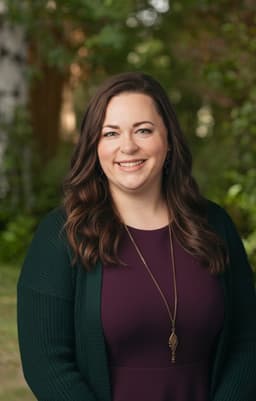
Leah Alissa Bayer
Leah Alissa Bayer, Founder and Managing Director of EVIA Studio
Leah Alissa Bayer, AIA, NCARB, LEED GA, is Founder and Managing Director of the architecture start-up EVIA Studio. First registered in 2017 in California, Leah is licensed to practice in CA, Hawaii, and Washington state and is based out of home offices in Palo Alto, CA and Bellingham, WA, while EVIA Studio serves clients throughout the Pacific States. A true multi-disciplinarian, Leah received her Bachelor of Architecture with an aerospace-centric thesis, a Minor in Fine Arts, and four years of structural engineering from Cal Poly, San Luis Obispo in 2014.
Equally passionate about serving as a leader in practice for her profession as she is to her firm, Leah is dedicated to volunteer work. She is the AIA Silicon Valley Treasurer and incoming Vice President for 2021, founding Chair of the AIASV Practice Leadership Committee, Founding Co-Chair of the Architectural Intelligence Conference, Advisor to AIA National’s Center for Practice, and Chair of the NCARB Experience Advisory Committee.
EVIA Studio isn’t your traditional architecture firm. They’re an award-winning, 100% women-led, virtual team of diverse professionals spread across the country who are passionate about creating exceptional living spaces for everyone. From extra space for a growing family to a vibrant showroom for a new business, healthy affordable housing or a luxurious getaway – whatever it is, they’ve got you covered with their commitment to outstanding service and design. They believe buildings should look great, feel great, and do great things for our communities.
Nicole Little
Nicole Little is the Community Engagement Lead at Architects Fora. With dual master’s degrees in Architecture and Urban Planning, she spearheads “Engage Fora,” a practice area dedicated to deep, systematic community involvement in the design process.
This episode is especially for you if:
You want to move beyond “check-the-box” community engagement and learn how to build it into a billable service.
You are interested in firm models that dedicate a percentage of staff time to research, pro-bono work, and professional passions.
You are a young professional with a dual-degree background looking for ways to integrate multiple disciplines into a single career path.
You want to understand how to align your personal values with the project work and operations of your firm.
You are curious about how a remote-first office can foster a deep sense of community and collaborative leadership.
§ SHOW LINKS
/// THE PRACTICE LAB
Conversations are useful. Running the experiment is what changes the firm.
The Practice Lab is where architects test one real change a month, on their tools, their business model, or their own career, alongside peers running experiments of their own. Office hours most Tuesdays.
§ TRANSCRIPTRead the full episode transcript
A The built environment is changing fast. If you want to be one of the people leading that change rather than responding to it, Join me this summer for Innovation in the Built Environment, a professional intensive from the University of Michigan's Taubman College of Architecture and Urban Planning. Learn more@beradicallybetter.com that's B E R A D I C A L L Y B E T T E R. Welcome to Practice Disrupted, a podcast exploring how architects can build better businesses, embrace emerging technology, and create more sustainable, fulfilling practices. I'm your host, Evelyn Lee, architect, angel investor, and founder of Practice of Architecture. Whether you're running a firm, starting your career, or reimagining what's possible, this podcast challenges you to think differently about the future of architecture. Hello Disruptors. Welcome back to this week's episode of practice disrupted.
A Season 12 has circled one uncomfortable question from a lot of different angles. How much of what architects claim they value actually shows up in how they practice? Today, that question lands somewhere specific. Community engagement. Most architects know they should do it. Many end up doing some version of it, and almost none have built it into a service that they actually charge for. Today I am joined by four people from Architects Fora who decided to change that. Leah Alyssa Baer is president of fora. Kate Conley and Sarah Vaccaro are their firm's principals, and Nicole Little is Community Engagement Lead and the reason this conversation exists at all.
A Nicole came to Fora before the firm even fully existed through a slow burn series of conversations that started in her interview. She holds dual master's degrees in architecture and urban planning. Because she refused to choose between them. She grew up in housing that was actively harming her family's health, and that history became a professional conviction. Fora had built 20% of everyone's work time into research and professional passion. Nicole used that space to build Engage Fora, a full service community engagement practice operating under its own brand, with almost no competition in its market and a growing list of clients who are simply waiting for someone to show up and lead. Let's get into it.
B Hello Architects Fora. Welcome to Practice Disrupted. Since there are so many of you joining us today, why don't we do a round robin of quick introductions?
C Hi Evelyn. This is Sarah Vaccaro, principal at Architects Fora.
D And this is Leah Baer, president at Architects Fora.
E And I'm Kate Conley. I'm another principal at Architects Fora.
F And I'm Nicole Little, Community Engagement Lead at fora.
B Great. And I know we've had Architects Fora on previously I'm obviously a huge fan of the firm, but I wanted to bring you on today to really talk about the program that Nicole has started. So engage Fora and how it came to be. And I wanted to kick off the conversation by talking about how Fora has a deliberate practice of giving team members space for their own research and development. I have historically said it's based off the Google kind of one day for yourself policy, but I'd love to hear the real history behind that and why you guys do it.
D Yeah, I'll start with this because I think it came from the very beginning of my career in this profession. I have always been really interested in the intersection of research and practice. I think if you've heard me before, you know I'm fairly non traditional as an architect and just love the potential of what studying other professions or other interests can have on what we do as architects. Because what we do is so big in what it touches and so expanding our worldview with an opportunity to develop a subject matter expertise outside of that is really exciting. So before starting my firm, I decided to work for a very large global firm that's well known for their research practice to understand how does an architecture firm do this, how do they integrate research into their work, how do they fund it, what does that look like? And learned a lot in a short period of time. So when we formed Fora, we finally had a big enough team where it was possible to start testing out what it would look like if we gave everyone an opportunity to do their own research or pursue their own passion. And fortunately my partners were crazy and gracious enough to dedicate 20% of everybody's time towards this. I will say also, Evelyn, separately I've had an interest in a four day work week, which is not just cramming 40 hours in a four day work week, but a 32 hour work week.
D So if you think about it, people who are really passionate about a subject are going to be exploring that outside of work likely. And that's on top of their 40 hour. So if you build that into the 40 hour work week, it is sort of functionally like a 32 hour plus something that's fun. So that was a personal thought on the back end of how this might work as well. It started out actually super loose, had no idea what we wanted to do. So we just were like, here's a chunk of time, eight hours a week, pick a topic that could have some potential impact on what we do and just go study it, understand it, learn. And we did that. For a while, I think about a year, close to a year.
D And then Kate developed this really awesome, basically like full project plan, a document that people would fill out that identifies a project they want to pursue with their time, how it'll impact our work, how it's going to be staffed, what deliverables are, what deadlines are. Really like setting up a framework for this to be legitimized. And it helped our team members also sort of develop project management skills and leadership skills in sort of a smaller scale and lower risk way. And then it actually brought more meaningful impact to our work after people had started to explore their subjects that they're interested in. And now we're working on formalizing sort of a research business plan and setting up the right structure to pursue grants. So this is very much a work in progress over the past few years, but has already had some pretty significant impacts on our business. As you will learn in this episode.
B I want to make a follow up statement about when you said we are now big enough to pursue this. Like, how big was big enough for you to set aside? Because we're not talking like a 40 person firm, right?
D I mean, how big were we when I started this? I can't remember. Eight people maybe?
C Yeah, eight. Eight to ten.
D Yeah. So still pretty small.
B I feel like in architecture, firm standards that becomes like medium.
D Yeah, but.
B But you're by no means like a huge firm.
D Correct?
B So, Nicole, you started to use that space to pursue community engagement work. Where were you in the development of all of this? Was that when it was a more loose structure? When it was after Kate kind of developed a full project plan, how did your involvement in community engagement come out?
F Yeah, so I think Sarah Lee and Kate, even before we had formalized this specialty structure, had encouraged us exploring these interdisciplinary fields of knowledge that we're passionate about and recognize the importance of bringing that intersectional work to affordable housing. My journey started back in school. I pursued a dual master's in architecture and urban planning. In my architectural coursework, I learned really great visual communication skills, but observed that there's this large disconnect between architects and the communities we're striving to serve. And then in my urban planning degree, I learned about community engagement data driven processes, and that this discipline has that inherent responsibility to serve their constituents, whether that's transportation, planning, public health. And so I've always had a kind of passion of merging these two fields together. When I graduated, I didn't want to choose between these two fields and I was very transparent with Saralee and Kate about that in my interview process. And so that dedicated specialty time and that opportunity and encouragement I received from them was one of the big factors that made me want to work for.
F For one of the many factors.
D Nicole was kind of a sneaky ninja about this, to be honest. Like, the way she came into the practice was not traditional, and it was based off of these very casual conversations about who she is and what she does. We don't have to get into detail, but, like, we were so compelled by her and interested in what she had to bring that there was sort of this slow roll process of trying to bring her on into the practice as we were buying out the firm. She really came into this with this passion, and we were excited about it.
B So, Nicole, talk a little bit about those conversations, because you said you were very open from the beginning. I think a lot more people wish they were more open from the beginning, honestly. I've been talking a lot more just in general about being honest with what you want out of a firm as well as what the firm wants out of you, because that makes for a more meaningful, lasting employee, employer relationship going forward for everyone. What were those conversations like? Like, did you have to kind of psych yourself up for them? And then how receptive was leadership along the way?
F Yeah, I don't think I ever felt the need to hype myself up to have these conversations with any of Saralea and Kate because they were so empathetic and human. From the beginning, from the initial meeting, we had kind of gone through this whole rebranding process together as an entire team. And some of our values were have a collaborative approach because we recognize diverse perspectives, bring value to the design, speak like a human for humans, center communities instead of putting ourselves as architects on a pedestal. And that architecture is really the stage for life and not the star of the show. Even in my beginning conversations with Saralee and Kate for this role, I was very forward about my passion for housing. And that came from a deeply personal space. I know we said we weren't going to get super personal on a Friday, but this is a very meaningful part of my story, is I grew up in not so great housing, very substandard housing that had severe impacts to the health of myself and my family members. And so I came with a different perspective of how intertwined housing and health are.
F And I was able to bring that to the firm and realize that everyone has that unique background and experience. They don't have to be an architect to bring something valuable to this field.
B I think one of the important Things you said was that the leadership created this space. I would love to hear more from leadership about how you create and inform that space and how the conversation transitioned. Because Leah mentioned Nicole being a little bit tricky about how her conversations, how it kind of bloomed into this full service aspect and literally not even a new service offering, but you are out there selling it as engaged Fora, which you could say is an entirely different business entity whether or not you set it up that way.
E Yeah, I mean it, it happened sort of almost by kismet and really rapidly. I mean the first, the reason, the reason Nicole is like actually joined for like negative time before Fora existed. She joined before we fully had bought the firm. And that project that she joined us to kind of help on before the deal was complete, we ended up winning. And pretty shortly after winning it, I think we had maybe had like one kind of casual conversation with that client. You know, they're like, oh, there's a community engagement requirement on this project too. We want to get that started pretty soon. I can't even remember maybe you even said it, Nicole.
E You were just like, oh, we'd be open to doing that ourselves. Just this, like very offhand tossed out comment. And a couple weeks later our client followed up with us and they're like, yeah, we'd like Fora to go ahead and provide a proposal on the community engagement for this project. So it literally happened like that. It was just that kind of putting it out into the universe and a client responding, seeing how thoughtful we'd been about the process so far. But it was very much a project based opportunity in the beginning. And us just having seen Nicole's work that she showed us in her portfolio of this deep community engagement that she'd done for her thesis, we had the confidence in her to say, like, we believe you can do a thoughtful process like this that will do right by our client who's asked us for this.
B So it's great that it was in her portfolio and I see that, but I feel like a lot of leadership, and it might be a generational thing, would be anxious or have anxiety about bringing a new team member into a project to leave such an important part. That kind of came out of a very light conversation. So I guess from a leadership standpoint, Kate, I know you mentioned it was in our portfolio, but is there anything else that you guys were measuring in terms of like the risk of having Nicole doing it and what honestly made Kate, Sarah and Leah like, stop yourselves from wanting to micromanage that as well?
E I mean I feel like early days of FORA and even now, like, we're all just figuring it out together. We were brand new to leadership. Our team was brand new to us. Why not trust this woman who's incredibly smart and clearly has this skill set that she's super passionate about bringing? Like, it's not like the three of us had these incredible community engagement skills and backgrounds that we were, like, comparing to Nicole's. If anything, she was the subject matter expert in this of the four of us. So, like, why not trust her, I think is kind of how we felt about it. Hire smart people and get out of their way. That's my advice always.
D I was gonna say, from a. From a liability perspective, performing community engagement is much lower risk than architecture too. So, you know, we had an opportunity to try something and learn from it with a partner that we really loved working with and that trusted us. So just why not?
B One of the things that I've been noticing a lot with the community engagement aspect, especially as architects, I would say the next generation of architects want to be so much more socially engaged, is one, they really love this work. Two architects, though, tend to tag it on as part of their services that they're already selling. We do it because the rfp, and we looked at the RFP and the process they got to the RFP to give us what they find in the RFP wasn't diligent enough for us to really deliver the type of building that we want to deliver. I feel like a lot of architecture firms then go back and say, we'll do this community engagement process because our building will ultimately be better for it, but, oh, it's included in everything else that we're doing. How did it evolve to become a whole nother service for you all, and what are the benefits that you guys have seen from that?
C I think for me to answer this question, best is kind of looking at different project types. So I come from my first 10 years of my experience in the profession was working on public educational school projects. And in that world, we do programming and master planning as a very integral part of the architectural design services. So I think to your question, Evelyn, it oftentimes is linked together because we need to talk to our district staff, our educators, our students, our parents to understand what the program is, what the goals are for the project, and then deliver the architectural design of those spaces. So I suspect that engagement for these projects being more internally focused with our client and our end users, isn't really seen as, like, community engagement. It's just part of the design process. And so I think it gets folded into the space architectural services more as you've described. Now, in contrast, multifamily housing is different.
C We don't typically have a direct connection to our end user. We don't know who our future residents will be. And in affordable housing in particular, we need to try and find and pursue people who might represent our future residents to better understand their priorities and their needs to inform the design of the project. So this becomes one arm of community engagement trying to reach our future residents. Affordable housing also has a stigma and often goes through a very public approval process. And we need to be thoughtful about building community support when adding the amount of number of new homes to an existing community, an existing neighborhood. And so bringing the community along through that process is key. And that becomes another arm of the community engagement process.
C So in this context, and at the scale of what it takes to do community engagement, well, it really does start to be a whole separate scope of services from our architectural services. And so I think that that, for me, best summarizes why this became so clearly kind of a branch of our firm that we needed to pour resources into.
B Historically, when I've talked to architecture firms about expanding their services, I recommended them doing a name change because our clients understand architecture services to fall in a very specific bucket of what they're offering. Talk about that decision when it came to creating Engage Fora and how Engage Fora is set up relative to the
D rest of the practice. I love a branding exercise. And when this started to get some real momentum behind it, as Sarah said, realizing how like big these services truly were, we knew we needed to lean into that and lift it up as, like, a differentiating element. And I agree the best way to do that is to give it its own identity and brand that people can recognize separately from architects Fora. Right. So that it is very clearly not just something that we fold into architectural practice. It's a unique offering.
E It was also because we started doing this on projects that already had architects. Yeah, we started doing this for other architecture firms as a service. So it didn't make sense for architects fora to be helping, oftentimes our competitors, whom we love doing it, community engagement. So it made sense to have another brand for that reason as well.
D Yeah, that's a great point. And that really, like, told us that was another step in telling us what this was as a legitimate, separate business is that it could stand on its own. So, yeah, to not compete. Right. So we workshopped this as a team and built out like materials and a strategic plan around it as if it were its own business. Nicole wrote a business plan for this, and then we planned a brand launch to really, like, put it out there in the world and give it some clout. So that came out in early 2024. And since then, Nicole has been building out, like, a suite of tools, both internally and externally to support this standing on its own.
D And that's with or without Architects Fora. So we have, to the extent we have separate bios under Engage Foura, we have a separate firm profile. We have all separately branded documents related to this. And when we seek out work where we're folding both of these things in, in our RFPs, we include EngageFora as like, a separate entity, but we tell the story about it, how it's married with our architectural practice. So we've really leaned into creating this separate business. To speak to your comment earlier about whether or not it actually is. It's not functionally, it's the same business. It's just simpler.
D We just got a fictitious business name or a DBA for Engage Fora. So this is truly a branding exercise so that the revenue is all coming into the same space, but it really feels like its own. And we're like, I'm very excited. I don't know. Sarah, Kadar, Nicole and I are very excited that we are next week actually attending Housing California Conference, and we, for the first time, got a booth for ourselves. And we're going all in on Engage. It's going to be a very interactive, very different type of experience, because last year, looking around and seeing sort of what was on the floor, and we were bringing up Engage, I realized we have this really cool opportunity because there's really no other competition in this space. And so we have this opportunity to brand Engage in a way that defines what community engagement actually is.
D Like, we can set a standard because there aren't other people in this space. So we're having a lot of fun with it. And, yeah, can't wait to roll that out.
B I want to circle back a little bit on what Kate mentioned, because, Kate, you even said you're doing this when there are other architecture firms on board. So, one, how are you being received by the other architecture firms? But two, are they hiring you or are the clients hiring you?
E Oh, that's a great question. Both is the answer. We have one client who now just reaches out directly to us who's another architecture firm, and we have also been hired by the client as, like, another consultant. I feel like Sarah has had the most experience with kind of both of those dynamics. You might be the best person to speak to that, actually. Sarah.
C Yeah, it's really exciting. As Nicole mentioned, it's our opportunity to walk the walk. We state that we value a collaborative process. And so getting to partner alongside architecture firms as their engagement consultant or partner along our housing developer clients as their community engagement expert is our opportunity to be really collaborative in our process and to go beyond just checking the box of community engagement. I think that's been kind of the layer of skepticism we've had to break through is that, oh, community engagement is just something you have to do, get through it so you can get it approved. Whereas we're trying to kind of re. Revise the narrative, if you will, to emphasize that community engagement actually makes our projects better and it sets our future residents up to be, to belong, to have a sense of belonging in the communities that they'll be joining when they move in. I think that's, that's, that's been our focus when we get to be engagement consultants to other architects is helping to reveal that truth a process.
C The more we can kind of co create with them of what do you need to. What would benefit your design to understand from the community and what can we put on the table to bring forward to the community, gather input on and then how can you really take that input and meaningfully integrate it into your design to strengthen it? So that's been an area that we've really been focused on in our partnerships with other architects. Now I'm not going to lie, it's our favorite when we get to be our own engagement consultants. It's just really fun and really meaningful. We believe it like with all of our heart that it makes our projects that much stronger to have robust community engagement with our future residents and with the communities and neighbors that surround our projects.
B I wanted to touch base on what it's like then working with other architects and where you're usually brought in on the process and what that dynamic is like. I imagine it might be a little bit different if you were brought in before they are the architect. It might be a little bit different if you were brought in after the architects. And then how receptive are they to what you're doing?
F Yeah, it changes architect to architect for sure. In the field there's still this kind of lingering mindset that architects know what's best and can make decisions on behalf of communities. And when that is the case, you know, you see community meetings where there's presentations and architects are kind of Talking at the community and then the community feedback received is seen as an uninformed suggestion in a way. And so our job there in that sense is to bring forward the value of community engagement. One of the key things that it does is it actually makes the design process a lot easier. It's less ambiguous. We have a lot of clarity and direction because of the feedback that we receive. And so when we're consulting, we kind of bring those values to the forefront.
F When we're sharing all that community engagement can be, a lot of the time we share case studies of other projects and how that works to kind of demystify the process. We find that people respond better to those more realistic illustrations of what it can be and what the impact can be. So in contrast, when we run community engagement because we're valuing what the community says, then our role kind of shifts to being listeners instead of talking at the community. And so the community, they experience something very different. We don't have this presentation at the front and everyone's sitting in chairs. We oftentimes have this station based engagement where the community goes around to stations that have been crafted to reflect the interest we're hearing. So if everyone cares about family oriented amenities or everyone cares about sustainability, we're going to make stations that are meaningful and relevant to them and then give them the opportunity to impact the design in a tangible and feasible way. And so it's a very different dynamic.
F It flips that architect and community hierarchy.
D I wonder if you can speak to like, sorry to ask questions for you, Evelyn, but. No, that's fine. Where we've worked, you know, our relationship with other architects in providing these services has evolved over time. Right. Where there's perhaps some skepticism in what our role looks like and potential competition between us being architects and coming into a space with another architect and then that evolving into being like reached out to regularly by that architecture team. It would be great to, if you could speak to that evolution, perhaps.
B Yeah, that was my question. Is that architect that was always talking at the community, did they ever come around to your side but also realize what they were doing at the time?
F Yeah, I think there was a big learning process for us in the beginning with this. And for us it was really like dropping our ego and coming at this from a lens of, we're on your team, we're not here to replace you as designers, we're here to help you on your journey with your work and make this. And we're only here to facilitate your process and make it better. And so there's two things that kind of make our practice unique. One is mission alignment in the fields that we're doing, community engagement. And then the second is deep disciplinary expertise. And so at 4, you know, we almost exclusively focus on affordable housing. And a lot of the community engagement work we're doing is also for architects doing affordable housing.
F And so we understand all that goes into affordable housing and it's design. And so we understand the type of feedback that the designers need. And then we also have that expertise in scheduling and how to get the right input at the right time and interweave this seamlessly with their entitlements process so that it doesn't make it a burden on them. And so we collect the right information that can feasibly actually be incorporated into the project at the right time. And so it's really minimalizing that friction to the best of our ability.
C And in the beginning, we partnered with a few firms that they were more hesitant to engage with the process. And when we came to the point where like, okay, let's craft our activities for this engagement event, it'd be a lot of things like, okay, they can help choose between these colors or this finish opportunity, like pretty superficial, literally superficial decisions. And that's fine. There's value in that. And that's not to discredit that. But there's so much more that the engagement and input from the community can be, can form the design process. And so we've evolved our process of how we partner with other architecture firms to bring them along and how do we co create activities together. And so now, even just the other day, Nicole created this great slide deck of okay, Here are the 10 priorities we've heard from the community so far that they're interested in.
C Parking is always one of them. Architectural character, how's it gonna fit in the neighborhood, et cetera. And then in the slide deck, we have like 10 examples of different activities that get at how we could gather input from the community on these different topics. And so we go through the slide deck in a working session meeting with our architectural partner and say like, okay, like what, what do you kind of have locked in? Like, it's non negotiable. There's not a lot of opportunities. What, what's open? Like what, what could you use a lot of input on? And then we craft the activities based off what would best support their process for this specific project with the specific community set of values. And that working session has deeply evolved the successful partnership between our team and other architecture firms that we're partnering with,
E yeah, I couldn't agree more. I think it's more just like how many times we've done this. Now we're entering year six of fora. We're entering year year five and a half of Engage Fora. I mean, it followed right on the heels. And so we do have all these examples, we do have all this prior experience. And I think for me, what really sells our partner architects on an idea is when we show them an example of how we did it on one of our projects. Like, we are the guinea pig architects.
E Fora is the guinea pig architect client for Engage Fora. So it's like, oh, here on our Mitchell Park Place project, this is how we did accountability. This is the way we demonstrated that. We showed that we were listening to the community. But it's our work. So it's like we walk the walk and I think it kind of can kind of give them a little more courage or comfort, whatever you want to call it, with the process, knowing that we also do it to ourselves.
D I think too, just to bring up Nicole's point about approaching this without an ego is really important. We come to the table truly with a service mindset to the other architects and great respect for what they do because we, we do it too and we understand how hard it is and how important it is. And I think that's what a lot of architects are really nervous about as well in that relationship and being able to do that and to continue to prove that we're here to serve them. We're not getting involved so that we can also be designers on this team. And just showing that builds trust over time and has led to these sort of repeat relationships with architects that, that then can see the value in working together.
A This episode is brought to you by the University of Michigan's Taubman College of Architecture and Urban Planning. I am teaching their professional intensive course Innovation in the Built Environment. And it is designed for practitioners who are ready to think differently about how the built environment gets made. Whether you're an architect, planner, developer or somewhere in between there. This course gives you the frameworks, the language and the cross sector perspective to lead change from wherever you sit. Five weeks of virtual sessions plus an in person intensive in Detroit. Find out more and register@beradicallybetter.com that's B E R A D I C A L L Y B E t t e r.com so on the flip side
B of the branding conversation or the branding question that we kind of asked earlier, I imagine that having this branch of community Engagement has also supported the work of fora. Can you talk a little bit about that? Sarah, you did say you obviously love to do the projects where you are also brought on as a community engagement specialist. Has that become a confusion at all or has it just been purely beneficial to the work that you're doing on the architecture side?
C So I would say there's. There's a big bucket of projects that are authorities having jurisdiction or landowners like county owned land or city owned land that put a project out for RFP to our developer clients. And in that rfp, there's a strong requirement for community engagement to be a part of the process. And in those situations, we have really awesome nonprofit housing developer clients that come right to us. They're like, okay, this one's focused on community engagement. We want Engage Fora and Architects Fora on this proposal. We want to present our seamless design and engagement process and win this project. And on those projects where there really is truly an emphasis for community agent, we've been hugely successful.
C We've won three major projects this way in the last year, I think. And they're big projects. They're the biggest our firm has ever had, you know, 250, 300 plus units. So it's really exciting to one, be moving to projects of that scale that can add that many new homes to a community, and two, get to do it with our seamlessly integrated community engagement architectural services. The other bucket is a nonprofit housing developer that has a project. They already have acquired the site or have access control to the site, and they've decided that they want community engagement involved in their process and an architecture team. And sometimes they'll put an RFP out for the two services separately. And so we've done really well chasing just the community engagement side of those projects.
C And that's when we really do get to partner with other architecture firms. And that's been a really fun kind of sideway to get into projects and work with a range of other partners.
B It is one and the same. Like Leah, you mentioned, it was just a DBA as Engage Fora. And I imagine, Nicole, you may be getting enough work to be purely on the community engagement side, but how are you all managing staffing and kind of what that looks like? Any confusion around this is our community engagement specialist, but they also may or may not happen to be your project manager on the architect side going forward.
E I feel like maybe I can answer this one and Nicole jumped in if you have extra feedback. She's a very busy lady these days. Let me Put it that way. The short answer is we staff it like an architectural project. An engagement project is an architectural project. And we as a team made a very conscious decision that all of our team members had a strong interest in participating in both of these activities. And really our team now views community engagement as an integral process of. Integral part of the design process.
E So it would be weird to, like, not view DD as part of the architectural process. It's also weird not to view CE as part of the architectural process. Like, for us, it is on that continuum. So that makes it easy for us to just staff it as seriously as an architectural project. We can adapt as needed when there are, like, billable work pushes. But we have so many CE projects this year, especially that it's, you know, critical that we support this big chunk of our. Of our business model in a really serious way. So what that has meant for us is that Nicole has really taken the helm as this, like, director role of Engage.
E She is training our team members to do all these tasks that she used to just kind of jump in and hack herself. And you know, what we found that's really special is that there are different parts of the community engagement process that have caught fire for different team members. And Nicole's made a really intentional move to find those, like, oh, this person really loves data synthesis. This person really loves being in person, greeting people. This person really loves, like, crafting the activities and identifying those design options. So just she's managed to identify what team members thrive in which phases as well. So that we're pulling people into CE in the moments that they can thrive on that process, because it is a new skill set for most of us.
F Yeah, Leah can speak to this more, but we did really make that conscious decision early on with Engage. And one of the main drivers of that was that we learned that you don't really internalize the feedback from these community engagement meetings unless you're there and interacting with the participants. If there's that level of separation between you, you don't really have that same level of empathy towards the community. And so when we're consulting for other architects, we want the architects there at those meetings as well. And so the same thing applies with our team. And so it was a very intentional decision to integrate our team together and involve them in community engagement.
D Yeah. And to speak on sort of the decision for this to be part of our practice overall. During those workshops when we were building up this branch as its own business, we talked about what is the ultimate goal of Engage 4, what do we want this to be in the future? Is it becoming its own separate company that has its own staff, or will it always stay integrated with architecture? And we came to the decision that what was most exciting and most impactful was that it stays married to architecture and instead of becoming its own thing, that architects adopt community engagement as a basic service. So our ultimate goal is for the entire profession to do community engagement on their work in a meaningful way and not just sort of checking the boxes type of way. And so because of that, we decided everyone on our team will be contributing to community engagement in some way, and they don't do it. In addition to sort of their architectural role, we do have certain people dedicated to the community engagement component and then we have a team dedicated to architecture so that they both get the full attention that they need and are working together as one integrated team.
C The cool hack to this is that as Nicole said, we are very focused on affordable housing. That is our area of expertise as engagement consultants and architects. These projects take 5 to 10 years to go from start to end. So being splicing into these very long term projects as community engagement consultants, which is a relatively short commitment in the grand spectrum, we get exposure to a lot more projects on a quicker cadence. And what that does is lets us to become experts in that local community that we're engaging with and experts on the project type it is. Typically affordable housing is intended to serve a specific population. Sometimes that's very specific, like veterans or farm worker households. Sometimes it's more general, like families.
C The engagement strategy to connect with those potential future residents is different, but there's a huge amount of data and research that's gained in the engagement process about very specific communities and populations that then we can leverage into our own architectural projects that have similar populations being served. And so it's been really cool to get exposure to more projects in that way and kind of just build our expertise and research database.
B I imagine also obviously that it gives you greater exposure before the RFP even goes out in many instances. And Leah, you mentioned that there's not actually a lot of competition in this space. So when you guys were looking at how not only how you staff, but how you price the services, how did you guys figure all of that out?
D Oh man, it's been a journey. So from the very first engagement that we spoke to earlier, where we were just sort of casually invited, we had no idea what to price us as. So we, we set a pretty low fee. If you compare to what we charge for that to what we're charging now it is like light years apart. So we just picked a number and we were dedicated to doing it as the architecture team and learning what it took. And so we kind of tested it as an experiment and knew that we were going to eat it on it as we learned. And we were actually told afterwards by that client like, hey, you can probably charge a lot more for this service. Which was really nice of them to tell us.
D And we recognized that we needed to after we evaluated what it took to do that work. And so with each project, we would increase a bit more and a bit more and bit more, sort of testing the market to see what it could handle and what felt comfortable for our clients to spend on a service like this. And it was marrying that with how much effort it actually took to do the work. And we got to a pretty good place where we could then sort of break that down into a whole menu of services based off of the different events or deliverables that we were offering. And that has served us really well over the past year or so, although we are due for another sort of look at that and refinement based off of what we've learned with having so many engagement projects right now. And so I think now we're sort of recognizing different communities and different clients have very different needs, even if the process technically looks the same in the plan. So being able to uncover that upfront and understand or adapt as we get into the plan will help us dial in those fees even further. But also, as we've been building out our services, we talked about how Nicole's been building out these tools and training up her team, so we've become much more efficient as well.
D So there's a sort of level where we capped out to where our clients feel comfortable. And maybe it took us more work than we could charge, but now it's taking us much less and less because we're being much more efficient.
E I would also say that in terms of fee setting specifically, there's really two aspects to community engagement, which is there's brain work and there's time work, because half of community engagement is event planning. So we do also have clients who are more than comfortable taking on the event planning half. And we can offer the brain work of community engagement at half the cost. And so part of that menu that we've built out is this kind of like client led or fora led, because you can also hire us soup to nuts, and you show up like the day of, and we have a whole event ready for you to go, or if you Have a client that has like an event planning team or a really motivated pm and that's something you prefer to self perform. We're happy to just come in and slot in the content. So it's flexible in that sense as well, in a way that architecture is not as flexible. Like we don't just let our clients like come in and self perform part of our architectural projects. So it can really be a very flexible conversation with them.
E Because not everyone has a huge community engagement budget on every project.
B What has that meant to the relationships that you have been able to form or to build with developers, landowners and jurisdictions in a way that probably most architecture firms just don't get to build those relationships? Because of this new Engage fora piece,
E we have the perfect answer to this question. As of this year, we have absolutely met developers, landowners, jurisdictions, as Sarah said, resident populations who we would not have met without our community engagement services being an independent service. Perfect example of this is that we were hired by a master plan architect to help with engagement on at the VTA River Oaks site. And we were brought in, did the initial community engagement before there was a developer on board. VTA had hired this architect to do their master plan and they wanted to do community engagement about the master plan. That architectural client, because they were the master plan client, were precluded from competing for the independent affordable housing project. That was the first phase of that master plan. So instead we partnered with one of our go to nonprofit housing developer clients, went after the project together and won it.
E But we were already the community engagement firm for that master plan. So they knew us and they knew how authentically we loved this process and how much we believed in community impact on design. So the groundwork was completely, completely laid for that project. And I'm not saying we 100% won that project because we were the community engagement consultants, but it was certainly mentioned and it certainly didn't hurt. So that was like literally living out like our wildest dreams of how community engagement might work from a business development standpoint was that that whole process and it was again all just kind of recognizing opportunities and taking them when it made sense and doing your best work that's authentic.
D So when we're doing business development for our architecture work and we're meeting with new clients and we're talking about ways that we can build a relationship. What we used to offer is, you know, hey, if you have a site, let us do a test fit for you. We'll do a little freebie so that we can build some sort of relationship that's low risk or low cost. And what's exciting is that we can also now slip in, hey, you know, we also do community engagement and this is really important to us. And if you have something that you're exploring that you need support in that way on, we'd love to be considered and we'd love to help you with that. And again, that is a low risk and much lower cost relationship and commitment to our team with a new developer that hasn't worked with us in architectural capacity, that we then have this opportunity again to prove who we are, show who we are through a shorter and lower fee commitment. So it has led to new work in a lot of different ways. By opening up those relationships and those doors and being able to just offer that as an option.
F Another way it's opened doors. Our first community engagement project, Mitchell park, which we brought up earlier, that was where Engage Fora was born from. And at the end of that process, in one of our later community engagement meetings, one of the higher ups in our client's company, they wrote to us that this was the best community engagement process they had ever seen, which was an incredible compliment to receive from a huge client. And from there it kind of blossomed from this word of mouth perspective where they reached out to other companies and just threw our name out there, said, you should hire Fora. And so Engage Fora really organically evolved from that as well. It's not all, you know, seeking these new opportunities and new clients. A lot of it comes to us.
C And I think a very simple reason that this is engagement is such a beautiful relationship builder is that you're throwing events with people, you're spending a lot of time in person, which, guess what, we're humans and that's what we're meant to do. And it feels really good when you get to spend time with people with your clients. Hanging out at a farmer's market or a holiday market. It also feels really good to talk to, to real people that care about the work we're doing. And just inherently in that process of talking and listening and engaging with people, it builds really deep bonds. And that is like, I don't think any of us could have ever expected that. That's just a beautiful component of this work that we get to be really deeply relational with our clients and our community members.
B How do you guys look at it going forward then? What is the overall business development program like? Are you managing to. It's all under the one roof, but you're kind of managing, doing two different things. The Services are differentiated, yet they're integrated, yet we want everybody on our team doing community engagement. So what do those conversations look like when you're doing strategic planning for the year ahead?
E I think you're about to get four different answers to this question, but I'll give mine first. We have a lot of community engagement work right now and for me as a leader of our firm, it is very important for me to keep the right balance of architectural projects and community engagement projects. And I don't, I mean, candidly, it is a lot of in person time, like Sarah said. And you want to make sure that your team has good work life balance. You don't want someone to burn out because they're going to too many farmers markets doing community engagement pop ups this month. Like that's silly. So for me it is about maintaining that healthy balance of, you know, our team getting to have this remote work practice that they've bought into by coming to work for fora, but still having, like Sarah said, those really critical in person moments as well. So that's where I come at.
E It is keeping the status quo and having good balance.
F I can go next. That balancing piece for me is really knowledge sharing with other entities, especially other architects, and not gatekeeping. What we're learning, we can't do architecture on every project or we can't do engagement on every other project for every other architect. And so we're doing our best to share lessons learned as we're learning them. Tips, resources because we've said this earlier, but we want architects to be doing this work, we want it to be integral to every process because the result is built environments that will better service all.
C I'm a very present minded person, so in three to five years I want to be doing exactly what we're doing right now which is engaged for is providing engagement to all of architects for projects. That might not fully be true right now, but that's my vision, is that we get to that point and we're still providing engagement services alongside other architects because I do love the balance between the two. But yeah, I've drunk the Kool Aid. I'm all in that our projects, any project is better when you talk to the community and the future residents. And so I just love to see that be prevalent across all affordable and multifamily and other scaled housing projects.
D I think I'll surprise you because I know you all think I'm usually very futuristic, but when it comes to engage, it's different. So I would echo what everyone has said so far. I Think aligning with all of our projects. And that includes expanding into different states where we are doing work in other communities. Also expanding. We have three different levels of engagement. Engage before, which is what we all think about when we're talking about. And then we also do engage during, which is continuing to engage during the construction so people understand what to expect.
D And then engage after, which is post occupancy studies, which has a really great potential impact on sort of architectural research for the broader architectural community. So I think leaning into the expansion, expanding those further services is exciting and we're doing it, just need to keep doing it. But I want to come back to. Well, first I'll go to Nicole's comment about other architects doing engage work. Our goal, as we said, is that this becomes a basic service and we cannot do it for everyone. We would love every architect to do it. So I can see really open sourcing and sharing these tools and resources that we've developed with other architects, perhaps partnering with the AIA to provide these resources and work with other firms that are doing this to provide standardized toolkits so it truly can become a standard basic service. That would be really exciting.
D And then to get into, I guess, the futuristic component of where my brain goes and talk about technology and where we're headed as a society, AI is really going to impact the architecture community. And I think we're all kind of pretending that that's not going to happen. But I looked at a study recently, and it's one of the top professions out there that's expected to have a major impact on what we're doing. And if you think about it, you can understand and see why. So I think the components of what we do that really are those relational moments and working with and understanding with people, human to human, are where we need to invest and where we really will find value and be valued in a world that's becoming more and more impersonal with the advancement of AI tools. So I, I hope that we can continue to show how valuable architects are in these moments, beyond what people think of us as like drafters or drawing pictures or whatever. You know, the public doesn't have a great sense of what we do. So if we can truly pivot and lean into this one, it'll be better for communities, it'll be better for architects and architecture, and it'll help us be more resilient in the next few decades where things are going to change a lot for the profession.
B So, Nicole, I feel like you've been gifted this opportunity at this wonderful firm to pursue something that you are ultimately very passionate about. But I also think you were very proactive in the beginning in terms of matching with a firm that would enable you to pursue those passions. So what advice do you have for young architects graduating into the field right now about using their voice to do the same thing that you did at Architects Forum?
F Absolutely. So my advice would be to find a firm that is value aligned and doing project work that you're really passionate about, regardless of if they're doing commute engagement or not. If you get the sense that their leadership is open and aligned with your values and open to community engagement, then go for it. And then once you're there, if they're not already doing community engagement, then advocate for it. I think our role as young professionals is to bring in that fresh new perspective, be disruptive, and change the field for the better.
A Hi Disruptors, thank you for joining us today on an episode of Practice Disrupted. If you like the content for today's show, you can find all of our past episodes over on practiceofarchitecture.com podcast. Be a part of the conversation by joining me, our speakers, and other disruptors in our community@practiceofarchitecture.com community. Our social media handle is practiceofarch. That's practice of ARCH. We'd love to hear from you, so feel free to drop us a DM and say hello. Tune in next week for a new conversation on change in the profession. This summer, join me for Innovation in the Built Environment, a professional intensive from the University of Michigan's Taubman College of Architecture and Urban Planning, built for practitioners who are ready to move from thinking about transformation to actually leading it.
A Learn more@beradicallybetter.com. that's B E R A D I C A L L Y B E T T E R Com.
§ TOPICS
Community & AdvocacyBusiness ModelFirm Operations
§ MORE EPISODES YOU MAY LIKE


/// THE WEEKLY READ