
/// PRACTICE DISRUPTED

§ EPISODE 235
From Trash to Power: Diverting Construction Waste at Industrial Scale
How can the AEC industry turn 41 million tons of annual wood waste into a circular economy powerhouse?
In this episode of Practice Disrupted, Evelyn Lee ventures into the construction and manufacturing side of the built environment to speak with Todd Thomas, founder and CEO of Woodchuck. While the podcast typically focuses on architectural practice, Todd’s work at the intersection of AI and sustainability offers a glimpse into a future where waste is no longer an afterthought, but a valuable commodity.
Todd explains the staggering scale of the problem: over 41 million tons of wood are sent to U.S. landfills every year, accounting for nearly 40% of all landfill volume. He details how Woodchuck uses advanced AI platforms to identify, sort, and divert this material at industrial scale. By bridging the gap between construction sites and manufacturing outlets, Todd is building the infrastructure necessary to move the industry away from a “take-make-waste” model and toward a truly circular economy.
The conversation also touches on the speed of execution in the tech world versus the slower pace of traditional architectural practice. Todd shares insights into how Woodchuck was “spun up” quickly to meet market demands and why architects need to start thinking about the material life cycle, and deconstruction, long before a project breaks ground.
“If we don’t have a way to divert it, it goes to a landfill. It’s that simple. And when it goes to a landfill, it produces methane, which is 80 times more potent than CO2. We have to treat waste as a resource if we want to change the math on sustainability.” — Todd Thomas
This episode is a fascinating look at how adjacent industries are solving the problems architects design for. Todd emphasizes that while architects have the vision, they must partner with technologists and “builders” of systems to ensure their sustainable goals are actually met in the field.
Guest:
Todd Thomas is the founder and CEO of Woodchuck, a technology platform dedicated to wood waste diversion at industrial scale. With a background spanning construction, manufacturing, and emerging technology, Todd has spent his career building AI-driven platforms that solve complex environmental and supply chain challenges. He is a leading voice on the circular economy and the role of tech in scaling sustainability.
This episode is especially for you if:
- You want to understand the true environmental impact of construction waste and why wood is the most overlooked resource in the waste stream.
- You are curious about how AI and machine learning are being used on the ground to identify and sort materials for reuse.
- You want to learn how to design for deconstruction and help your clients participate in a circular material economy.
- You are interested in the speed of tech startups and how their approach to business execution differs from traditional architecture firms.
- You believe that architectural value should extend beyond the building’s completion and into the responsible lifecycle of its materials.
§ GUEST
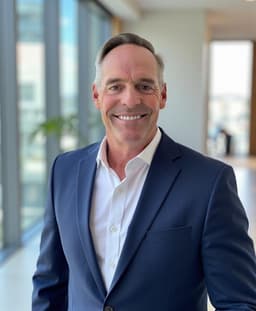
Todd Thomas
Todd Thomas is the founder and CEO of Woodchuck, a technology platform dedicated to wood waste diversion at industrial scale. With a background spanning construction, manufacturing, and emerging technology, Todd has spent his career building AI-driven platforms that solve complex environmental and supply chain challenges. He is a leading voice on the circular economy and the role of tech in scaling sustainability.
This episode is especially for you if:
You want to understand the true environmental impact of construction waste and why wood is the most overlooked resource in the waste stream.
You are curious about how AI and machine learning are being used on the ground to identify and sort materials for reuse.
You want to learn how to design for deconstruction and help your clients participate in a circular material economy.
You are interested in the speed of tech startups and how their approach to business execution differs from traditional architecture firms.
You believe that architectural value should extend beyond the building’s completion and into the responsible lifecycle of its materials.
§ SHOW LINKS
/// THE PRACTICE LAB
Conversations are useful. Running the experiment is what changes the firm.
The Practice Lab is where architects test one real change a month, on their tools, their business model, or their own career, alongside peers running experiments of their own. Office hours most Tuesdays.
§ TRANSCRIPTRead the full episode transcript
A When I was practicing, finding a detail meant digging through old models. That's why I'm glad to have Puros sponsoring this episode. They make every detail family and standard searchable across your firm and ensure that nothing gets used blindly. See it@pyrdos.com that's P I R R O S.com. Welcome to Practice Disrupted, a podcast exploring how architects can build better businesses, embrace emerging technology and more sustainable, fulfilling practices. I'm your host Evelyn Lee, architect, angel investor and founder of Practice of Architecture. Whether you're running a firm, starting your career, or reimagining what's possible, this podcast challenges you to think differently about the future of architecture. Hello Disruptors.
A Welcome back to this week's episode of Practice Disrupted. We don't usually cover companies on the construction side of the project. Practice of architecture sticks to business operations and where architects can add value. But every now and then someone shows up doing work so adjacent to our world and so far ahead of where most of us were thinking that I want to bring them into the conversation. Today I'm sitting down with Todd Thomas, Founder and CEO of Woodchuck. Todd's background spans construction, manufacturing, sustainability and emerging technology with a common thread of AI platforms across his last several companies. Woodchuck is wood waste diversion at industrial scale. The US sent over 41 million tons of wood to landfills last year.
A 30 to 40% of landfill volume is wood. Todd's team pulls that material out of the waste stream, processes it into biomass and routes it to energy partners who turn it into clean renewable power. The tech piece is Woodchuck AI computer vision on the dumpster itself so that the wood bin is actually wood and the cardboard bin is actually cardboard. The strategic piece is chain of custody from origin to final destination, audible diversion data. Their clients can actually stand behind. We get into the Ford Blue Oval EV battery project, what waste diversion specs could look like in pre construction and where architects have leverage they are not yet using. Let's dive into it. Hi Todd, welcome to the show.
A Thank you for coming on Practice Disrupted.
B Thanks Evelyn. Thanks for having me on.
A So we don't usually cover companies on your side of the project, considering that we cover business operations. But you are doing something really interesting so I wanted bring you on to explain to us what you're doing. But before we get into Woodchuck, why don't you tell us a little bit about your background and how it's mostly non architectural.
B Yeah, so I mean academically I studied economics and then my career has really spanned multiple different verticals. Construction, manufacturing, sustainability, always with a common thread of emerging technologies. So I kind of have an eclectic background that applies to the, I guess the unique role that Woodchuck is now filling.
A So do you want to tell us what that role is?
B Sure. So Woodchuck does wood waste diversion. So we work with construction and manufacturing companies to divert wood out of their waste stream. So the United states sent over 41 million tons of wood to landfills last year. U.S. landfills are 30 to 40% wood by volume. So it's a huge amount of material that's filling up our landfills. And that material is really valuable.
B Wood has tremendous potential for all sorts of different products. So we work with construction manufacturing companies to make sure that none of that wood ends up in the landfill. We divert it, we process it into biomass, and deliver it to our partners that use it to generate clean, renewable energy. So we are reducing waste and we are providing a new renewable source of power. We're really addressing two global problems by connecting those two problems together.
A What is interesting to me in your explanation, which is great, thank you, by the way, was that you made no mention of AI, yet AI is integrated into what you're doing. Can you explain a little bit more about that as well?
B Sure. So we built an AI platform, Woodchuck AI, and we use the AI specifically. We use image recognition, or you can call it computer vision. We use that to help us identify and segregate materials. So in the past, lots of different companies have tried to separate materials after the fact. So you can envision a big dumpster at a job site, and everybody just throws everything in there, right? You've got metal and cement and drywall and all kinds of stuff. And it all gets mixed together, it all gets commingled. And then some company will pick up that dumpster and bring it to a facility somewhere and try to sort that material out.
B And it's really difficult because once all this stuff gets mixed together, it's messy. And to separate it is very labor intensive. And really, no one's figured out a cost effective way to do that. So we have a different strategy. When we go to a job site or to a manufacturing facility, we put multiple containers. We put a container for wood, we put a container for cardboard, one for plastic, one for metal. And we really can do as many material streams as that site generates. So we're not.
B We're not limited to a certain number of materials, but we always have wood, cardboard, plastic, metal. Everybody has lots of those waste. And then we use the AI system to help make sure. We are getting the correct material in each bin. So I'll actually put a camera on the bin so it kind of turns it into a smart dumpster, if you will. And if someone tries to put the wrong material into that bin, we can notify them immediately so that can be removed and we get compliance. So at the end of the day or the end of the week, whenever that dumpster is full, the wood dumpster is all wood and the cardboard dumpster is all cardboard. Now we have these materials pre sorted.
B Now we can consolidate them and they become commodities that have value. So for a construction company or a manufacturing company or a small business, instead of paying someone to haul all of these materials to a landfill, we're diverting them and we're turning into value, we're turning them into commodities that can be sold and it actually generates soft revenue back to that client. So it's really pretty powerful. Last year, or I'd say in general in the United States, we spend about $2 to bury a dollar worth of material in the landfill. On the grand scale, the US spent $2 billion last year to bury a billion dollars worth of valuable resources. So we're trying to address that problem, make sure these fantastic resources don't get buried. We divert them and use them for their highest best use.
A Another interesting thing that we talked about during our conversation previously too is Woodchuck is the whole system. It's not just the technology on the dumpsters. You're end to end. What does it take to build out that type of infrastructure within a company?
B So when we originally launched, we actually launched with just the platform and we subbed out all the different pieces and we managed and tracked everything with our platform. But then we, in order to make the platform as rich and detailed and functional as possible, we decided we wanted to work as the operator in order to really learn the business and make sure our platform did everything that that operations needed it to do. So we started functioning as the operator as well. And what we discovered over time was there was a real strategic advantage in being both the operator and in being the software platform. And that really comes down to what I think has become our core value, which is chain of custody of this material from origin through destination, which allows us to track all of that data and be able to validate exactly what happens to all of these materials so we can provide validated auditable data to our end clients that can prove the diversion efforts that they're taking. One of the challenges in sustainability in general is a lack of data and certainly that's true. On the waste side. You know, everybody's familiar with waste management and public services and Green for Life and these big companies, well, they're in the business of hauling waste.
B And they own landfills. That's their business. So they haul material and they take it to a landfill. Some of them do offer recycling services, but for the most part, when you have something recycled, it goes to a MRF material recycling facility. And the reality is, once it enters that facility, it's kind of a black box. You have no idea what happens to that. Sometimes before it even goes to a mrf, it goes to a transfer center, which is just where they bring all the small trucks and consolidate all the trash before moving it to another location. And again, once that material goes in there, it's a black box.
B Nobody knows what happens to that material. It's commingled with material from other job sites. So there's no way to track what happened to your data or to your material. So for Woodchuck, when we pull material, when we take wood, we control that wood from the job site through processing, through transportation, until it's actually delivered to the energy facility to generate electricity. When we take cardboard, we bail the cardboard, we load it on trucks, and we track it all the way to the recycler. So whatever material it is, we track it from origin to final destination. So we have that chain of custody so we can let people know, yes, we really did recycle your cardboard. This is the recycling company we brought with you.
B We really did recycle your metal. This is the metal recyclers that receive your metal. And we can provide confirmed and validated data to prove that, yes, we diverted all these materials. And here's your validated proof of proof.
A Earlier on, you mentioned that a part of your background covered the construction industry, but you actually have a very varied background that works across multiple industries. So how did you find yourself in a position where you saw Woodchuck as a viable company?
B So you're right. I've worked in a number of different industries, including construction, but also manufacturing, automotive sustainability. But again, the common thread was always emerging technologies. And the last several companies have been AI platforms. And so the origin of Woodchuck really comes back to Northstar Clean Energy. So North Star Clean Energy is the renewable energy side of the public utility for the state of Michigan. So a lot of people in Michigan buy their power from Consumers Energy. That's the consumer facing brand.
B Inside that company is the renewable side of the house where they develop solar farms and wind Farms and they have bioenergy. And so they actually reached out to me and said, we have a unique problem that we're hoping you can help us solve. You have an odd, eclectic background across different verticals and technology. So we think you might be able to help us solve this problem. So their problem was they had three bioenergy facilities in the state of Michigan that had the capacity to use biomass to generate electricity. Their challenge was they didn't have enough biomass, so they were forced to augment their fuel supply with fossil fuels. They really wanted to get off of fossil fuels and go 100% biomass. So they were looking for a solution that would catch them up on biomass immediately, but also they think they need to double their energy capacity over the next 10 years.
B So they're looking for an immediate solution, but also a solution that could grow with them over the next 10 years. So they reached out to me and said, hey, you've got this interesting background. Can you come help us try to solve this problem? So we worked together and we came up with the hypothesis that there was a huge supply of wood waste in construction. And that that wood waste from construction, it's usually two by fours, right? They're already dry, they're relatively clean. Two by four is fairly energy dense in terms of how biomass goes. So it can be an ideal feedstock for biomass, for energy production. So we came up with that hypothesis, my co founder and I, Dre, who worked together, this is the third company we've done together working in AI platforms. So we quickly built an MVP of the Woodchuck AI and we rolled out to a very first client and that very first client happened to be an Amazon distribution center.
B And so the very first month on that job site, we diverted several thousand tons of wood from their job site and we processed that into biomass and our partner, Northstar Clean Energy, turned that into clean renewable energy. Then Amazon gave us the feedback that was, hey, this is great, we loved what you did with the wood, but what about all the other materials on the job site? What about our cardboard? What about our plastic? And we had purposefully built our platform to be flexible because we, we knew there were lots of things that we didn't know yet. We didn't know what we didn't know, right? So we built platform to be very flexible. So we quickly added cardboard and plastic and we continued to build our data set and we, and we taught the algorithm what cardboard was and what plastic was, and we taught it basic contaminants. And month two, we diverted wood, cardboard and Plastic. It really took off from there. Because what we found was construction companies are looking for solutions they would prefer to divert waste. They don't want to pay someone to take in the landfill.
B And a lot of it's coming from their end customers. Their end customers are looking for solutions to reduce waste and to reduce costs. So we come in with a solution and we're able to divert their materials and we're able to generate soft revenue back to them. So we can really reduce waste, reduce costs, and increase availability of power. So construction companies love it, their end clients love it. And so it's really taken off. We're now in the beginning of our third year, and we've gotten to work with some amazing partners. We've got an amazing client list.
B Oh, yeah. It all starts from what was the problem we were trying to solve and how do we come up with a solution that will meet our end goals? And yeah, we're pretty excited. We've got good momentum.
A I want to talk about momentum because I think architects come up with ideas and we're used to working on timelines that take especially our larger projects. I've heard permitting takes longer than what you just said to stand up a company. Can you talk to us a little bit about that? Speed to momentum and how do you getting an MVP and just going and implementing it's just a new type of variable or a different type of pace, I think that architects work at. But I think it also speaks to the ability of being able to move fast and what you can do with that.
B Yeah, so that's the interesting interaction between a startup company and construction and architectural and big tech. Right. Because they typically don't move quickly. So that's for us, if we find a client that says, oh yeah, we can move really quickly, we can do that within six months. Like, hey, that's great, we can do it by tomorrow. Right. Because we're a startup and we can move quickly and we have a small team. So you have to find that path that works for both of you.
B You need to find that timeframe that works. So, yes, we can bring value to a big company because we can solve their problems quickly, but it's not always easy to implement those problems. But say, one area that we're really excited about right now that really interacts at the architectural level is building in specifications upfront as to the waste diversion, both the percentages of waste that is to be diverted and the ability to track and validate that. We think moving forward for construction, that's really important. And we want to be. We would like to see waste diversion specifications included in the specifications of that building. So we are just starting to do a couple projects where we are kind of engaging in that pre construction stage where these specifications can be built into the project. And I think we're seeing a particular interest in that in the AI data center space.
B So obviously there's a huge surge in AI data center construction and the end clients are these big tech giants that have really big commitments and public commitments to sustainability. So they want to divert their waste and they want to be able to prove that they are diverting their waste. Because there's the whole other discussion about greenwashing. Right. So if you're saying that you're diverting waste, but all of that material is going to a transfer center or to, to a MRF and you can't really track it and validate it, you know, what are you, what are you really doing? What can you prove? So if you, you know, were to engage with woodchuck and we can actually divert all of those materials and we can track and validate and provide auditable data so you can prove all of that diversion and there's tremendous value to the end client and that's the type of specification that we would like to get built in. Really the pre construction architectural phrase, that's
A obviously client driven on the specification side.
B Yeah, but there's a couple of big, and I'm not sure I should say the specific companies, but there's a couple of the big tech companies that really kind of lead this space and if they build specifications, they often become the default in the industry. Anyway, we've got a couple of projects maybe I can come back later and give you more specifics on. But we're pretty excited about a couple of these projects.
A It's been interesting because I think the language that you've been using on this call covers sustainability and climate, which I feel like architects really resonate with. But you also covers waste reduction, cost reduction and efficiency. How has your positioning of woodchuck changed today versus maybe when you just started two years ago? And honestly, why have you made some of those adjustments?
B So you're right, the language has changed. I mean, what we are doing, diverting waste, tracking it and reporting on that, that hasn't changed. But you're right, how we're talking about it has. And that's because words like climate and sustainability, they do have an audience, but for other audiences they can be a little triggering and there is resistance there. However, everybody likes efficiency, everybody likes cost reduction, everybody Likes waste reduction. Now those are non political, right? Everybody's on board with those. So we do, I would say we talk about sustainability and climate impact with specific audiences, but in our broader communication we do kind of lean into the efficiency of AI, you know, the efficiency that AI can bring to that environment. And we lean into the cost reduction and the waste reduction because again, that's, you know, that's, everybody's on board with that.
B So yes, that is definitely a shift from when we launched three years ago.
A Big thanks to Pyrdos for sponsoring this episode. Every firm has that one person who remembers where every detail lives, which family is the right one, and what the office considers standard. But there's only one of them and they've got their own projects to run. Piros does that job across every project office and team. So nothing gets reused blindly. See how it works@puros.com that's P I R R O S C O M. I want to talk about a case study. So I mean, you've mentioned data centers more broadly.
A Walbridge brought Woodchuck on for the Ford Blue Oval EV battery project, which is this multi billion dollar build. When were you brought on on that project? And how did Woodchuck kind of change what a contractor's day might look like?
B So yeah, that was a great project. And so that's an EV battery factory, which honestly to some extent is similar to a data center. And that you're building a huge building and then you're filling it with high tech equipment. And whether it's EV battery equipment or servers for a data center, all of that high tech equipment arrives on site in six sided hardwood boxes filled with cardboard and plastic. And kind of traditionally all of that packaging material just goes to the landfill. But all of that packaging is totally divertible. It's wood, cardboard, plastic, and sometimes there's metal supports in there, all of which can be separated and diverted for a secondary purpose. So Woodchuck got involved in that project at the stage that essentially the shell building was done and they were bringing in this equipment and starting to install that equipment.
B So they had all of this packaging material and we had the opportunity to bid to Walbert and say, look, we can take all this packaging material for you and make sure none of it goes to the landfill. And in the meantime, we can provide a really large cost savings to you and we can provide you some really nice sustainability reports that you can share back with Ford. Because Ford also has huge sustainability commitments. They really want to get to zero waste. They want to get to net Zero. You know, we, we can help them with that. So they were a great client. So we got the opportunity to be on that project and we, we were on that project for about six months.
B We diverted 10,000 tons of wood that otherwise would have gone to the landfill. So instead we diverted it. That generated 10,000 megawatts of renewable power. So really a fantastic outcome for everyone.
A Yeah. And that was after the corn shell had already been completed too.
B Correct. That that was just the packaging from that project.
A That's incredible. You mentioned moving towards specifications. I am. At the beginning of the episode I mentioned I brought you in to a space that I don't usually plan. We don't usually talk about project implementation. Practice of architecture typically sticks to business operations. And where architects can add value specifications is one area. Is there other areas that architects can be adding greater value? We don't usually get this deep outside of maybe what our specifications can say on waste diversion when it comes to
B our buildings, I think we're seeing a shift in focus. So I'd say historically people focus on the efficiency and sustainability of the operation of a building once it's completed and up and running once it's in the production phase. Like certainly the client Ford. Right. Ford has been very efficient and very sustainable in the production side of their buildings for quite some time. So we are excited that people are now starting to look deeper into the construction of that building itself. Because when you look at the embedded carbon of a project like this, about 40% of the carbon comes from the upfront embedded carbon in the building itself. So if we can address that, if we can address that during the construction, can have a really significant impact on the total lifecycle of carbon for that project.
B And so from an architect standpoint, I think there's, there's a couple of different ways that you can impact that. And one is we've already talked about, right. Building in diversion specifications into the project and requiring tracking on that. The other one, which is a really interesting area is specifying the packaging of the equipment itself. And what I mean by that is a lot of this high tech equipment comes from Asia. It's manufactured in Asia, it's shipped over the sea. And so it's packaged in these different materials. And what we've found is there is flexibility, that there is variance in what materials are used to package these.
B So there's always wood and, and plastic and cardboard and a certain amount of metal, but there's differences in the cardboard and there's a lot of difference in the plastics. Clear virgin plastic is Very recyclable has a lot of value. White plastic is very recyclable and has a lot of value. Some of the darker plastics, and particularly the plastics that have fiber in them that makes them more like a tarp than a plastic, those are much harder to recycle. So if you're going to receive, you know, multiple sea containers of equipment from your overseas provider and you can specify, look, we don't want heavy fiber plastic in this, we want clear virgin plastic or we want white plastic, then that can dramatically increase the recyclability of those materials and that both increases the recyclability. But it also is a further reduction in cost. If you take clear plastic and you bail it into a thousand pound bale, it's worth 90 bucks. If you have a bunch of plastic that has fiber in it and you bail that into a thousand pound bale, you might not find anybody that wants it.
B You may still have to pay to, to haul that off site. So there's a significant difference in the total cost as well. So to the extent that we can work again on the specifications up front and put requirements in the packaging of that material before it gets packaged up and stuck into a sea container, it can have a real positive impact on the cost and recyclability once it arrives at its destination at the new building.
A Where is Woodchuck operating right now? If I want to engage or if I write that into my specification and I want to ensure that I can actually get delivered.
B So right now we're doing projects in Michigan, Indiana, Ohio, Kentucky. But the great thing about our operations are we can really go anywhere. If you're doing a large data center project, that's going to be an 18 to 36 month project. For a project that size of that duration, we can go anywhere in the U.S. and everywhere in the U.S. those basic conditions are the same. You're getting the same materials that have the capacity to be diverted or recycled. You have the need for, to reduce waste, you have the need for more energy.
B Those are universal situations. So we really can operate pretty much anywhere in North America. So if we have a big client says, hey, will you come to Texas? Will you come to Virginia? Will you come to California? Yeah. To come to a big data center for you or to do a big EV battery factory for you? Absolutely, we'll be there and we'll do it. So if you want to do a project in the Great Lakes right now, piece of cake. We can be up and running in a couple of weeks. If you want us to come Anywhere else in the U.S. sure, no problem.
B Give us 30 days, we'll be there.
A Critical buildings like data centers, I think are becoming the bread and butter of a lot of larger firms. What scale can Woodchuck reliably scale down to? Especially if I'm just a small or medium sized operator and I'm working with more regional clients.
B So, you know, for a big mega project, we'll go anywhere. But if you're a smaller, smaller company. So we, we operate in Detroit and in western Michigan, kind of locally. So if you're a local manufacturer in western Michigan, you know, in Grand Rapids or Holland or Zealand or one of those towns, we can support you at pretty much any volume. We have clients that have one dumpster a month, and once a month we go and pick up their dumpster and divert their material for them. If you're in an area where we already have a local presence, we can support pretty much anybody. But for us to kind of travel and open a new geography, we're really going to want one of these larger megaprojects.
A Do you have any targeted areas of growth either where you're coming in the near future?
B So we do a lot of work right now for Walbridge and for Barton Malo, and we're engaged with a couple of new contractors and we're looking at projects in Texas and Virginia for those folks. So really our goal this year is to build relationships with two or three more general contractors and support them. There's just a lot of data center work going on in Texas, Virginia and the Midwest and the Northeast. So we're building partnerships with the contractors that are doing those. And really it's a small list. Like 90% of the data center work is done by 10 of the big national contractors. So if we can build relationships with three or four or five of those guys, that'll give us ample work for the coming years.
A I want to talk a little bit more about the surprises that you have found. Having spent some time outside the industry and being back in construction. What has surprised you about anything? The AEC process, the construction side that you didn't see coming or that you just had a different opinion about.
B So, yeah, I ran a construction company for eight years. It was a regional residential and commercial company. And that world moves pretty slow. Contractors, they've been using the Same Plumber for 10 years and the same H Vac companies for 20 years. And people don't switch up very easily or quickly. And so we were definitely surprised at the reception by big construction companies and by their willingness to Try something new. I mean, you brought up the Ford Blue Oval project. When Walbridge gave us the opportunity to do that project, we were just thrilled to get a chance to kind of prove what we could do at that scale.
B That was a great opportunity for Walbridge to take a risk on this little startup was a very pleasant, happy surprise for us. We were thrilled to do it. So I'd say that was one surprise. Just the reception that we got from contractors and their willingness to make a change. But I think that's really driven by the other surprise, which is what we call pull through demand from the end clients. So I mentioned, you know, we did this very first project, the very first project Woodchuck ever did was for Amazon and Amazon loved the sustainability report. So now they call us directly and they want us on their projects. And Ford, we got a chance to do that Blue Oval project for Ford.
B Well, they now call me directly. They say, hey, Todd, we're, you know, we're doing this next project. We'd like you there. We're going to introduce you to our contractor. So we're getting, you know, these, these huge name brands, you know, Amazon and, and, and Ford and, and Google and they're calling us, you know, the trash man. Right. At the end of the day, we're still the trash guy, right? And so for these big, you know, name brand brands to call this little startup Trash Guy is really amazing and surprising. But I think it goes to the value that we're bringing.
B So these companies really do care about sustainability. They really do want to document and prove that they are hitting these goals that they are setting and there just aren't a lot of options for it out there. So again, when I talk about Woodchuck, I mean, yes, we are an operator and we are literally diverting materials for them. But I really think the huge value is this platform that we have built that tracks everything and can validate, improve and provide auditable data to the end clients. So if Amazon says yes, we diverted 10,000 tons of wood, or Ford says, yeah, we diverted 10,000 tons of wood and produced 10,000 megawatts of clean power, well, we can give them the data to prove it. So if they're investors or the media or whoever wants to push back and say, oh, that's just a story, no, bam, here's the data, validated, auditable, and there's, there's just tremendous value there. So say we're, we're pleasantly surprised with kind of, I guess, the traction and the demand that we found in the marketplace.
A What Would you tell a young architect, or even an experienced architect who's been in this industry and sees an opportunity when it comes to being more entrepreneurial?
B Yeah, I think there's, there's a lot of really exciting stuff going on out there. I mean, material science is advancing really quickly. We see mass timber really having a moment and really we're now able to, we're seeing a lot more projects where they're replacing steel with mass timber and it can create a, you know, it's a more sustainable material that uses less power to generate. It's literally a renewable resource in and of itself and it can create really beautiful buildings. A big wood beam can just be much more attractive than a big steel beam. So I would say if you're a young architect and you're looking at projects, keep your eyes open, always be learning. What are the new developments in material science? What are the new developments in construction processes? Another really exciting area is vacuum sealed glass. Vacuum sealed glass, like Luxwall, is just starting to ramp up production.
B And with these vacuum sealed glass, it can dramatically change the energy efficiency of a building. You know, a typical window, like a single pane glass, can be like R2 versus say a solid wall, like a brick wall, which is R20. So, you know, a huge difference in the energy that is lost through a window. Vacuum sealed glass can be R20. It can be the same resistance as a brick wall. So it can dramatically change the energy requirements of that building, which can change the cooling system and the H vac system and it can really change how much power that that building consumes. And so much of our global power goes to heating and cooling buildings. So vacuum sealed glass is amazing.
B So again, there's just, there are constantly new developments that are coming out that can really improve our sustainability in the built environment. So as a young architect, or an old architect, whoever you are, be reading the journals, be aware of what are the new developments that are coming out there and let's build them in. So something like Woodchuck, we didn't exist three years ago, but now we exist. So we now have the capacity to build waste diversion specifications into a project with a realistic understanding that, yeah, we can actually do this. These are specifications that if we build them in, they can be met. The technology, the processes exist. So I think that's really exciting. I think this is very exciting time to be in the built environment.
A Hi Disruptors, thank you for joining us today on an episode of Practice Disrupted. If you like the content for today's show, you can find all of our past episodes over on practiceofarchitecture.com podcast. Be a part of the conversation by joining me, our speakers, and other disruptors in our community@practiceofarchitecture.com community. Our social media handle is practiceofarch. That's practiceofarch. We'd love to hear from you, so feel free to drop us a DM and say hello. Tune in next week for a new conversation on change in the profession.
B It.
§ TOPICS
SustainabilityAI & AutomationEntrepreneurship
§ MORE EPISODES YOU MAY LIKE


/// THE WEEKLY READ